

- Quick Answer
- How the Defrost System Works
- Why a Refrigerator Stops Defrosting
- Defrost Problem Diagnosis Chart
- Defrost Heater Failure
- Defrost Thermostat & Sensor Problems
- Frozen Defrost Drain
- Evaporator Fan Problems
- Step-by-Step Troubleshooting
- Frequently Asked Questions
- Professional Refrigerator Repair
Quick Answer
If your refrigerator is not defrosting, the most common causes are a failed defrost heater, faulty thermostat or temperature sensor, blocked defrost drain, defective control board, or evaporator fan problems. Without proper defrost cycles, frost continues building on the evaporator coils until airflow is restricted and cooling performance declines.
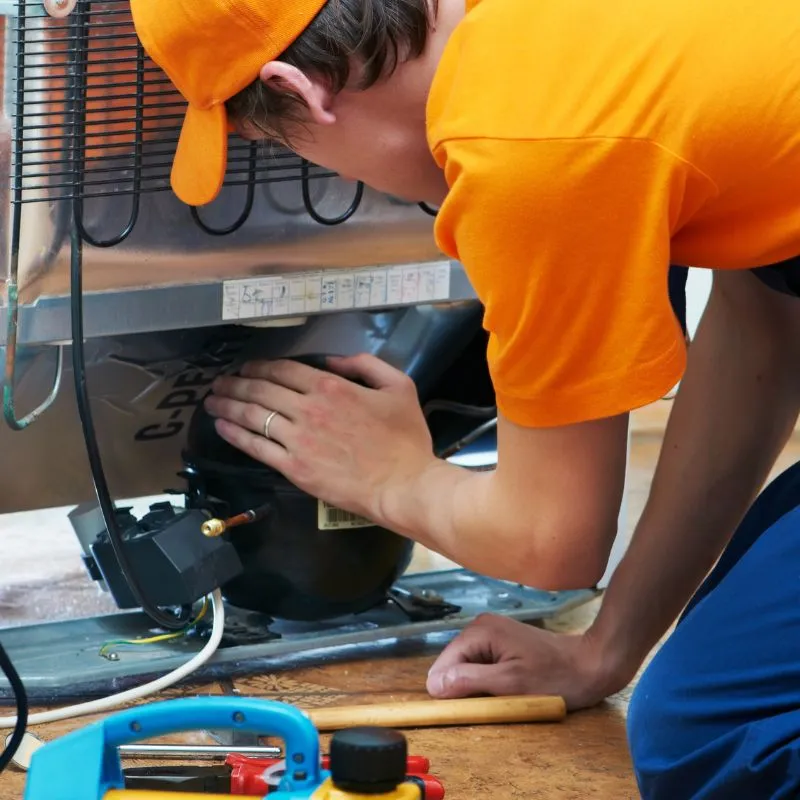
Modern refrigerators automatically remove frost several times each day. When the defrost system stops working, ice gradually covers the evaporator coils, preventing cold air from circulating throughout the refrigerator.
Early diagnosis can often prevent food spoilage, compressor strain, and more expensive repairs.
Technician Insight
A refrigerator that cools normally for a few days after manual defrosting but then develops heavy frost again almost always has a failed component in the automatic defrost system.
A refrigerator that cools normally for a few days after manual defrosting but then develops heavy frost again almost always has a failed component in the automatic defrost system.
How the Defrost System Works
Automatic defrost systems rely on several components working together:
- Evaporator coils
- Defrost heater
- Defaporator thermostat or thermistor
- Electronic control board or defrost timer
- Defrost drain
- Evaporator fan
When any part of this system fails, frost begins accumulating instead of melting during scheduled defrost cycles.
Why a Refrigerator Stops Defrosting
The most common causes include:
- Failed defrost heater
- Faulty defrost thermostat
- Defective temperature sensor
- Frozen or clogged defrost drain
- Evaporator fan failure
- Control board malfunction
- Defrost timer failure (older refrigerators)
Each of these problems eventually restricts airflow and reduces cooling efficiency.
Defrost Problem Diagnosis Chart
| Symptom | Likely Cause | First Step |
|---|---|---|
| Heavy frost on freezer back wall | Defrost heater failure | Perform manual defrost |
| Water leaking inside refrigerator | Blocked defrost drain | Inspect drain opening |
| Freezer cold, refrigerator warm | Airflow blocked by ice | Check evaporator frost |
| Fan hitting ice | Excessive evaporator frost | Complete manual defrost |
| Frost returns after 2–3 days | Defrost system component failure | Professional diagnosis |
Defrost Heater Failure
The defrost heater melts accumulated frost from the evaporator coils.
When it fails:
- Ice continues building
- Airflow decreases
- Cooling performance drops
- Refrigerator temperatures rise
A failed heater is one of the most common causes of refrigerator defrost problems.
Defrost Thermostat & Sensor Problems
The thermostat or thermistor monitors evaporator temperature and signals when defrost should begin or end.
Typical symptoms include:
- Repeated frost buildup
- Cooling problems after several days
- Defrost cycle never starts
- Inconsistent refrigerator temperatures
Incorrect temperature readings prevent proper automatic defrost operation.
Frozen Defrost Drain
During every defrost cycle, melted water must drain away safely.
A clogged drain may cause:
- Water pooling beneath drawers
- Ice at the bottom of the freezer
- Unpleasant odors
- Recurring leaks
Clearing the drain often restores proper water flow.
Evaporator Fan Problems
The evaporator fan distributes cold air throughout the refrigerator.
If ice blocks the fan:
- Cooling becomes uneven
- Fresh food compartment warms first
- Fan noises increase
- Air circulation stops
Fan problems frequently accompany severe defrost failures.
Step-by-Step Troubleshooting
Safety Reminder: Never chip away ice with sharp objects, as refrigerant lines behind the evaporator can be easily damaged.
1. Perform a Complete Manual Defrost
Disconnect power and allow all ice to melt naturally.
2. Inspect Door Gaskets
Warm air entering the refrigerator increases frost accumulation.
3. Check Airflow
Remove food blocking interior vents.
4. Inspect the Defrost Drain
Ensure melted water drains freely.
5. Monitor Frost Return
If frost returns within several days, the automatic defrost system likely requires repair.
Frequently Asked Questions
Why is my refrigerator not defrosting?
The most common causes are a failed defrost heater, thermostat, temperature sensor, or electronic control board.
Can I manually defrost my refrigerator?
Yes. Manual defrosting temporarily restores airflow, but recurring frost indicates an underlying problem.
How do I know if the defrost heater is bad?
Heavy frost repeatedly forms on the evaporator coils and returns shortly after manual defrosting.
Can a clogged drain stop defrosting?
A blocked drain won’t stop the defrost cycle itself but can cause water to freeze again, creating additional ice buildup.
When should I call a technician?
If heavy frost returns within a few days after manual defrosting or cooling performance continues declining.
Professional Refrigerator Repair
If your refrigerator continues developing heavy frost after manual defrosting, professional diagnostics can identify failed heaters, thermostats, sensors, evaporator fans, control boards, or defrost timers before the problem causes compressor damage or food spoilage.
Maintenance Tip:
Keeping door gaskets clean, maintaining clear airflow, and addressing small frost buildup early can significantly reduce the likelihood of major defrost system failures.




Discover Solutions for Other Common Refrigerator Issues


