


If your fridge is loud or noisy, it can be hard to tell whether you’re hearing a normal cooling cycle—or the first sign of a repair bill. The good news: most sounds are harmless, and a lot of the annoying ones have simple, practical fixes you can do safely at home.
Below is a clear “sound-to-cause” guide, a checklist you can follow in minutes, and the situations where a technician is the smarter move.
Is it normal when a fridge is loud or noisy?
Yes—sometimes. A refrigerator is basically a small climate system with moving parts, fans, refrigerant flow, and automatic defrosting. That means even a healthy unit can hum, click, gurgle, or hiss.
But if your fridge is loud or noisy in a new way (or the sound is getting worse), it’s worth narrowing down:
- Where it comes from (back, bottom, inside)
- When it happens (only after door closes, only at night, constantly)
- What it sounds like (buzz, rattle, grinding, high-pitched whine)
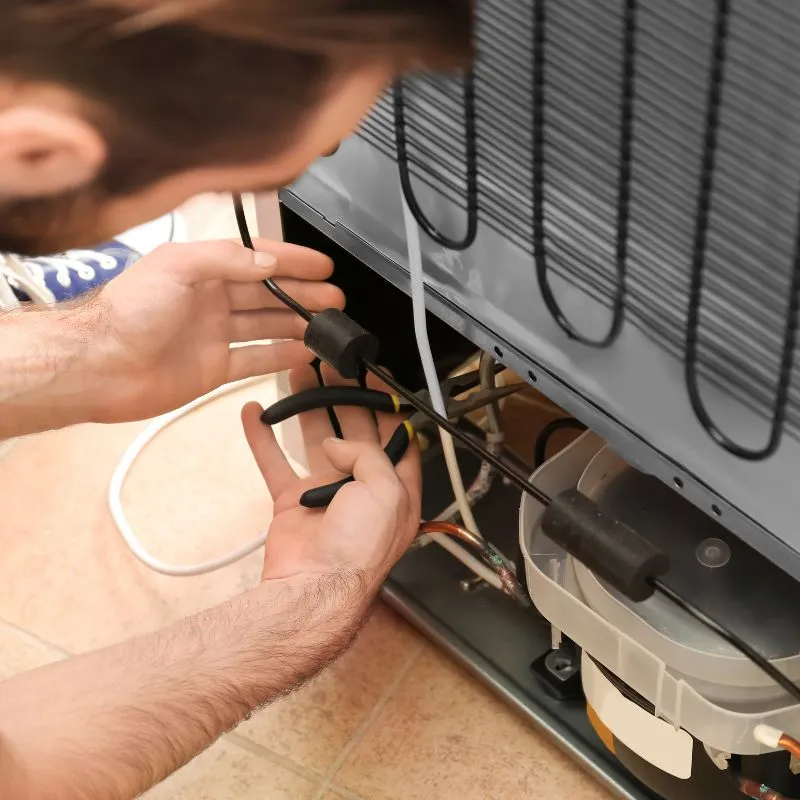
Quick diagnosis
| Noise you hear | Most likely cause | Where it comes from | What you can do safely |
|---|---|---|---|
| Steady hum/buzz | Compressor running (often normal) | Back/bottom | Make sure airflow space is clear; clean coils |
| Clicking (occasional) | Thermostat/relay switching | Back | Normal unless constant; check power outlet stability |
| Rattling/vibration | Fridge not level or touching cabinet/wall | Sides/back | Level the legs; pull unit slightly away |
| Popping/cracking | Plastic parts expanding/contracting | Inside | Usually normal, especially after cooling cycles |
| Gurgling | Refrigerant moving | Inside/back | Normal; no action needed |
| Hissing (brief) | Defrost cycle/evaporation | Inside | Normal if short; check for heavy frost if constant |
| Grinding/squealing | Fan blade hitting ice or worn fan | Freezer/back panel | Defrost, clear obstructions; consider service if it persists |
| High-pitched whine | Fan motor strain or failing motor | Inside/freezer | Check for ice buildup; service if sound continues |
If your fridge is loud or noisy and the sound matches “grinding/squealing” or “high-pitched whine,” treat it as a higher priority—those often relate to fan problems that can worsen.
Two-minute checks that fix a surprising number of noisy fridges
 Before you open anything, unplug the fridge (or switch off the breaker) if you’ll touch internal parts.
- Level it: An unlevel fridge amplifies vibration. Adjust the front legs so the unit feels stable and doesn’t rock.
- Create breathing room: Leave a small gap from the wall so coils and fans don’t echo against surfaces.
- Stop “contact rattles”: Make sure the fridge isn’t touching a cabinet side panel, a radiator pipe, or a loose trim piece.
- Rearrange inside items: Bottles and glass containers can clink and buzz when the compressor starts.
- Check the drain pan: Some models have a pan at the bottom that can sit slightly loose and vibrate.
These small adjustments often help when a fridge is loud or noisy mainly during compressor start-up.
DIY fixes by location: back, bottom, or inside
If the noise is from the back/bottom
Here are safe fixes that don’t require advanced tools:
- Clean condenser coils (dust makes the system work harder, increasing hum).
- Inspect the condenser fan (if accessible): remove lint/hair buildup with a soft brush.
- Tighten accessible screws on rear panels (don’t force anything—just snug).
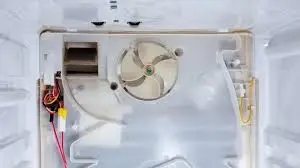
If the noise is from inside the freezer
This is commonly fan or frost related:
- Look for heavy frost buildup on the back freezer wall.
- Do a full defrost (unplug, leave doors open, towels ready) if ice seems excessive.
- Listen with the freezer door open: if sound changes dramatically, the evaporator fan area is a strong suspect.
When a fridge is loud or noisy specifically from the freezer compartment, ice contacting a fan blade is one of the most common causes.
When noise means trouble: red flags you shouldn’t ignore
A refrigerator can make normal sounds, but these warning signs matter:
- Your fridge is loud or noisy and temperatures are unstable (food spoils faster, freezer softens).
- The sound is new, constant, and loud, especially a harsh buzzing or grinding.
- You see water under the fridge or frequent puddles inside drawers.
- The freezer shows thick frost/ice that returns quickly after defrosting.
- The noise is paired with burning smell or repeated tripping of a breaker.
If any of the above show up, it’s often cheaper to diagnose early than to wait for a full failure.
Prevention
To reduce the chances your fridge is loud or noisy again:
- Vacuum coils and vents periodically (especially if you have pets).
- Keep a little space behind the fridge for airflow.
- Avoid overpacking the freezer (restricted airflow can increase fan strain).
- Make leveling part of routine cleaning—floors settle over time.
Some refrigerator noises are normal. But if your fridge is loud or noisy in a way that’s new, harsh, constant, or tied to cooling problems, treat it as a signal—not a nuisance. Start with leveling and clearance, then move to coil cleaning and frost checks. If grinding or high-pitched whining persists, it’s usually time for a technician.




Discover Solutions for Other Common Refrigerator Issues


