

If your Refrigerator Fan is Not Working Properly, the fridge may still look “alive” (lights on, display working), but cooling will suffer fast. You might notice warm food, soft ice cream, loud humming, or weird temperature swings. The good news: many issues behind a fan not working on refrigerator are diagnosable at home—and some are fixable without replacing the whole appliance.
Below is a practical guide to refrigerator fan repair and fridge fan repair, with clear symptoms, quick tests, and safe next steps.
What the Refrigerator Fan Does
Most modern refrigerators use at least one fan:
- Evaporator fan (inside the freezer compartment, behind a panel): moves cold air across coils and circulates it through freezer and fridge.
- Condenser fan (near the compressor, bottom/back): removes heat from the condenser coils.
When a Refrigerator Fan is Not Working Properly, cold air circulation drops. That’s why you can get a freezer that’s “sort of cold” while the fridge section turns warm—or you hear the motor trying but no airflow happens.
If your fridge fan not spinning is the evaporator fan, the refrigerator section usually warms first. If the condenser fan is failing, the whole unit may struggle and the compressor area may feel overly hot.
Book Online and Save $25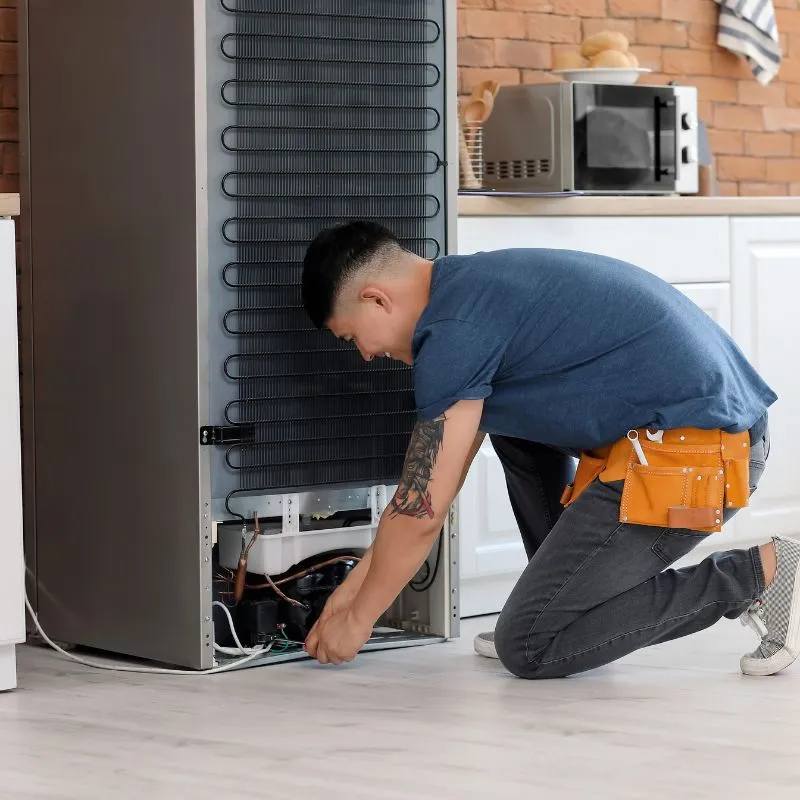




Quick Symptoms Checklist
Here are common signs that point to a fan not working on refrigerator:
- Freezer is colder than the fridge section (or fridge is warm)
- Unusual noise: grinding, rattling, squealing, or intermittent buzzing
- Ice buildup on the freezer back wall
- Temperature swings: cold one day, warm the next
- Air vents in the fridge feel weak (little airflow)
- Fridge fan not spinning even though the compressor runs
Diagnostic: Symptom → Likely Cause → What to Do Next
| What you notice | Most likely cause | Safe first step | Typical fix (DIY vs Pro) |
|---|---|---|---|
| Fridge fan not spinning, freezer panel has frost | Ice blockage or defrost failure | Unplug and inspect behind freezer panel | Defrost system diagnosis (often Pro) |
| Loud grinding from freezer, fan slows/stops | Worn fan motor bearings | Listen and check for wobble | Replace evaporator fan motor (DIY-capable) |
| Fan runs only when door switch is pressed | Door switch issue or normal behavior | Press door switch and listen | Replace door switch if inconsistent (DIY) |
| Weak airflow, fan turns but slowly | Dust, obstruction, or failing motor | Clear ice/debris, check blade | Clean/replace fan blade or motor (DIY) |
| Compressor area very hot, poor cooling | Condenser fan failing or coils clogged | Clean coils; check condenser fan | Clean coils (DIY), fan motor (DIY/Pro) |
| No fan, no cooling, but lights work | Control board, wiring, or power to fan missing | Verify settings, reset power | Electrical diagnosis (Pro recommended) |
This table helps narrow your refrigerator fan repair plan without guessing. If your Refrigerator Fan is Not Working Properly, start with the simplest visual checks before ordering parts.
What to Check First
1) Confirm which fan is the problem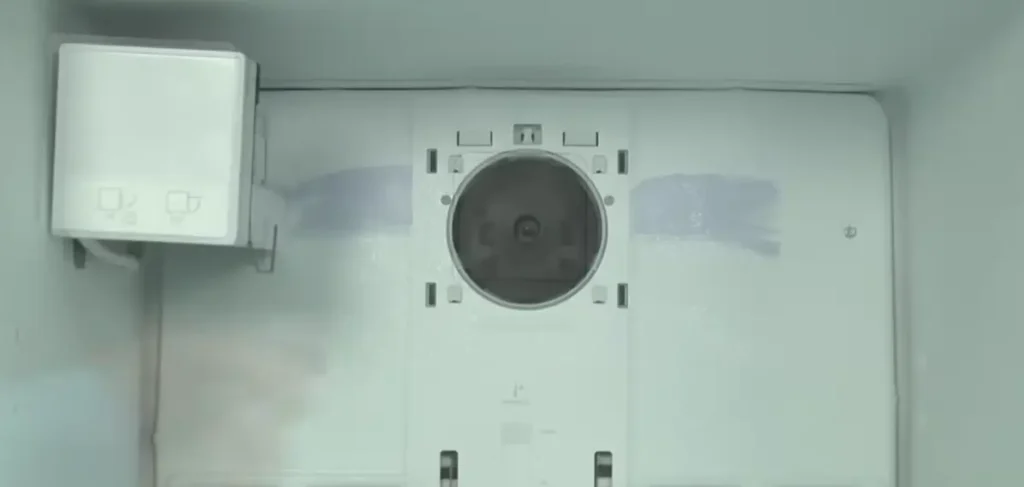
For fridge fan repair, you want to identify evaporator vs condenser fan:
- Evaporator fan: open the freezer, listen for airflow/hum. Many models stop the fan when the door is open—press the door switch to test.
- Condenser fan: access bottom/back panel (unplug first). It should run when the compressor runs.
If you’re unsure, the classic clue is: fridge section warm + freezer “okay-ish” often means evaporator fan trouble.
2) Check the door switch (surprisingly common)
A fan not working on refrigerator can be as simple as a door switch that tells the fridge “door open,” so it stops the fan.
Quick test:
- Press and hold the door switch.
- If the fan starts, the switch may be loose, sticky, or failing.
This is a very common starting point for refrigerator fan repair, especially when the Refrigerator Fan is Not Working Properly intermittently.
3) Look for ice or debris blocking the fan blade
If your fridge fan not spinning, you may find:
- Ice buildup around the fan shroud
- Food packaging rubbing the fan
- A fan blade that’s cracked or rubbing plastic
If the blade can’t rotate freely, you’ll keep seeing a fan not working on refrigerator symptom even if the motor is fine.
4) Listen for “trying to spin” sounds
A weak motor often:
- Starts, stops, and restarts
- Makes a squeal or grind
- Spins slower than normal
That’s a classic clue for fridge fan repair involving motor replacement.
Tools you’ll likely need for refrigerator fan repair
- Phillips screwdriver / nut driver (common sizes: 1/4″ and 5/16″)
- Flashlight
- Small brush + vacuum (for dust and coils)
- Gloves (sharp sheet metal edges)
- Multimeter (optional, but useful)
These basics cover most refrigerator fan repair jobs when a Refrigerator Fan is Not Working Properly.
Mistakes that make fridge fan repair harder
- Forcing panels off without checking hidden screws
- Running the unit with panels removed for long periods
- Ignoring heavy frost (it’s often a defrost-system clue)
- Replacing the fan motor without checking for obstructions first
- Skipping coil cleaning when the condenser area is overheating
Avoiding these keeps a simple fridge fan repair from turning into a longer breakdown.
Common Causes Explained (and How to Fix Them)
Ice buildup / defrost problems
If the freezer back wall is frosted and the fridge fan not spinning, the fan may be stuck in ice. You can temporarily defrost (unplug and leave doors open), but if it returns, the issue often isn’t the fan—it’s the defrost heater, thermostat, or control.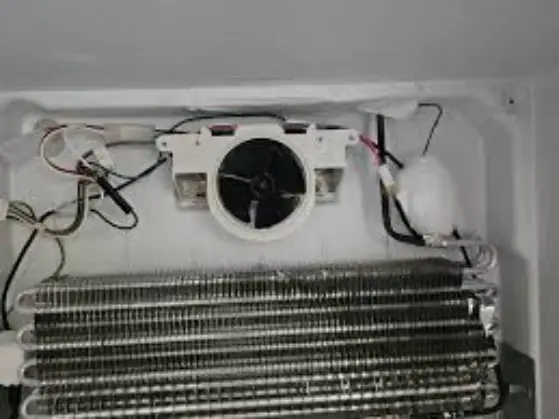
When a Refrigerator Fan is Not Working Properly because of recurring frost, the best “repair” is diagnosing defrost components, not just swapping the fan.
Failed fan motor (evaporator or condenser)
A worn motor can still hum but won’t start. If the blade turns stiffly or the motor is noisy, replacement is usually the correct refrigerator fan repair step.
Many homeowners do this as a DIY fridge fan repair if they’re comfortable removing panels and reconnecting plugs.
Dirty condenser coils causing overheating
A clogged condenser area can make the system run hot. If the condenser fan struggles or the compressor is scorching, clean the coils. This often improves cooling even if the fan not working on refrigerator symptom was borderline.
Coil cleaning is a “low risk, high payoff” part of refrigerator fan repair.
Wiring, connectors, or control board issues
If the fan never receives power, the motor may be fine. This is more common when:
- The fan is brand new but still doesn’t run
- You have intermittent operation that doesn’t match door-switch behavior
Electrical issues are where fridge fan repair can cross into “call a technician” territory.
When to Call a Pro
You should strongly consider professional help if:
- Frost returns quickly after defrosting (defrost diagnosis)
- You smell burning, see melted plastic, or hear arcing
- The fan wiring harness is damaged
- You replaced the fan and the fan not working on refrigerator problem remains
In these cases, the Refrigerator Fan is Not Working Properly due to a deeper system fault, not just a mechanical fan issue.
Practical Advice
Start with the door switch and airflow checks. Then look for ice or debris. If the fridge fan not spinning with the door switch pressed and the blade turns freely by hand, motor replacement becomes the most likely refrigerator fan repair path.
If the Refrigerator Fan is Not Working Properly because frost keeps building up, focus on defrost diagnostics—otherwise you’ll fix the symptom but not the cause.
If you want, tell me your fridge brand/model and whether the freezer has heavy frost on the back wall—then I’ll suggest the most probable fan (evaporator vs condenser) and the safest repair route for that specific setup.
Discover Solutions for Other Common Refrigerator Issues


