


When you notice your fridge freezer coils frosting up, it’s rarely “just a little ice.” Frost on coils is a sign that airflow, defrosting, or moisture control has gone off track. Left untreated, it can push your compressor to work harder, raise energy use, and slowly ruin cooling performance.
Below is a practical guide to diagnose why fridge freezer coils frosting up happens, what you can safely do at home, and how to prevent it from coming back.
Why Fridge Freezer Coils Frosting Up Is a Problem
Coils (especially the evaporator coils inside the freezer section) are designed to get cold. A thin film of frost is normal during operation, but when fridge freezer coils frosting up turns into heavy snow-like buildup, the fan can’t move air across the coils. That means:
- The freezer may stay “kind of cold” but not stable.
- The fridge compartment warms up first (because cold air comes from the freezer).
- You may hear the fan struggling or notice longer run times.
In other words, fridge freezer coils frosting up is usually an airflow or defrost issue—not a “need more gas” issue.
Book Online and Save $25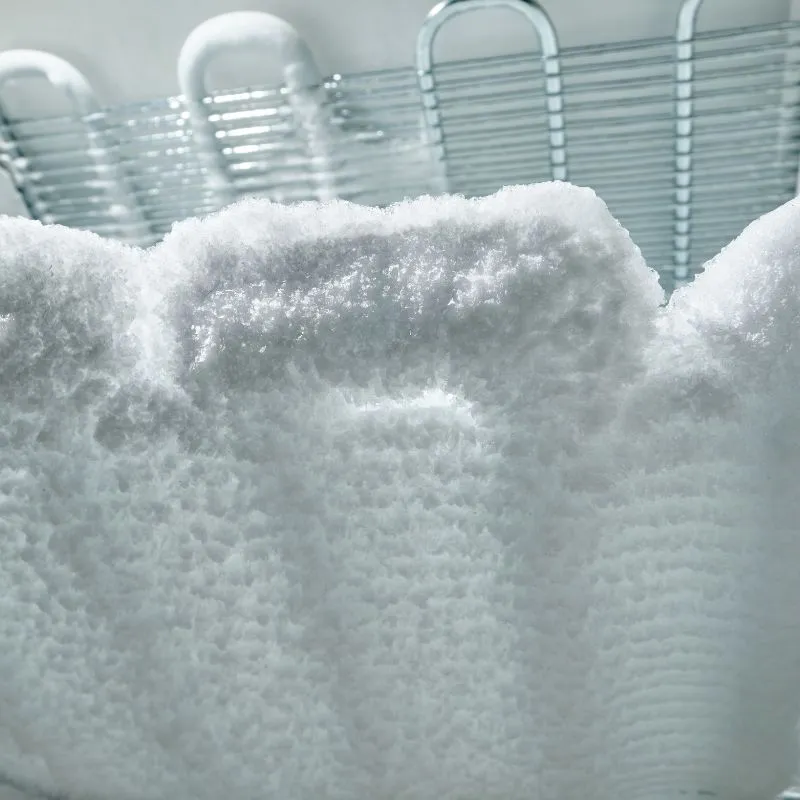




The Most Common Reasons Coils Ice Over
Here are the usual culprits behind fridge freezer coils frosting up:
- Door seal leaks (gasket): Warm, humid air enters and freezes on the coil.
- Door left slightly open: Even a tiny gap can cause rapid frost.
- Blocked vents or overpacked freezer: Air can’t circulate, frost concentrates on the coil.
- Defrost system failure: Heater, defrost thermostat/sensor, or control board may not trigger defrost.
- Drain line clog: Meltwater can refreeze and create excessive ice.
- Fan issues: If the evaporator fan slows or stops, cold air doesn’t move correctly.
If you keep seeing fridge freezer coils frosting up after clearing ice, it’s almost always one of the items above.
Discover Solutions for Other Common Refrigerator Issues


What the Frost Pattern Tells You
The location and “shape” of the frost can point to the cause. Use the table to narrow down what’s happening when fridge freezer coils frosting up appears.
| Frost Pattern / Symptom | Likely Cause | What You Can Do First |
|---|---|---|
| Thick frost blanket covering most of the evaporator area | Defrost system not working | Manual defrost + check for recurring frost within 3–7 days |
| Frost mostly near the door side / front area | Door gasket leak or door not sealing | Clean gasket, check alignment, do the “paper test” |
| Ice buildup at bottom of freezer, water pooling then refreezing | Defrost drain blocked | Clear drain with warm water; check drain tube |
| Freezer cold, fridge warm; fan noise changes or stops | Evaporator fan problem or blocked airflow | Remove blockage, listen for fan, ensure vents are clear |
| Frost returns fast after defrost (24–48 hours) | Significant moisture intrusion or defrost failure | Inspect gasket and door habits; consider technician if repeated |
This is the most useful “at-a-glance” step because fridge freezer coils frosting up isn’t one-size-fits-all.
Safe Fixes You Can Do at Home (In Order)
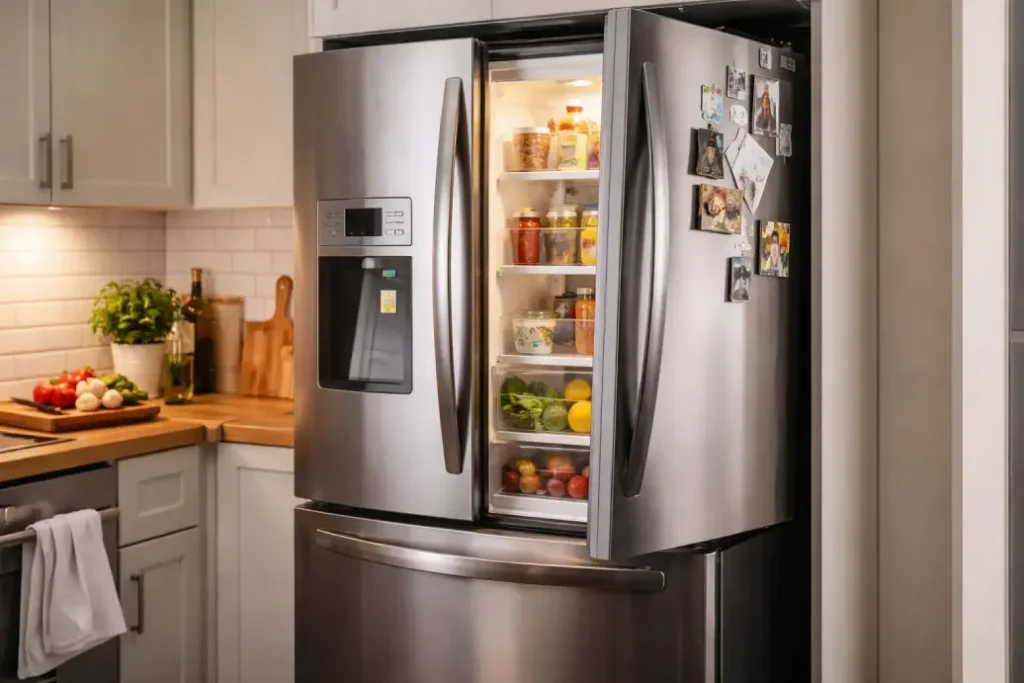 To handle fridge freezer coils frosting up without guessing, follow this sequence:
- Do a full manual defrost
- Unplug the unit.
- Leave doors open and let ice melt naturally (towels help).
- Avoid sharp tools—puncturing a coil is an expensive mistake.
- Check door sealing
- Clean the gasket with mild soap and warm water.
- Do the “paper test”: close a sheet of paper in the door; if it slides out easily, sealing is weak.
- Make sure drawers/bins aren’t preventing full closure.
- Restore airflow
- Don’t pack food against vents.
- Leave a little space between items so air can circulate.
- Confirm the internal fan area isn’t blocked by ice.
- Clear the defrost drain
- If you see ice at the freezer bottom, the drain may be clogged.
- After defrosting, flush the drain with warm water (a turkey baster works well).
After these steps, monitor for signs of fridge freezer coils frosting up returning. If it comes back quickly, you’re likely dealing with a defrost component failure rather than a one-time moisture event.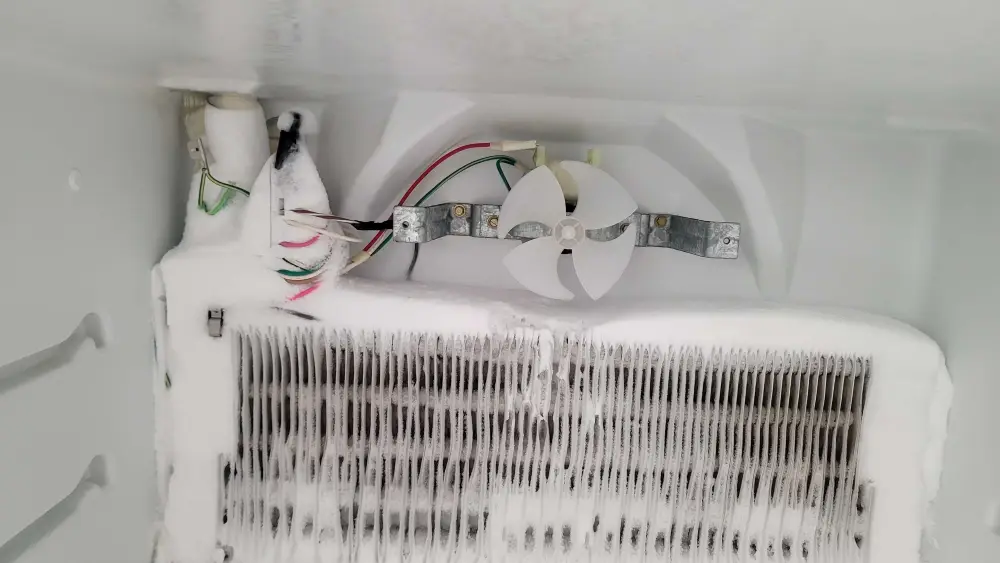
Fast prevention habits
- Keep freezer door openings short (especially in humid weather).
- Make sure containers are sealed; uncovered liquids add moisture.
- Let hot food cool before placing it inside.
- Avoid overfilling; maintain airflow paths.
These habits reduce the chance of fridge freezer coils frosting up by limiting humidity and improving circulation.
Signs you may need a technician
- Frost returns within 1–3 days after a full manual defrost.
- You hear clicking, repeated restarts, or unusual fan grinding.
- The fridge section warms while the freezer seems “mostly okay.”
- Ice buildup is consistent and heavy even with a perfect door seal.
If multiple items here apply, fridge freezer coils frosting up is likely tied to a defrost heater, sensor/thermostat, or control issue.
How to Prevent Fridge Freezer Coils Frosting Up Long-Term
To stop fridge freezer coils frosting up from becoming a repeating cycle, focus on three pillars:
1) Moisture control
Humidity is the fuel for frost. Better sealing, fewer long door openings, and sealed containers cut frost dramatically.
2) Proper airflow
Even when the system is healthy, blocked vents make fridge freezer coils frosting up more likely because cold air can’t distribute evenly.
3) Healthy defrost function
Modern units rely on timed or sensor-controlled defrost cycles. If the defrost system fails, fridge freezer coils frosting up becomes inevitable—manual defrost only buys time.
If you’re dealing with fridge freezer coils frosting up, start with the simple wins: manual defrost, gasket check, airflow fixes, and drain clearing. Those solve a big portion of cases. If frost returns quickly, it’s a strong hint the defrost system needs repair.
If you want, tell me the brand/model and where exactly the frost appears (full coil blanket, door-side, bottom sheet of ice), and I’ll narrow it down to the most probable cause and next step.