

If your refrigerator freezing food problem shows up out of nowhere—milk with ice crystals, lettuce turning to slush, eggs cracking—it’s not “normal cold.” It’s usually a controllable airflow or temperature issue. Below is a practical, reader-first guide to diagnose and solve the most common reasons food in fridge is freezing, plus the quickest fixes you can do today.
Why Is My Refrigerator Freezing My Food?
When people search why is my refrigerator freezing my food or why is my refrigerator freezing food, they’re usually dealing with one of these root causes:
- Too-low temperature setting (or a faulty temperature sensor)
- Airflow forced directly onto items (especially near vents)
- A damper/air diffuser stuck open
- A defrost system problem causing odd cooling cycles
- Door seal leaks causing the fridge to overcompensate
- Overpacked shelves blocking normal circulation
So if you’re thinking, why is my fridge freezing food—you’re not alone. Let’s narrow it down.
Book Online and Save $25



 Fast Checks (Do These Before Anything Else)
Here are quick, high-impact steps when your fridge is freezing food and you want an immediate improvement:
- Set the fridge temperature to 37–40°F (3–4°C)
- Move items away from the back wall and air vents
- Keep liquids and delicate produce away from the cold-air stream
- Make sure the door closes fully (no “bounce back”)
If your fridge freezing food issue disappears after these steps, it was likely airflow + placement, not a major failure.
The Most Common Reasons Food in the Fridge Is Freezing
1) Temperature Is Set Too Cold (Or Not Reading Correctly)
If you’re asking why does my refrigerator freeze food, start with settings. Many fridges get bumped colder during cleaning or by kids (or an accidental dial turn).
Signs:
- Everything feels extra cold, not just one shelf
- Drinks get icy, not just vegetables
Fix:
- Adjust to 37–40°F (3–4°C)
- Wait 24 hours for stabilization
If food in fridge is freezing even at a normal setting, a sensor or control may be misreading and keeping the compressor running longer than needed.
2) Items Are Too Close to the Air Vents
A very common reason fridge keeps freezing food is direct exposure to the cold air outlet. The fridge compartment doesn’t cool evenly: the “blast zone” near vents can dip below freezing even when the average temp is fine.
Fix:
- Keep at least 2–3 inches (5–8 cm) clearance from the vent and back wall
- Store leafy greens and berries in drawers (they’re designed to buffer airflow)
This alone solves many cases of refrigerator freezing food.
3) Damper (Air Diffuser) Stuck Open
In many models, a damper controls how much freezer air enters the fridge section. If it’s stuck open, the fridge becomes “mini-freezer,” and you’ll wonder why is my refrigerator freezing food even when settings look reasonable.
Signs:
- Freezing happens mostly on the top shelf or near the vent
- Freezer seems normal, but fridge items freeze quickly
Fix ideas:
- Open the damper area (if accessible) and check for ice blockage
- Reduce freezer setting slightly (temporary)
- If persistent, the damper assembly may need service

4) Defrost Problems Causing Weird Cooling Behavior
If defrost components fail, ice can build up and redirect airflow in unpredictable ways. That’s another reason people search why does my refrigerator freeze food after noticing random freezing patterns.
Signs:
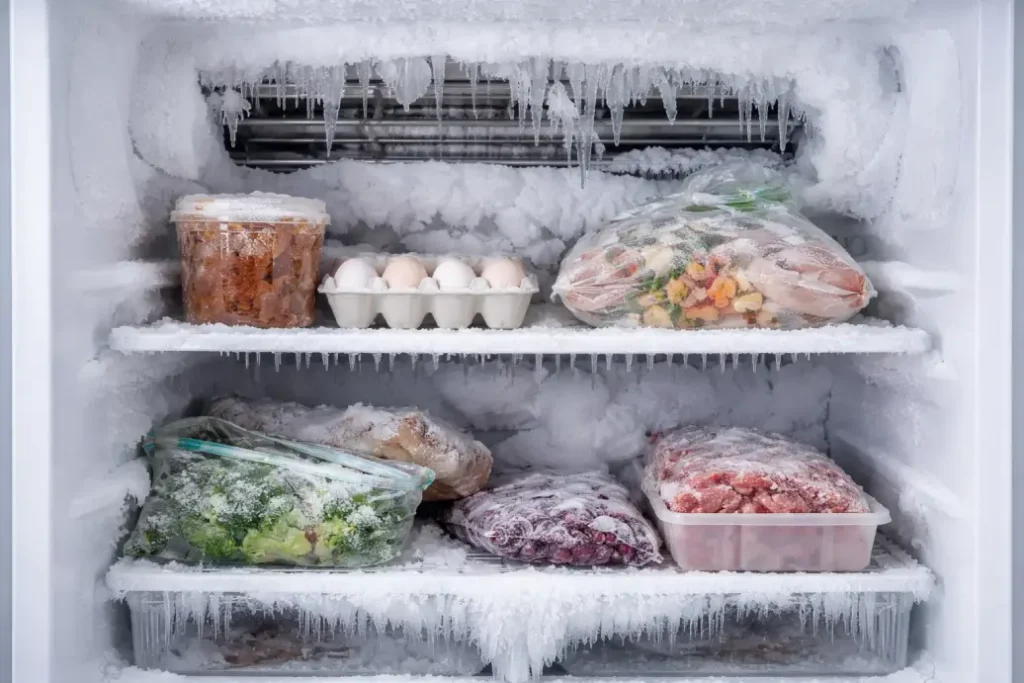
- Frost buildup in freezer panel
- Fridge temps swing: too cold, then too warm
Fix:
- Manual defrost (unplug for 12–24 hours, towels ready)
- If it returns, a defrost heater/thermostat/timer issue is likely

5) Door Seal Leaks (Gasket Issues)
A leaky gasket lets warm air in. The fridge responds by cooling harder, and certain zones over-freeze. That’s how food in fridge is freezing can coexist with other areas that feel merely “cold.”
Quick gasket test:
- Close the door on a thin paper strip
- If you can pull it out easily, the seal may be weak there
Fix:
- Clean gasket with warm soapy water
- Ensure shelves aren’t preventing full closure
- Replace gasket if torn or deformed
Symptom → Likely Cause → Best Fix
| What you notice (symptom) | Most likely cause | What to do first |
|---|---|---|
| Only items near vent/back wall freeze | Direct cold airflow | Move items + add clearance |
| Top shelf freezes, drawers OK | Damper stuck open / airflow imbalance | Check damper area; reduce freezer setting temporarily |
| Everything freezes, drinks icy | Setting too cold / sensor issue | Set to 37–40°F; monitor 24h |
| Freezing happens randomly + frost in freezer | Defrost system issue | Manual defrost; if returns, service |
| Door doesn’t close firmly | Gasket leak / obstruction | Clean gasket; check alignment and shelf load |
If you’ve been typing fridge freezing food into search because you don’t know where to start—use the table and follow the “first action” column.
Store Food So the Fridge Doesn’t Freeze It
If your fridge is freezing food, placement matters more than people think:
- Keep high-water foods (lettuce, cucumbers, berries) in drawers
- Avoid storing items directly under or in front of vents
- Don’t press containers against the back wall
- Use sealed containers for liquids (they supercool and freeze easier)
Quick Fixes You Can Do in 10 Minutes
If you’re stuck on why is my fridge freezing food, start here:
- Adjust temperature to 37–40°F (3–4°C)
- Reorganize: clear vents, remove overpacking
- Check door closure and gasket cleanliness
- Put a simple fridge thermometer inside for accuracy
These steps often stop fridge keeps freezing food without needing parts.


When to Call a Technician
If why is my refrigerator freezing food remains true after 24–48 hours of correct settings and proper airflow, you may be dealing with a failed sensor, damper motor, or control board.
When booking service, describe it like this:
- “The refrigerator freezing food happens mostly on (top shelf / near vent / everywhere).”
- “Temperature setting is normal but food in fridge is freezing.”
- “I checked door seal and airflow; problem persists.”
This helps avoid generic “turn it warmer” advice.
Most cases of refrigerator freezing food come down to airflow (items near vents/back wall) or a damper issue—not mysterious luck. If your fridge freezing food problem is consistent, follow the checklist, use the symptom table, and you’ll pinpoint whether it’s a simple adjustment or a part that needs attention.
If you want, tell me your fridge brand/model (or share a photo of the inside layout and vent locations), and I’ll map the most likely airflow path and where freezing zones usually appear.


