

When your Refrigerator is Too Cold, it’s not just annoying—it can ruin fresh produce, freeze drinks, and waste money on spoiled groceries. The good news: in many cases, you can solve the problem in under an hour with a few smart checks.
Below is a practical guide to diagnose why your Refrigerator is Too Cold, what settings to use, and which parts to inspect before you call a technician.
Quick Signs Your Refrigerator Is Too Cold
If your Refrigerator is Too Cold, you’ll usually notice at least one of these:
- Milk or juice gets icy at the back of the shelf
- Vegetables in the crisper freeze or turn watery
- Eggs crack or feel partially frozen
- Condensation turns into frost inside the fresh-food compartment
- Drinks freeze even when placed away from the freezer
If any of this sounds familiar, treat it as a temperature-control issue—not a “my fridge is powerful” feature.
Book Online and Save $25



Ideal Temperature Settings
Most people lower the dial when food seems warm, then forget about it. Days later, the Refrigerator is Too Cold and everything starts freezing.
Here are the target temperatures:
| Compartment | Recommended Temperature | What Happens If It’s Too Cold |
|---|---|---|
| Refrigerator (fresh food) | 37–40°F (3–4°C) | Produce freezes, liquids slush, food texture degrades |
| Freezer | 0°F (-18°C) | Excess frost, higher energy use, freezer burn risk |
If your Refrigerator is Too Cold, aim for 38°F / 3°C as a stable starting point.
Most Common Reasons Your Refrigerator Is Too Cold
1) Temperature Dial Set Incorrectly (Yes, It Happens)
Some models use “1–5” or “1–9” scales where higher numbers mean colder. Others are reversed. If the Refrigerator is Too Cold, set the control one step warmer and wait 12–24 hours to see results.
2) Airflow Problems Inside the Fridge
Cold air enters the fridge through vents (often on the back wall). If food blocks the vent, the airflow becomes uneven and creates freezing “hotspots.”
Check these airflow mistakes:
-
Items pressed directly against the back wall
-
Overpacked shelves that restrict circulation
-
A vent covered by bags, boxes, or tall containers
If your Refrigerator is Too Cold, clearing the vents is one of the fastest fixes.
3) Faulty Temperature Sensor or Thermostat
A failing sensor can “think” the fridge is warm and keep cooling nonstop. This is a common reason the Refrigerator is Too Cold even when settings look normal.
4) Damper Control Stuck Open
Many refrigerators regulate cold air from the freezer into the fridge using a damper door. If it sticks open, the fridge gets blasted with freezer-level air—then your Refrigerator is Too Cold no matter what you do with the dial. 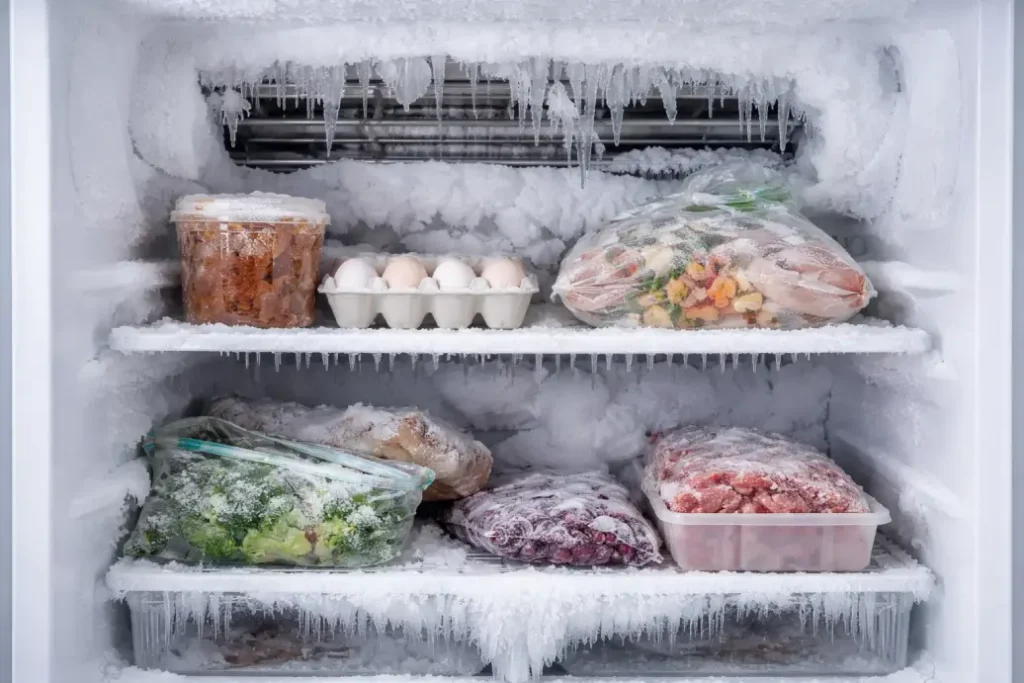
5) Defrost System Issues (Frost Buildup Can Mislead the System)
If defrost isn’t working correctly, coils may ice up. Some fridges respond with weird temperature behavior, including overcooling in the fresh-food area.
Step-by-Step Troubleshooting Checklist
Use this order to avoid wasting time.
- Step 1: Measure the real temperature.
- Put a fridge thermometer in the center shelf for 2–3 hours. “Feeling cold” isn’t reliable.
- Step 2: Adjust the setting slightly warmer.
- Only change one step at a time. Big jumps can cause more instability.
- Step 3: Check vent blockage and food placement.
- Leave a few inches of space from the back wall.
- Step 4: Inspect the door seal (gasket).
- A bad seal usually causes warming, but in some systems it can trigger longer cooling cycles that create freezing zones.
- Step 5: Look for heavy frost on the back panel.
- Frost where it shouldn’t be can point to damper/defrost problems.
If after these steps your Refrigerator is Too Cold for more than 24 hours, you’re likely dealing with a component issue (sensor, damper, control board).
Food Placement That Prevents Freezing
Even with perfect settings, some zones run colder. If the Refrigerator is Too Cold mainly in certain spots, reorganizing can help immediately.
Avoid placing these near vents/back wall:
-
Leafy greens, cucumbers, berries
-
Milk, eggs, yogurt
-
Bottled drinks and cans
Better spots for “freeze-sensitive” items:
-
Middle shelves, toward the front
-
Crisper drawers set to higher humidity (for produce)
-
Door shelves (often slightly warmer, though less stable)
When to Call a Technician
You can usually handle simple adjustments. But if your Refrigerator is Too Cold and you notice any of the following, service may be the fastest path: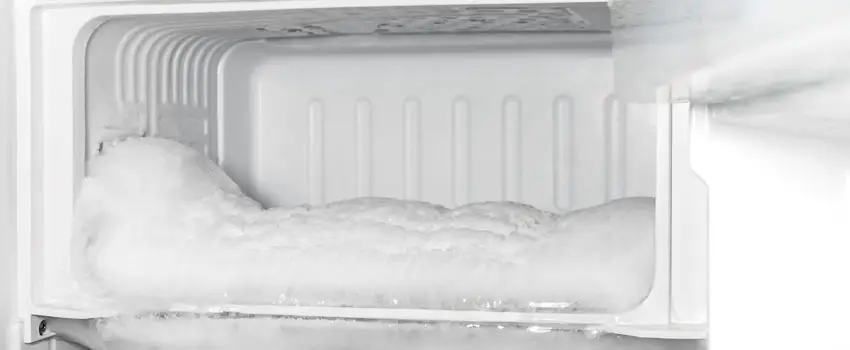
-
The fridge freezes food even on the warmest setting
-
Temperature swings wildly day to day
-
You hear constant running with minimal cycling off
-
The fridge compartment forms thick frost repeatedly
-
The damper area makes clicking noises or won’t respond
These signs often point to a failing thermostat/sensor, stuck damper, or control issue.
If your Refrigerator is Too Cold, start with the basics: verify actual temperature, adjust settings slightly warmer, and fix airflow by clearing vents and spacing items away from the back wall. If the problem persists, suspect the damper, sensor/thermostat, or defrost system.
If you want, tell me your refrigerator brand/model and whether the freezing happens near the back wall or everywhere—I’ll outline the most likely cause and the exact checks to do first.
Discover Solutions for Other Common Refrigerator Issues


