

Content:
- Quick Answer
- Why a Refrigerator Suddenly Goes Dead
- Safety First
- 60-Second Power Checks
- Quick Diagnosis Decision Tree
- Outlet, Breaker & GFCI Problems
- Demo Mode & Sabbath Mode Issues
- Damaged Power Cord Problems
- Door Switch Issues
- Start Relay & Compressor Relay Problems
- Main Control Board Failure
- Compressor Failure Symptoms
- 10-Minute DIY Troubleshooting Workflow
- What NOT to Do
- Repair vs Replace
- When to Call a Professional
- Frequently Asked Questions
- Final Thoughts
Quick Answer
If your refrigerator is completely dead — no lights, no fan noise, and no cooling — the most common causes are:
- Tripped breaker or GFCI outlet
- Loose or damaged power cord
- Demo or Sabbath mode enabled
- Failed start relay
- Blown internal fuse
- Defective main control board
- Compressor startup failure
Many “dead refrigerator” problems are actually simple electrical or control issues that can be diagnosed within minutes before paying for expensive repairs.
This guide was reviewed by experienced refrigerator repair specialists servicing Whirlpool, Samsung, LG, GE, Frigidaire, KitchenAid, Bosch, Sub-Zero, Viking, Thermador, and Maytag refrigerators throughout New York City.
Why a Refrigerator Suddenly Goes Dead
Modern refrigerators rely on several electrical and cooling systems working together:
Power Supply → Safety Components → Main Control Board → Compressor & Cooling System
If one major component in that chain fails, the refrigerator can appear completely lifeless.
| Component | Purpose | Typical Failure Symptoms |
|---|---|---|
| Outlet / Breaker | Provides electrical power | No lights or sound |
| Power cord | Transfers electricity to fridge | Intermittent operation |
| Start relay | Starts compressor | Clicking noises |
| Main control board | Controls cooling functions | Completely dead refrigerator |
| Compressor | Creates cooling | Warm fridge and humming |
Safety First
- Always unplug the refrigerator before opening panels.
- Do not touch exposed wiring with power connected.
- If you smell burning plastic or see sparks, stop immediately.
- Keep refrigerator doors closed during troubleshooting to preserve cooling.
- Avoid extension cords except temporary outlet testing.
60-Second Power Checks
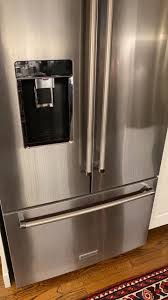
Before assuming major refrigerator failure, start with these fast checks:
- Test the wall outlet.
Plug in a lamp or phone charger. - Reset nearby GFCI outlets.
Kitchens often share protected circuits. - Check the breaker panel.
Flip refrigerator breakers fully OFF then back ON. - Inspect the power cord.
Look for burn marks, cuts, or crushed insulation. - Verify the plug is fully inserted.
Heavy refrigerators sometimes loosen plugs while moving.
Quick Diagnosis Decision Tree
| Symptoms | Most Likely Cause |
|---|---|
| No lights, no sound | Power supply, breaker, board, or cord |
| Lights on but no cooling | Relay or compressor issue |
| Repeated clicking | Bad start relay |
| Panel works but cooling off | Demo mode or Sabbath mode |
Outlet, Breaker & GFCI Problems
Electrical supply problems are among the most common causes of refrigerators appearing completely dead.
Common Signs
- No interior lighting
- No compressor hum
- Other devices on same outlet fail
What to Check
- Kitchen GFCI outlets
- Electrical panel breakers
- Damaged receptacles
- Loose refrigerator plugs
Important: Refrigerators should never remain connected to lightweight extension cords long-term.
Demo Mode & Sabbath Mode Issues
Many modern refrigerators include showroom or Sabbath modes that disable cooling while keeping displays active.
Common Symptoms
- Display panel lights work
- No cooling or fan activity
- Buttons respond but fridge stays warm
Quick Fix
- Turn cooling back ON
- Exit Demo or Sabbath mode
- Unplug refrigerator for 5 minutes
Damaged Power Cord Problems
Refrigerator power cords can become damaged from:
- Pinching against walls
- Rodent damage
- Overheating
- Improper movement during cleaning
If the cord feels hot or smells burnt, discontinue use immediately.
Door Switch Issues
A faulty door switch usually affects lighting more than cooling, but it can still help diagnose electrical problems.
- Interior lights never activate
- Switch feels stuck
- Panel behaves inconsistently
Start Relay & Compressor Relay Problems
A defective start relay is one of the most common causes of refrigerators clicking but not cooling.
Classic Symptoms
- Clicking every few minutes
- Short humming sounds
- Compressor never fully starts
A burnt relay may rattle when shaken or smell scorched.
A failed refrigerator start relay is far cheaper to repair than a failed compressor, which is why proper diagnosis matters before replacing expensive cooling components.
Main Control Board Failure
Modern refrigerators rely heavily on electronic control boards.
If the control board fails, the refrigerator may appear completely dead even when power is reaching the appliance.
- No response from display
- No cooling or fan operation
- Intermittent startup
- Random resets or flashing lights
Compressor Failure Symptoms
| Symptoms | Possible Compressor Problem |
|---|---|
| Warm fridge with clicking | Locked compressor |
| Breaker trips repeatedly | Shorted compressor winding |
| Loud humming | Failed compressor startup |
10-Minute DIY Troubleshooting Workflow
- Test the outlet with another device
- Reset breakers and GFCI outlets
- Inspect the refrigerator cord
- Power-cycle the refrigerator
- Check display and cooling settings
- Listen for clicking or humming
- Verify fans are operating
- Document symptoms before calling repair service
What NOT to Do
- Do not bypass electrical safety devices
- Do not repeatedly power-cycle every minute
- Do not attempt refrigerant work yourself
- Do not continue using burnt outlets
- Do not ignore burning smells
Repair vs Replace
Whether repair makes sense depends on:
- Refrigerator age
- Compressor condition
- Part availability
- Energy efficiency
- Overall appliance condition
| Repair Type | Usually Worth Repairing? |
|---|---|
| Start relay replacement | Usually yes |
| Power cord replacement | Usually yes |
| Control board replacement | Depends on age |
| Compressor replacement | Often expensive on older units |
When to Call a Professional
Professional refrigerator repair is recommended if:
- The outlet has confirmed power but fridge stays dead
- The compressor clicks repeatedly
- The control board appears damaged
- You smell burning electronics
- The breaker trips repeatedly
- The refrigerator is still under warranty
Schedule professional refrigerator repair in New York
Why Homeowners Choose Express Repair NY
- Same-day refrigerator repair service
- Repairs for all major refrigerator brands
- Experienced control board & compressor diagnostics
- Emergency refrigerator repair across NYC
Frequently Asked Questions
Why is my refrigerator completely dead?
The most common causes are power problems, tripped breakers, failed control boards, defective relays, or damaged cords.
Can a bad outlet make a fridge appear broken?
Yes. A failed outlet or GFCI can completely shut down the refrigerator even when the appliance itself works normally.
Why does my fridge click but not start?
Repeated clicking often points to a failed compressor start relay or compressor startup issue.
Can Demo Mode stop refrigerator cooling?
Absolutely. Demo Mode disables cooling while leaving lights and displays operational.
Should I unplug a dead refrigerator?
Yes — especially if you notice burning smells, overheating cords, or electrical damage.
Final Thoughts
A refrigerator that suddenly goes completely dead can feel alarming, but many failures involve simple power issues, relays, or control settings rather than catastrophic compressor damage.
By checking outlets, breakers, controls, relays, and startup symptoms systematically, many homeowners can narrow down the problem before paying for major repairs.
Using a dedicated refrigerator outlet, cleaning condenser coils regularly, and avoiding overloaded kitchen circuits can help prevent sudden refrigerator shutdowns and electrical failures.
Need Help With Another Refrigerator Issue?
If your refrigerator is showing more than one symptom, these troubleshooting guides may point you to the right fix.