

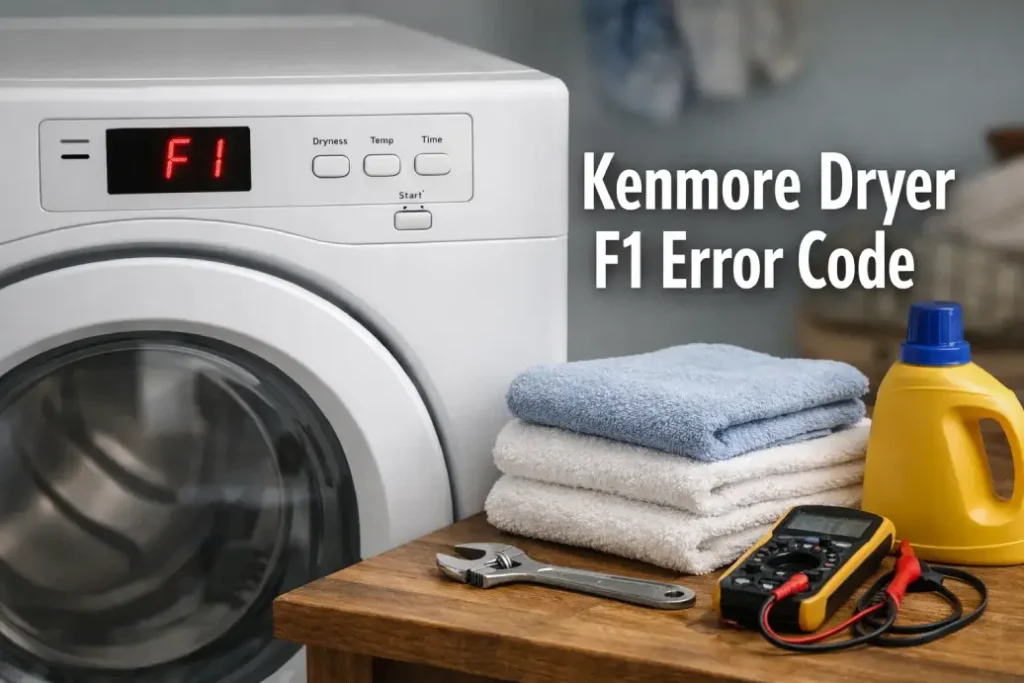
If your Kenmore dryer suddenly stops in the middle of a cycle and displays the F1 error code, don’t assume the appliance has reached the end of its life. While the code often points to a problem with the electronic control system, it doesn’t always mean the main control board has failed.
In many cases, the error is caused by overheating, loose electrical connections, voltage fluctuations, or poor airflow that gradually damages sensitive electronic components. Because several different problems can produce the same error code, replacing expensive parts without proper troubleshooting often wastes both time and money.
This guide explains what the Kenmore dryer F1 error means, which components are most commonly responsible, and the safest way to diagnose the problem before deciding whether professional repair is necessary.
What Does the Kenmore Dryer F1 Error Code Mean?
On many Kenmore dryers manufactured by Whirlpool, the F1 error indicates that the main electronic control board has detected an internal fault or lost communication with one of its circuits.
The electronic control board acts as the dryer’s central computer. It monitors sensors, controls the heating element, manages motor operation, and coordinates every stage of the drying cycle. When it receives information that falls outside its expected operating range, it interrupts the cycle and displays the F1 code to prevent further damage.
Although the control board is frequently responsible, the board itself isn’t always defective. A poor electrical connection, unstable power supply, overheating, or damaged wiring can trigger the same warning.
Common Symptoms That Often Appear With F1
- The dryer starts but shuts off after a few minutes.
- The display begins flashing and beeping unexpectedly.
- The cycle timer freezes or resets itself.
- The drum tumbles but produces little or no heat.
- The dryer refuses to start until power is disconnected.
- The error disappears temporarily after unplugging the appliance but returns during the next cycle.

If several of these symptoms appear together, the issue is usually related to the electronic control system rather than the heating element or thermal fuse alone.
What Causes the F1 Error?
Although the display shows only one code, several different failures can produce it. Understanding the possible causes makes troubleshooting much easier.
1. Failing Electronic Control Board
The control board contains dozens of electronic components that experience repeated heating and cooling during every drying cycle. Over time, solder joints may crack, relays can wear out, and capacitors begin to deteriorate.
When this happens, the board may operate normally for several minutes before suddenly shutting down and displaying the F1 code.
2. Loose Wiring Connections
Every drying cycle creates vibration. After years of operation, electrical connectors may loosen slightly, creating intermittent communication problems between the control board and other components.
Even a connector that appears fully seated can develop oxidation that increases electrical resistance.
Poor airflow is one of the most overlooked causes of electronic failures. When lint blocks the exhaust vent, hot air remains trapped inside the cabinet much longer than intended. Repeated exposure to excessive heat accelerates wear on the control board and may eventually trigger F1 errors. Voltage spikes, improper grounding, or unstable household electrical service can confuse sensitive electronic controls. If the dryer recently experienced a power outage or electrical surge, performing a complete reset may temporarily restore normal operation. Some Kenmore models separate the display panel from the main machine control. If communication between these two boards becomes unreliable, the control system may register an F1 fault even though the primary control board remains functional. Before opening the dryer, try resetting the electronic control. If the dryer completes the cycle normally, the fault may have been caused by a temporary software or voltage issue. If the F1 error returns immediately, continue with the remaining checks. Many homeowners underestimate how much airflow affects electronic reliability. A restricted exhaust vent causes temperatures inside the cabinet to rise significantly, exposing the control board to unnecessary heat during every cycle. Before assuming the control board has failed, inspect the entire vent system. Even if cleaning the vent doesn’t immediately eliminate the F1 error, improving airflow helps protect replacement electronic components from premature failure. After disconnecting power, remove the top panel to access the electronic control area. Carefully inspect every wiring connector attached to the control board. Intermittent F1 errors are often traced to poor electrical connections rather than defective electronics. If all wiring appears secure, perform a careful visual inspection of the electronic control board. You don’t need special tools to spot obvious damage. Many failed control boards show visible signs that indicate overheating or electrical failure. If any of these conditions are present, replacing the control board is usually more practical than attempting to repair individual electronic components. Many homeowners immediately suspect the thermal fuse because it is one of the most common dryer failures. However, a blown thermal fuse usually prevents the dryer from starting altogether rather than displaying an F1 error. That said, overheating severe enough to damage a thermal fuse can also shorten the life of the electronic control board. If both components fail around the same time, poor airflow is often the underlying cause. For this reason, replacing only the failed part without cleaning the vent system may allow the same problem to return. Replacing the electronic control board becomes the most likely solution if the following conditions are true: Modern control boards cannot usually be repaired economically in the field. In most situations, replacement of the complete board is the recommended repair. The total repair cost depends on the exact Kenmore model and the component that has failed. If the dryer is relatively new and otherwise in good condition, replacing the control board is usually less expensive than purchasing a new appliance. Although several troubleshooting steps are safe for homeowners, certain situations require professional service. A qualified technician can verify the diagnosis using the factory service sheet and electrical measurements before replacing expensive components. While electronic components eventually wear out, proper maintenance can significantly reduce the likelihood of premature failure. Keeping the dryer cooler during normal operation reduces stress on the electronic control board and helps extend its service life. No. If the dryer repeatedly displays the F1 code, continuing to operate it may cause additional damage to the electronic control system or create overheating problems. A power reset only clears temporary electronic faults. If the code returns during the next few cycles, an underlying problem still exists. No. Loose wiring, poor ventilation, power supply problems, or communication faults between electronic components can all trigger the same code. Yes. Restricted airflow traps excessive heat inside the dryer cabinet, accelerating wear on relays, capacitors, and solder joints located on the control board. Many electronic control boards operate reliably for 10 years or more. However, heavy usage, poor ventilation, and electrical surges can shorten their lifespan considerably. The Kenmore dryer F1 error code should be viewed as an electronic system warning rather than a simple nuisance message. Although a defective control board is one of the most common causes, it’s important to eliminate easier problems—such as airflow restrictions, loose wiring, or unstable electrical power—before replacing expensive parts. Begin with the basic checks, inspect the vent system, verify all wiring connections, and examine the control board for visible heat damage. In many cases, this systematic approach identifies the real cause of the problem while avoiding unnecessary repairs. If the error continues after completing these steps, professional diagnosis and replacement of the electronic control board is usually the most reliable long-term solution.4. Electrical Power Problems
5. User Interface Failure
Step 1 — Perform a Complete Power Reset
Step 2 — Inspect the Dryer Vent System

Step 3 — Inspect the Control Board Connections
Step 4 — Look for Signs of Heat Damage
Can a Thermal Fuse Cause an F1 Error?
When Should the Control Board Be Replaced?
Typical Repair Cost
Repair
Typical Cost
Professional diagnostic visit
$80–$150
Electronic control board replacement
$220–$500
Wire harness repair
$100–$250
Complete dryer vent cleaning
$120–$250
When to Call a Professional
How to Prevent the F1 Error in the Future
Frequently Asked Questions
Can I continue using the dryer with the F1 error?
Will unplugging the dryer permanently fix the error?
Does the F1 code always mean the control board is bad?
Can poor airflow really damage electronics?
How long does a Kenmore control board typically last?
Final Thoughts