

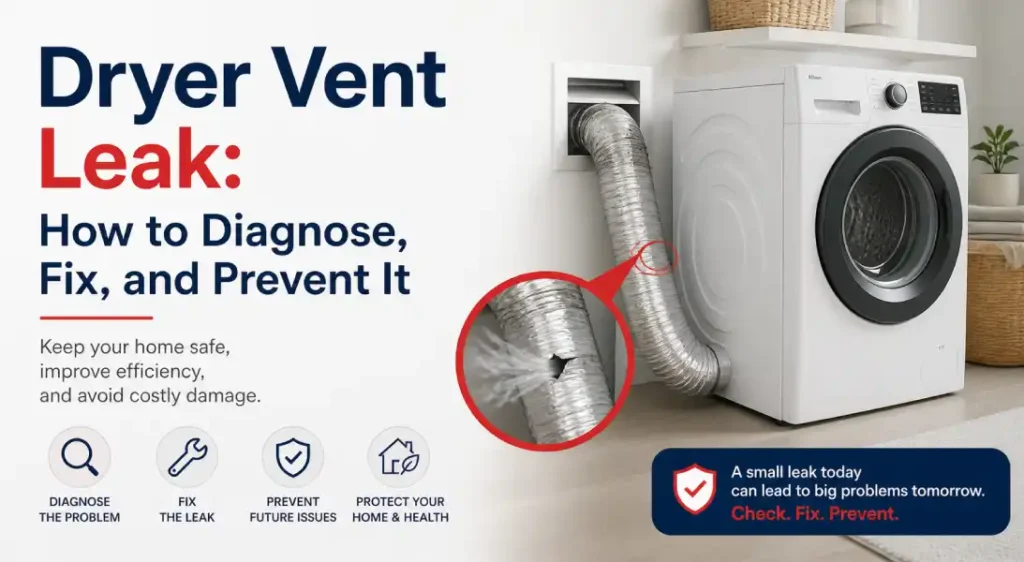
A leaking dryer vent can quietly damage your home for months before you notice it. Hidden moisture builds up inside walls and ceilings, leading to mold, structural damage, and even fire hazards.
What is a dryer vent leak?
A dryer vent leak occurs when hot, moist air escapes from the duct system before reaching the outside of your home. Instead of being safely exhausted, this air carries lint and humidity into walls, attics, or living spaces.
This reduces vent efficiency, restricts airflow, and increases drying time — all while creating ideal conditions for mold and damage.
7 warning signs of a dryer vent leak
If your dryer vent is leaking, you’ll likely notice these symptoms:
- Musty or damp smell in the laundry room
- Moisture stains on walls or ceilings
- Condensation forming on ductwork
- Weak airflow from the exterior vent
- Clothes taking longer to dry
- Sudden increase in energy bills
- Lint appearing in unusual areas
These signs often develop slowly, which makes early detection critical.
What causes a dryer vent leak?
Understanding the cause helps you fix the issue permanently instead of masking symptoms.
1. Loose or unsealed joints
Over time, connections between duct sections can loosen, allowing air to escape.
2. Damaged exterior vent cap
Cracked hoods or faulty dampers allow backdraft and moisture intrusion.
3. Airflow restriction
Lint accumulation and long duct runs reduce airflow, forcing air out through weak points.
4. Incorrect duct material
Flexible foil or plastic ducts trap lint and tear easily. Rigid metal ducts provide better airflow and durability.
5. Lack of insulation
Cold environments (like attics) cause condensation when warm air passes through uninsulated ducts.
6. Poor installation layout
Too many bends and long runs reduce efficiency and increase pressure inside the system.
How to diagnose a dryer vent leak
Quick check (2–5 minutes)
- Run the dryer on high heat
- Hold a tissue near duct joints
- Look for air movement or fluttering
- Check walls and ceilings for damp spots
- Inspect airflow outside the home
Weak airflow or visible moisture usually confirms a problem.
Advanced diagnosis
For more accurate results:
- Use a moisture meter to detect hidden dampness
- Use a thermal camera to identify cold or wet areas
- Inspect attic or crawlspace ductwork
How to fix a dryer vent leak
DIY fix (for minor leaks)
If the problem is accessible and not severe:
- Tighten all clamps and connections
- Seal joints with UL-listed foil tape
- Apply duct mastic for airtight sealing
- Replace small damaged sections
- Straighten and shorten duct path if possible
Professional repair (recommended for serious issues)
You should call a specialist if:
- Moisture damage is visible
- Mold is present
- Duct runs through walls or ceilings
- Airflow is severely restricted
- You have a gas dryer with backdraft risk
Professional repairs may include full duct replacement, rerouting, insulation, and airflow optimization.
Real case example
In one residential property, a leaking dryer vent in the attic caused condensation buildup over several months. The homeowner noticed a musty smell but ignored it. Eventually, mold developed inside the insulation and drywall.
After inspection, the issue was traced to:
- an uninsulated duct
- multiple loose joints
- excessive duct length
The solution involved replacing the duct with rigid metal, sealing all joints, and adding insulation. The problem was fully resolved, and drying efficiency improved by over 30%.
Common problems and solutions
| Problem | Cause | Solution |
|---|---|---|
| Moisture on wall | Leaking joint | Seal connections |
| Weak airflow | Lint blockage | Clean vent system |
| Condensation | Cold duct | Add insulation |
| Mold smell | Hidden leak | Replace damaged section |
| Water near dryer | Low spot in duct | Fix slope |
How to prevent a dryer vent leak
Preventative maintenance is the most effective long-term solution.
Best practices:
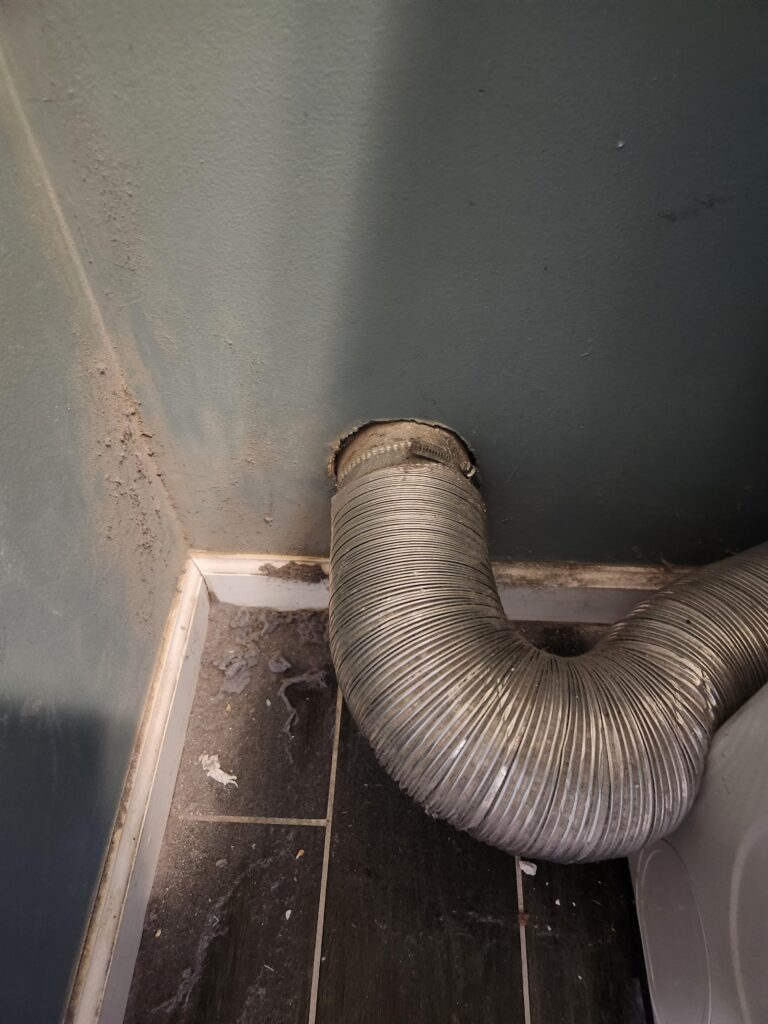
- Clean the lint screen after every load
- Clean the vent system annually
- Use rigid metal ducts instead of flexible foil
- Keep duct runs short and straight
- Insulate ducts in cold areas
- Check exterior vent cap regularly
- Ensure proper airflow and vent efficiency
Safety and code recommendations
- Use 4-inch smooth metal ducts
- Avoid plastic or thin foil ducts
- Do not connect dryer vents to shared systems
- Follow manufacturer limits for duct length
- Ensure proper exhaust airflow
A properly installed system significantly reduces fire risk and improves performance.
FAQ
Is a dryer vent leak dangerous?
Yes. It can cause mold growth, structural damage, and increase fire risk due to lint accumulation.
Why is my dryer vent leaking water?
This is usually caused by condensation forming inside the duct due to poor insulation or restricted airflow.
Can I fix a dryer vent leak myself?
Small leaks can be fixed DIY. Larger or hidden issues require professional repair.
How often should I clean my dryer vent?
At least once a year, or more often with frequent use.
What is the best duct material?
Rigid metal ducts are the safest and most efficient option.