


Content:
- Quick Answer
- Why Dryers Leak Water
- Common Signs of Dryer Condensation Leaks
- How Dryer Leaks Can Damage Your Home
- Main Causes of Dryer Water Leaks
- Quick Reference Table
- Step-by-Step Troubleshooting Guide
- How to Fix Dryer Condensation Leaks
- When to Call a Professional
- How to Prevent Future Dryer Leaks
- Best Dryer Vent Installation Practices
- Frequently Asked Questions
- Final Thoughts
Quick Answer
A dryer leaking water is usually caused by condensation buildup inside the vent hose or duct system. Common causes include clogged vents, crushed hoses, improper vent slope, poor airflow, damaged dryer ducts, or cold vent pipes creating excess moisture condensation.
If you notice puddles under or behind your dryer, it’s easy to assume a plumbing leak is nearby. But dryers can create water problems too — especially when hot moist air cannot vent properly outdoors.
Instead of escaping outside, humid air cools inside the duct system and turns into water droplets. Over time, that moisture builds up inside hoses, vent pipes, walls, or even the dryer cabinet itself.
This article was reviewed by experienced dryer repair specialists servicing Whirlpool, Samsung, LG, GE, Maytag, Bosch, Frigidaire, and Electrolux dryers throughout New York City.
Why Dryers Leak Water
Dryers generate hot humid air during every cycle. That air must travel efficiently through the vent system and exit outdoors.
When airflow becomes restricted, several things happen:
- Moisture stays trapped inside the vent
- Hot air cools too quickly
- Condensation forms inside ducts
- Water pools inside low spots or damaged hoses
- Leaks eventually appear under or behind the dryer
In many cases, the dryer itself isn’t technically “leaking” — the vent system is failing to remove humidity correctly.
Common Signs of Dryer Condensation Leaks
| Warning Sign | What It Usually Means |
|---|---|
| Water under dryer | Condensation trapped in vent system |
| Laundry room feels humid | Poor vent airflow |
| Windows fog during drying | Moist air leaking indoors |
| Dry clothes take longer | Vent blockage or restricted airflow |
| Musty odor near dryer | Moisture buildup and mildew |
How Dryer Leaks Can Damage Your Home
Even small condensation leaks can create major long-term damage.
- Warped laminate or vinyl flooring
- Mold growth behind walls or baseboards
- Rust inside the dryer cabinet
- Wet insulation in crawlspaces or walls
- Higher electric bills from poor airflow
- Premature heating element wear
Over time, restricted dryer airflow also increases fire risk because lint and moisture often collect together inside vent systems.
Main Causes of Dryer Water Leaks
Blocked Dryer Vent
The most common cause is lint buildup restricting airflow inside the dryer vent.
- Exterior vent flaps become clogged
- Lint builds up inside elbows and long vent runs
- Bird nests block exterior vent caps
- Airflow slows and condensation forms
Damaged or Loose Dryer Hose
Cracked, crushed, or disconnected hoses allow moist air to escape indoors where it cools into water droplets.
- Loose clamps
- Kinked vent hoses
- Crushed flexible ducts
- Punctures or small holes
Improper Vent Slope
Dryer vents should slope slightly toward the exterior.
If the vent line sags or tilts backward:
- Condensation pools inside the duct
- Water flows back toward the dryer
- Leaks appear after long cycles
Cold Vent Pipes
Uninsulated ducts running through attics, crawlspaces, garages, or exterior walls cool hot exhaust air too quickly.
This causes heavy condensation inside the vent system.
Quick Reference Table
| Cause | Typical Symptoms | What to Check First | Risk if Ignored |
|---|---|---|---|
| Blocked vent | Long dry times, humidity | Exterior airflow | Mold and overheating |
| Loose or damaged hose | Water behind dryer | Hose condition and clamps | Wall damage and mildew |
| Improper vent slope | Intermittent puddles | Low spots in vent line | Standing water inside duct |
| Cold vent duct | Condensation outside vent | Missing insulation | Hidden moisture damage |
Step-by-Step Troubleshooting Guide
Safety First: Always unplug the dryer before inspecting hoses, vents, or internal airflow systems.
- Pull the dryer away from the wall.
Inspect the hose for visible damage or crushing. - Check vent airflow outside.
The exterior flap should open fully during operation. - Inspect for lint buildup.
Check inside the hose and vent openings. - Look for moisture inside the duct.
Water inside the hose confirms condensation problems. - Verify vent slope.
The vent should slope slightly downward toward the exterior. - Inspect cold vent areas.
Check for missing insulation in attics or crawlspaces.
How to Fix Dryer Condensation Leaks
Clean the Dryer Vent
|
Replace Damaged Hoses
|
Improve Vent Slope
|
Insulate Cold Ducts
|
When to Call a Professional
Professional dryer repair is recommended if:
- Leaks continue after vent cleaning
- The vent runs behind walls
- You see internal rust or electrical issues
- Dryer airflow remains weak
- The dryer shows error codes
- The vent system design appears incorrect
Schedule professional dryer repair in New York
Important:
Restricted dryer vents not only cause condensation leaks — they also significantly increase dryer overheating and fire risk.
How to Prevent Future Dryer Leaks
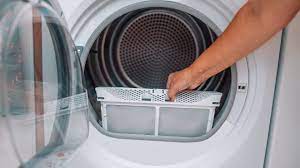
- Clean lint filters after every load
- Vacuum vent systems every few months
- Schedule annual vent cleanings
- Maintain 4–6 inches of wall clearance
- Replace damaged hoses immediately
- Watch for longer drying times
Best Dryer Vent Installation Practices
| Best Practice | Why It Matters |
|---|---|
| Use rigid or semi-rigid metal ducting | Improves airflow and safety |
| Keep vent runs short | Reduces condensation buildup |
| Avoid excessive elbows | Prevents airflow restriction |
| Insulate cold vent sections | Prevents moisture formation |
Frequently Asked Questions
Why is my dryer leaking water underneath?
Most dryer leaks are caused by condensation trapped inside blocked or poorly installed vent systems.
Can a clogged dryer vent cause water leaks?
Yes. Restricted airflow traps moisture inside the vent where it condenses into water.
Why does my laundry room feel humid when the dryer runs?
This usually indicates moist exhaust air is escaping indoors due to vent leaks or blockages.
Should dryer vents be insulated?
Yes — especially if they pass through attics, crawlspaces, garages, or cold wall cavities.
Can dryer condensation cause mold?
Absolutely. Repeated moisture buildup behind walls or flooring can quickly lead to mold growth.
Final Thoughts
Dryer condensation leaks are usually caused by airflow problems, blocked vents, damaged hoses, poor installation, or cold vent systems.
Fortunately, many issues can be solved through proper vent cleaning, hose replacement, insulation improvements, and correcting vent design problems.
If leaks continue after basic troubleshooting, professional dryer repair can help prevent larger moisture damage, overheating problems, and dangerous airflow restrictions.
Annual dryer vent cleaning is one of the most effective ways to improve dryer performance, reduce energy costs, and prevent condensation leaks.