
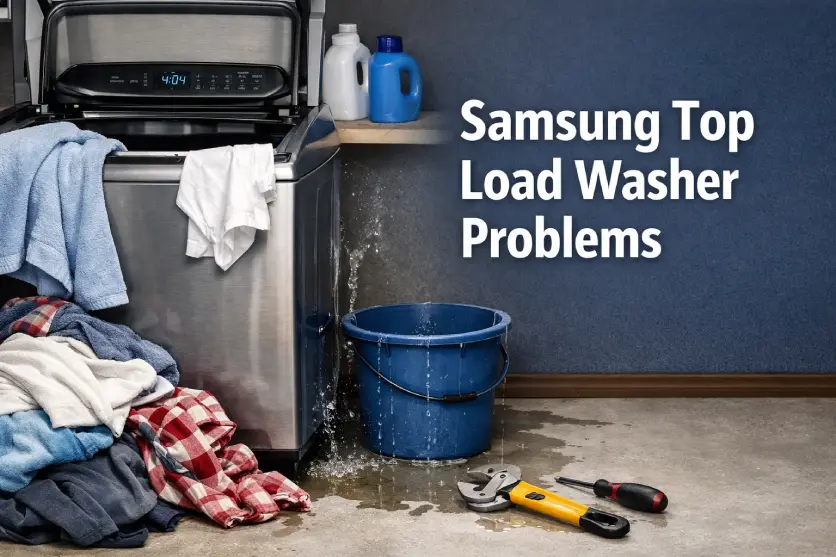
The most frequent common samsung washer issues include excessive vibration, failure to spin, draining problems, and unexpected cycle interruptions.
Samsung top load washers are generally reliable, but like any appliance, they can develop faults due to wear, improper loading, detergent misuse, or blocked components. Understanding the root cause helps you fix small issues early before they turn into expensive repairs.
Samsung Washer Not Spinning Causes
If your washer completes the wash phase but clothes remain wet, spin failure is one of the most common complaints.
Typical causes include:
- Lid switch failure preventing spin activation
- Worn or loose drive belt (on belt-driven models)
- Load imbalance detection stopping high-speed rotation
- Electronic control board errors
- Drain problems preventing spin start
- Faulty motor or hall sensor
In many cases, simply redistributing the laundry or cleaning the drain filter can restore normal operation.
Excessive Vibration and Walking
Top load washers can shake or “walk” across the floor when something is wrong.
Possible reasons:
- Uneven flooring or improper leveling
- Worn suspension rods
- Overloading with heavy items like blankets
- Shipping bolts not removed (on new installations)
- Drum imbalance sensor triggering repeated retries
If vibration becomes severe, it may damage internal components or loosen electrical connections.
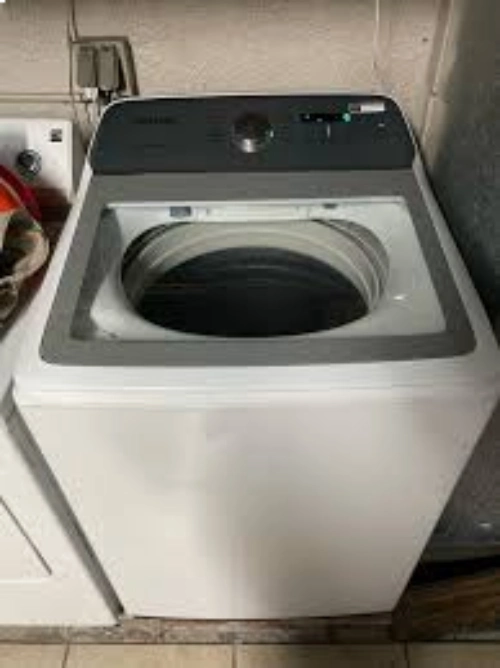
Washer Not Draining Properly
Water remaining in the tub after a cycle is another frequent issue.
Common causes:
- Clogged drain pump filter
- Kinked or blocked drain hose
- Coin or debris stuck in the pump impeller
- Control board not sending drain command
- Frozen or slow household drainage
Slow draining can prevent the washer from entering the spin cycle, making clothes come out soaking wet.
Washer Not Starting or Stopping Mid-Cycle
If the washer refuses to start or pauses unexpectedly, electrical or sensor-related issues are often responsible.
Check for:
- Loose power cord or tripped breaker
- Faulty door/lid lock mechanism
- Overheating protection activation
- Software glitch requiring reset
- Water level sensor malfunction
A simple power reset (unplugging for 5 minutes) can sometimes clear temporary control errors.
Problem Table
| Problem | Cause | Fix |
|---|---|---|
| Won’t start | Power issue | Reset washer or check outlet |
| Loud spin | Suspension wear | Replace suspension rods |
| Stops draining | Pump clog | Clean filter and hose |
| Error codes | Sensor fault | Run diagnostic mode |
Common Samsung Error Codes
Many Samsung top load washers display helpful error messages.
Examples include:
- UB / UE → Unbalanced load
- 4C → Water supply issue
- 5C → Drain blockage
- LC → Leak detected
- DC → Lid lock problem
Understanding these codes can save time and help you decide whether the issue is DIY-friendly or requires professional service.
Maintenance Tips to Prevent Problems
Preventive care significantly reduces the chance of breakdown.
Helpful practices:
- Avoid overloading the drum
- Use the correct HE detergent amount
- Clean the drain filter every month
- Leave lid open after washing to prevent odor
- Check pockets for coins and small objects
- Run tub clean cycle periodically
Routine maintenance helps extend washer lifespan and maintain cleaning performance.
When to Call a Technician
Some faults require professional repair, especially when they involve:
- Burning smells from the motor
- Repeated error codes after reset
- Water leaking from the base
- Loud grinding or metal noises
- Washer shutting off during spin
Ignoring these warning signs can lead to motor damage, wiring failure, or control board burnout.
Final Advice
Ignoring samsung top load washer problems may lead to more serious mechanical or electrical damage. Early diagnosis and timely repair are usually much cheaper than replacing the entire appliance.