

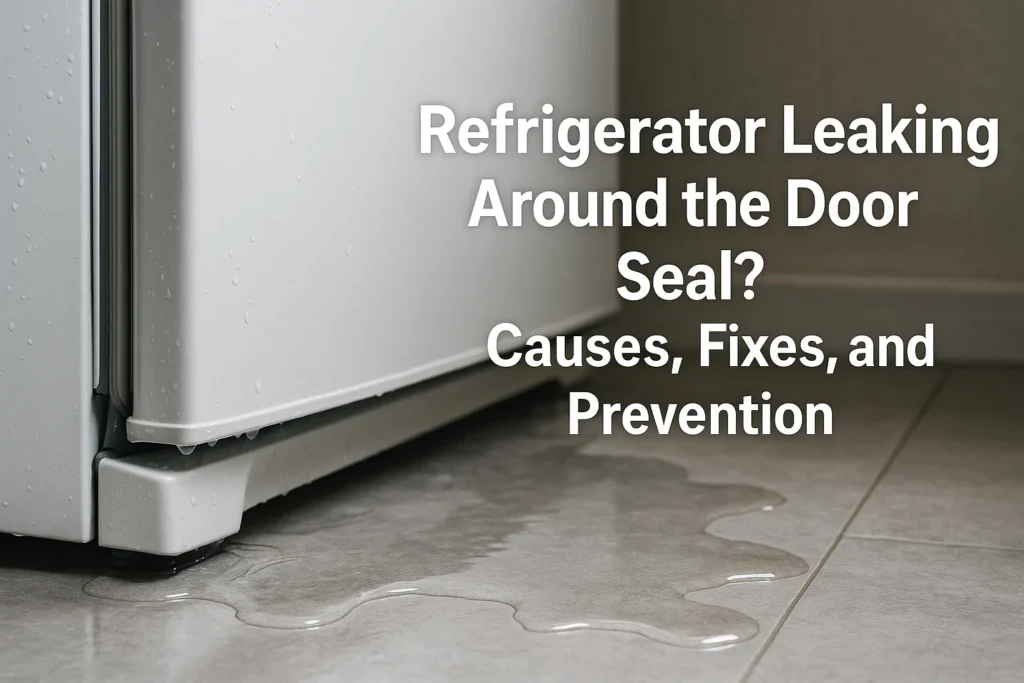
Water Around Your Fridge Door? Here’s What It Really Means
If you notice water pooling around your refrigerator door seal, don’t ignore it.
What looks like a minor leak is often a warning sign that your fridge is no longer sealing properly. And once that airtight barrier is compromised, several problems can develop quickly:
- Warm air enters the fridge
- Condensation builds up
- The compressor works harder
- Energy bills increase
- Food spoils faster
The good news: in many cases, you can fix this in under 30 minutes.
What Is a Refrigerator Door Seal (Gasket)?
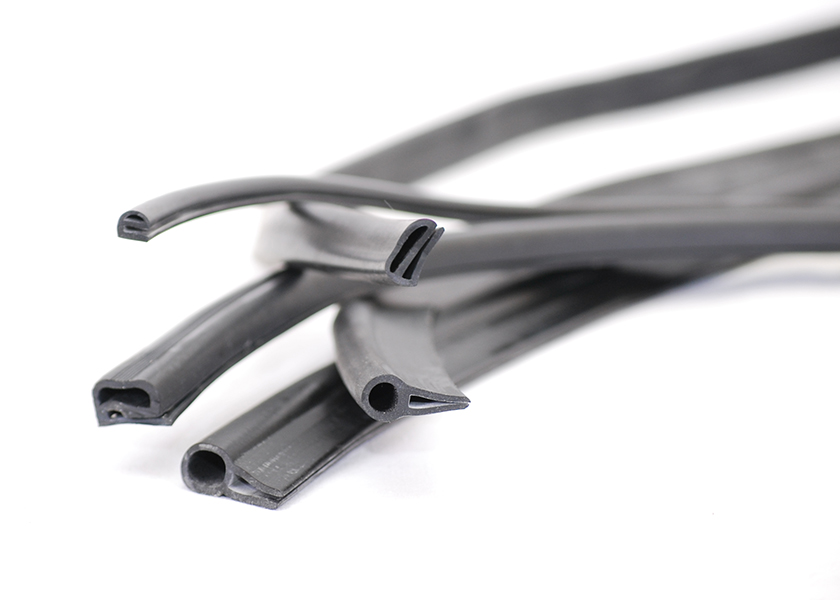
The door seal—also called a gasket—is a flexible rubber strip that lines the edge of your refrigerator door. It usually contains a magnetic core that keeps the door tightly closed.
A properly functioning gasket:
- Maintains a stable internal temperature
- Prevents moisture and condensation
- Improves energy efficiency
Most modern refrigerators use magnetic rubber or vinyl gaskets designed to create an airtight seal when the door is closed.
Why Your Refrigerator Is Leaking Around the Door Seal (7 Real Causes)
1. Dirty or Sticky Gasket
 Dust, grease, food residue, or mold can prevent the seal from closing tightly.
2. Cracked or Torn Seal
Even small tears allow humid air inside → condensation forms → water appears.
3. Warped or Deformed Gasket
Heat exposure, aging, or leaving the door open too long can cause the seal to lose its shape.
4. Improper Installation
If the gasket isn’t fully seated, gaps often form—especially in corners.
5. Refrigerator Not Level
If the fridge tilts forward, the door won’t close completely.
6. Clogged Defrost Drain
Water from defrost cycles backs up and may appear near the door area.
7. Temperature or Airflow Problems
 Incorrect settings or blocked vents increase internal humidity.
How to Tell If the Door Seal Is the Problem
Quick Visual Inspection
Check for:
- Cracks or splits
- Gaps along the edge
- Flattened or hardened rubber
- Mold or buildup
The Paper Test (30 Seconds)
Close the door on a piece of paper and try to pull it out:
- Strong resistance → seal is working
- Slides out easily → seal is weak
Hidden Warning Signs
- Water under drawers
- Condensation on shelves
- Fridge running constantly
How to Fix a Leaking Refrigerator Door Seal
Step 1: Clean the Gasket (Most Common Fix)
You’ll need:
- Warm water + dish soap or vinegar
- Soft brush or toothbrush
- Microfiber cloth
Clean thoroughly:
- Inside grooves
- Corners
- Around the magnetic strip
This alone fixes a large percentage of leaks.
Step 2: Repair Minor Damage
If the seal is only slightly damaged:
- Apply clear silicone to small cracks
- Use a hairdryer (low heat) to reshape warped areas
- Apply food-safe silicone lubricant to restore flexibility
Step 3: Replace the Door Seal
If cleaning doesn’t solve the problem, replacement is the best option.
How to replace it:
- Find your refrigerator model number
- Order a compatible gasket
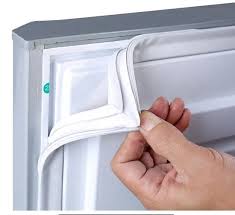
- Remove the old seal
- Install the new one (top → sides → bottom)
- Test using the paper method
Tip: Warm the new gasket before installation to remove folds and improve fit.
Step 4: Level Your Refrigerator
- Adjust the front legs
- Ensure a slight backward tilt
- Check door alignment
A properly leveled fridge will close more securely and seal better.
When DIY Fixes Aren’t Enough
Call a professional if:
- The leak continues after replacing the gasket
- The door is misaligned or sagging
- There is ice buildup inside
- The fridge runs constantly
Sometimes the real issue lies in internal components, like the defrost system.
How to Prevent Door Seal Leaks
Simple habits can save you time and money:
- Clean the gasket once a month
- Avoid overloading door shelves
- Keep temperature at 3–4°C (37–40°F)
- Don’t slam the door
- Inspect seals every few months
Prevention is always cheaper than repair.
FAQ
Can I glue a refrigerator gasket?
Only if it’s slightly detached. Worn or damaged seals should be replaced.
How often should I check the seal?
Quick check monthly, deep cleaning every 3–4 months.
Why is my fridge leaking if the seal looks fine?
Possible causes include:
- Clogged defrost drain
- Internal ice buildup
- Airflow issues
Are universal door seals reliable?
They can work, but model-specific gaskets provide a better fit and longer-lasting results.