
Your quiet kitchen suddenly sounds like a workshop? If your oven is making noise, it’s more than just annoying — it can be a sign that something inside needs attention. The good news: many noisy oven issues are easy to understand and sometimes even fix yourself.
Let’s break down the most common reasons why an oven makes noise, how to troubleshoot them safely, and when it’s smarter to book professional appliance repair.
Why Is Your Oven Making Noise?
Modern ovens include fans, heating elements, relays, and electronic components. Any of these can create unusual sounds when they begin to wear out or malfunction.
Typical noises include:
- Buzzing
- Humming
- Rattling
- Clicking
- Grinding
- Vibrating
Understanding the type of noise your oven makes is the first step toward solving the problem.
Common Causes of Oven Noise
1. Cooling Fan Problems
Many built-in ovens have a cooling fan that runs during and after cooking. If this fan becomes loose, dirty, or worn, it can cause:
- Loud humming
- Rattling sounds
- Intermittent vibration
DIY Tip:
Turn off and unplug the oven. Check if debris or grease buildup is blocking the fan vents. Cleaning vents can sometimes eliminate the noise completely.
2. Convection Fan Making Noise
If you use convection mode, the internal fan circulates hot air. Over time:
- Fan blades may bend
- Bearings can wear out
- Motor can become noisy
This often results in a grinding or whirring oven sound.
What you can try:
- Listen carefully — does the noise only happen in convection mode?
- If yes, the convection fan motor is likely the cause.
Replacing the fan motor is usually a professional repair job.
3. Loose Panels or Internal Parts
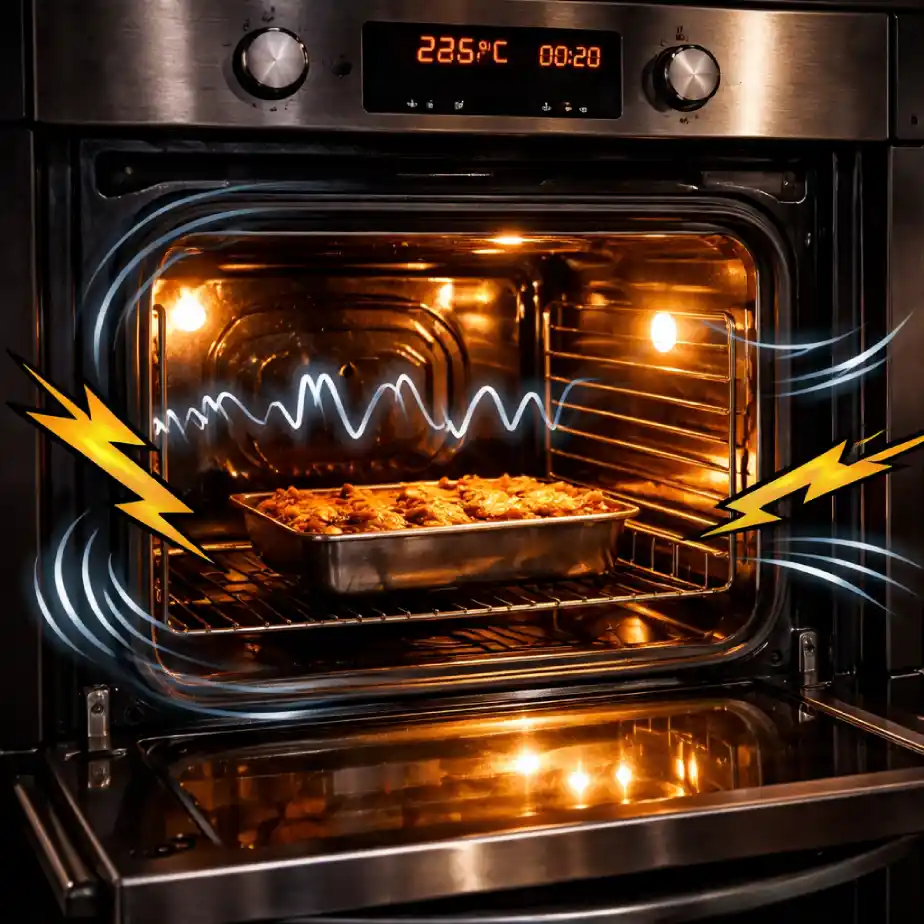
Sometimes the issue is surprisingly simple. Vibrations during heating cycles can loosen:
- Back panels
- Rack supports
- Fan covers
- Screws
This can cause metallic rattling or buzzing.
Quick check:
After the oven cools down, gently press different panels while it runs (with caution). If the sound changes — you’ve found the source.
4. Relay Board Clicking or Buzzing
Modern ovens use electronic control boards. A failing relay may produce:
- Constant buzzing
- Repeated clicking
- Electrical humming
This is not usually a DIY repair. Control board issues may affect temperature accuracy or safety.
5. Heating Element Noise
A heating element expanding during temperature changes can make:
- Popping sounds
- Light ticking
This is often normal, especially in older ovens. However, loud or sudden noises may indicate:
- Element damage
- Mounting issues
- Electrical faults
Oven Noise Troubleshooting
Here’s a quick reference to help identify what’s happening.
| Noise Type | Possible Cause | DIY Fix | Professional Repair Needed |
|---|---|---|---|
| Rattling | Loose panel or fan cover | Tighten screws | Sometimes |
| Grinding | Worn convection fan motor | No | Yes |
| Buzzing | Relay board or electrical issue | No | Yes |
| Humming | Cooling fan obstruction | Clean vents | Sometimes |
| Popping | Heat expansion of element | Usually normal | Rarely |
Is It Safe to Use a Noisy Oven?
It depends on the sound.
Usually safe:
- Light ticking
- Quiet fan hum
- Minor expansion noises
Potentially unsafe:
- Loud electrical buzzing
- Burning smell
- Grinding metal sounds
- Sudden vibration
If your oven making loud noise is accompanied by error codes or uneven heating — stop using it and arrange inspection.
Step-by-Step Basic Noise Check
Before calling for repair, try this simple process:
- Turn the oven off and let it cool completely.
- Remove racks and inspect for loose metal parts.
- Clean interior vents and fan areas.
- Run the oven in different modes (bake / convection / grill).
- Identify when exactly the noise starts.
This information helps technicians diagnose the issue faster — and may reduce repair costs.
When to Call a Professional
DIY is great — but ovens combine electricity, high heat, and complex electronics. You should book professional service if:
- Noise gets worse over time
- Oven stops heating properly
- Circuit breaker trips
- You hear grinding or loud buzzing
- The fan stops spinning
- There’s a burning or plastic smell
Technicians can safely replace:
- Fan motors
- Control boards
- Heating elements
- Temperature sensors
Timely repair often prevents more expensive damage later.
How to Prevent Oven Noise in the Future
A little maintenance goes a long way.
- Clean grease regularly
- Avoid slamming oven doors
- Don’t overload racks
- Check fan vents monthly
- Schedule professional inspection every few years
Quiet operation is usually a sign your appliance is healthy.
Final Thoughts
If your oven is making noise, don’t ignore it — but don’t panic either. Many sounds are harmless or easy to fix. By identifying the type of noise and performing simple checks, you may solve the problem yourself.
And when the issue involves internal components or electronics, calling a trusted appliance repair specialist ensures your oven stays safe, efficient, and ready for everyday cooking.