
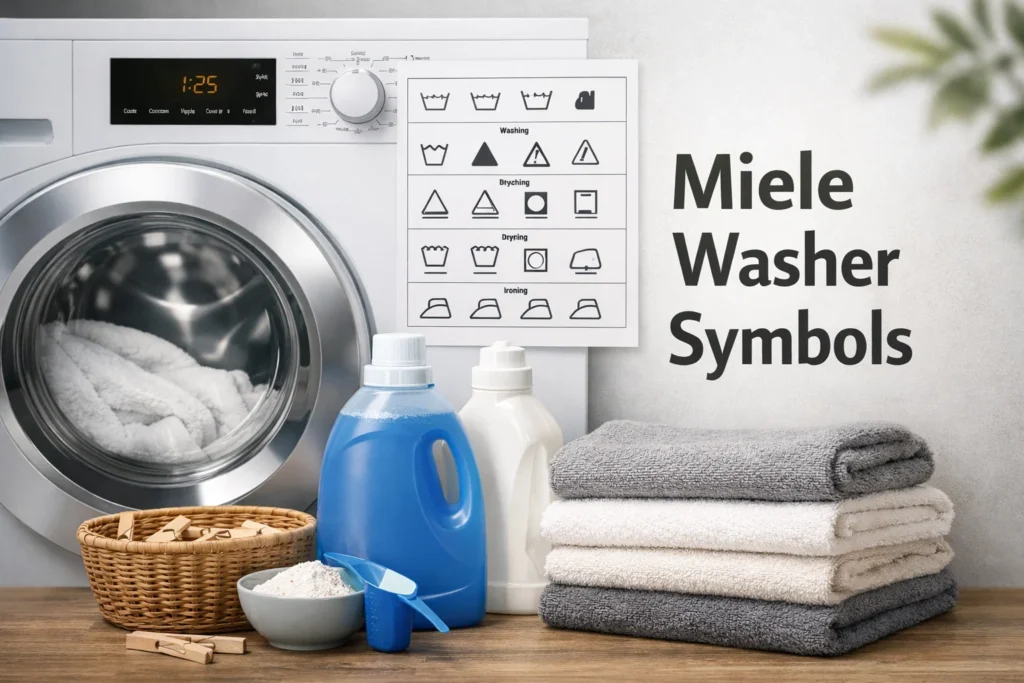
If you own a Miele washing machine or are trying to understand clothing care labels, learning Miele washer symbols is essential. These symbols help you choose the correct washing programme, temperature, drying method, ironing settings, and even professional cleaning options.
This complete guide explains all Miele washing machine symbols with real examples and practical tips to help you protect your clothes and improve washing performance.
What Are Miele Washer Symbols?
Miele washer symbols are internationally standardized icons that appear both on clothing care labels and on washing machine programme displays. They provide clear instructions on how garments should be washed, dried, ironed, bleached, or professionally cleaned.
Understanding these symbols helps you:
- Prevent fabric damage and shrinkage
- Extend garment lifespan
- Improve wash efficiency
- Reduce energy and water consumption
- Select the correct Miele programme
Washing Symbols Explained
The washing symbol is usually shown as a bucket icon. It may include numbers or additional markings that indicate temperature limits and agitation levels.

Normal agitation — Standard wash cycle suitable for durable fabrics such as cotton, linen, and towels.

Reduced agitation — Gentle washing motion designed for synthetic fabrics, blends, and easy-care garments.

Much reduced agitation — Extra delicate washing for fragile textiles like viscose or lightweight synthetics.

Hand wash — Garment should be washed by hand or using Miele Wool or Silk programmes.

Do not wash — Item must not be machine washed. Professional cleaning is recommended.
Miele Programme Symbols
Miele washing machines use programme icons to indicate fabric types and wash performance levels. Choosing the correct programme ensures optimal cleaning and fabric protection.
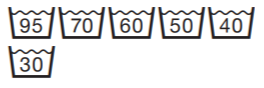
Cottons — Ideal for cotton, linen, bedding, towels, underwear, and durable garments.

Minimum Iron — Designed to reduce creasing on synthetics and blended fabrics.

Delicates — Very gentle washing action for lightweight fabrics and sensitive garments.

Woollens — Special wash rhythm that protects wool fibres and prevents felting.

Silks — Ultra-gentle cycle for silk and hand-wash fabrics.

Express 20 — Quick wash for lightly worn clothing.

Automatic Plus — Automatically adjusts water level, wash rhythm, and spin speed based on mixed loads.
Drying Symbols
Drying symbols help determine whether garments can be tumble dried and at what temperature.

Normal temperature — Safe for standard tumble drying cycles.

Low temperature — Gentle drying recommended for delicate fabrics.

Do not tumble dry — Air drying or flat drying is required.
Ironing Symbols
Ironing symbols indicate the maximum temperature setting that can be safely used.

Approx. 200°C — High heat suitable for cotton and linen.

Approx. 150°C — Medium heat for polyester blends and synthetics.

Approx. 110°C — Low heat for delicate fabrics.

Do not iron — Heat may permanently damage the fabric.
Professional Cleaning Symbols
Some garments require special cleaning processes.

Dry clean only — Professional dry cleaning required.

Dry clean (P) — Requires specific solvent-based cleaning.

Wet cleaning — Professional water-based cleaning allowed.

Do not dry clean — Avoid chemical cleaning methods.
Bleaching Symbols
Bleaching symbols indicate whether whitening agents can be safely used.

Any bleach allowed — Chlorine or oxygen bleach can be used.

Oxygen bleach only — Use non-chlorine bleach.

Do not bleach — Bleaching agents may damage the fabric.
Tips for Using Miele Washer Symbols Correctly
- Always check clothing care labels before washing
- Sort laundry by fabric type and colour
- Use gentle programmes for delicate garments
- Avoid high temperatures unless required
- Follow drying and ironing instructions carefully
Final Thoughts
Understanding Miele washer symbols ensures safer washing, better cleaning performance, and longer garment lifespan. Whether you’re selecting a wash programme, drying cycle, or ironing temperature, these symbols provide essential guidance for everyday laundry care.