


If your cookies brown on the bottom while the top stays pale, or your bread looks done outside but stays gummy inside, you might not have a recipe problem—you might have an oven accuracy problem. Learning how to calibrate oven temperature is one of the fastest ways to make baking and roasting predictable again.
This article explains what “oven calibration” actually means, how to check whether your oven runs hot or cold, and what you can do (even if your model doesn’t offer a simple calibration setting).
Why You Should Calibrate Oven Temperature (Even If the Oven Is “New”)
Many home ovens drift over time. Heating elements age, thermostats become less precise, door seals weaken, and temperature sensors can slowly lose accuracy. Even brand-new ovens can be off by 10–30°F (or more) depending on the model and installation.
When you calibrate oven temperature, you reduce the guesswork and gain consistency. That shows up as: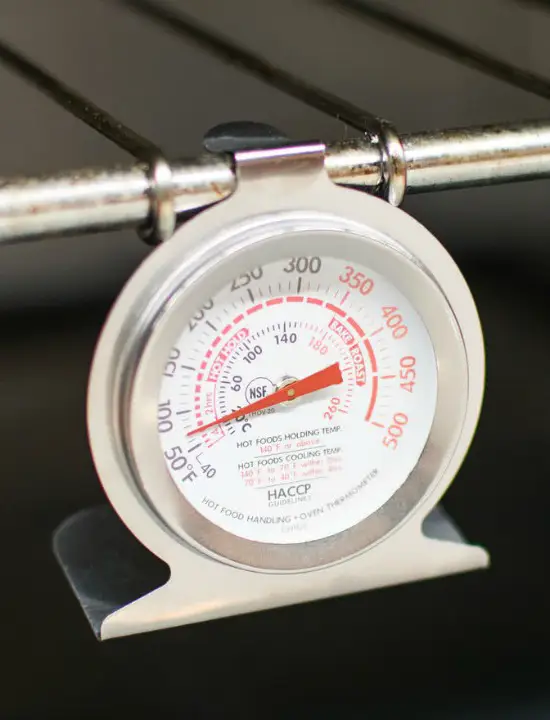
- More even browning on cookies and pastries
- Better rise and crumb structure for bread
- Less dried-out chicken or overcooked fish
- Predictable roasting times for vegetables and meats
What “Oven Calibration” Really Means
To calibrate oven temperature, you’re aligning the oven’s thermostat reading with the actual temperature inside the cavity. There are two common outcomes:
- Adjust the oven’s internal offset (best-case scenario): Many ovens let you change the thermostat calibration by a set number of degrees.
- Use a working correction (if no built-in adjustment): You learn your oven’s typical error and compensate (for example, set 365°F when you need 350°F).
Either way, the goal is the same: when you set 350°F, you get something close to 350°F in real conditions.
Step 1: Check Temperature Accuracy Before You Calibrate Oven Temperature
Use the right tool
A basic oven thermometer works, but a digital probe thermometer that can tolerate oven heat is often more precise. The key is to measure steady temperature—not just the moment it hits “preheat complete.”
How to run a simple test
- Place the thermometer in the center of the middle rack.
- Preheat the oven to 350°F (175°C).
- After the oven says it’s preheated, wait another 15–20 minutes.
- Record the temperature.
- Repeat readings every 5 minutes for 20 minutes (four readings total).
- Average the readings.
Ovens cycle—temperature rises above and falls below the target—so a single reading can be misleading. Averaging gives a much clearer picture.
If your average is 330°F, your oven runs about 20°F low. If it’s 375°F, it runs 25°F high. That’s exactly the information you need to calibrate oven temperature correctly.
Step 2: Calibrate Oven Temperature Using Built-In Settings (If Available)
Many modern electric ovens have an “Oven Temperature Calibration” or “Temp Offset” option in the settings menu. Others use a keypad sequence. The idea is similar across brands:
- You enter a calibration mode
- You set an offset (often ±10–35°F)
- The oven adjusts future temperature control automatically
Important: Some ovens only allow calibration in small increments (like 5°F). If your oven is off by 12°F, you might choose a 10°F correction and still keep a small mental adjustment.
Once you calibrate oven temperature, re-test at 350°F to confirm the average is closer to the target. 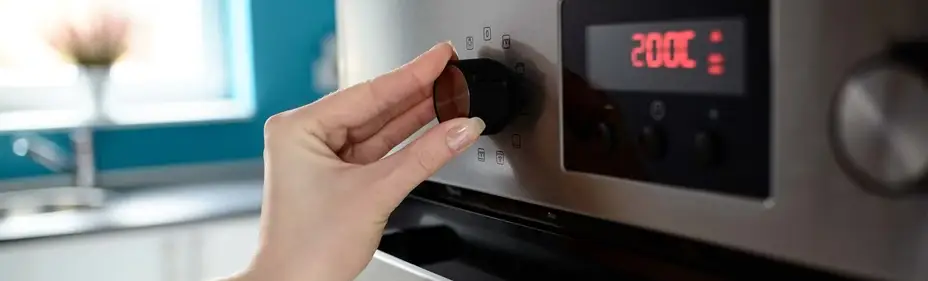
Step 3: If You Can’t Calibrate Oven Temperature Internally, Use a Reliable Workaround
Not every oven supports thermostat adjustments. In that case, you can still “calibrate” in practice by applying a consistent correction.
Example workaround
- You want 400°F
- Your oven runs 25°F hot
- Set the oven to 375°F to get close to a true 400°F average
This is still a real-world way to calibrate oven temperature, because it makes your cooking results consistent.
Make it easier: keep a quick reference note
Write down the offsets you’ve observed (e.g., “350°F runs 20°F low”) and keep it in your phone or taped inside a cabinet door.
Where Oven Temperature Errors Come From
If your tests show big swings or wildly inconsistent results, calibration might not be the only issue. Common causes include:
1) Hot spots and airflow issues
Many ovens heat unevenly. Convection helps, but even then, the back corner might be hotter than the front.
Tip: Rotate baking trays halfway through for recipes that demand even browning.
2) Rack placement
Top rack often browns faster; lower rack can over-crisp bottoms. Middle rack is usually the most neutral for tests and baking.
3) Door seal wear
A leaky gasket lets heat escape and forces longer cycles. That can throw off temperature stability.
4) Wrong pan choice
Dark pans absorb more heat and can make food seem “overbaked” even if temperature is accurate.
To calibrate oven temperature properly, you want a stable test setup: middle rack, minimal opening of the door, and consistent cookware.
How Often Should You Calibrate Oven Temperature?
A practical schedule:
- Every 6–12 months if you bake regularly
- Any time results suddenly change
- After moving (ovens can shift slightly after transport or re-leveling)
If you rely on precise baking—macarons, sourdough, pastries—it’s worth checking more often. A quick test can save hours of failed batches.
Quick Checklist: Calibrate Oven Temperature Like a Pro
- Test at 350°F with multiple readings
- Use the average, not a single number
- Adjust the oven’s calibration offset if available
- If not, apply a consistent manual correction
- Re-test to verify improvement
- Account for hot spots with rotation and rack choice
When you calibrate oven temperature, you’re not chasing perfection—you’re building repeatability. And repeatability is what makes recipes feel “easy” instead of unpredictable.