
Content:
- Quick Answer
- Why a New Ice Maker Stops Working
- Common Warning Signs
- Quick Causes & Solutions Table
- Water Supply Problems
- Water Filter Issues
- Freezer Temperature Problems
- How to Reset the Ice Maker
- DIY Troubleshooting Steps
- When to Call a Professional
- Frequently Asked Questions
- Final Thoughts
Quick Answer
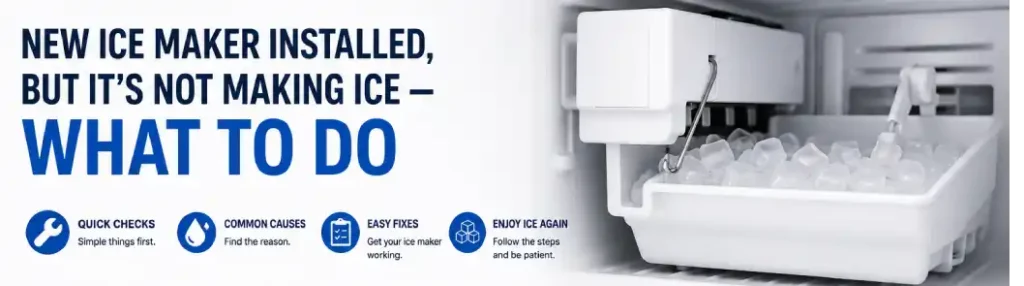
A newly installed ice maker that is not making ice is usually caused by water supply problems, clogged filters, frozen fill tubes, incorrect freezer temperatures, reset issues, or installation mistakes. In many cases, the ice maker simply needs proper water flow, colder temperatures, or a manual reset before it starts producing ice normally.
Most new refrigerator ice makers need several hours after installation before producing the first batch of ice. A completely full ice bin may take up to 24 hours.
This article was reviewed by experienced refrigerator repair technicians servicing Whirlpool, LG, Samsung, GE, Frigidaire, KitchenAid, Bosch, Sub-Zero, and Maytag refrigerators throughout New York City.
Why a New Ice Maker Stops Working
Installing a new ice maker should improve convenience, but several small issues can prevent the system from producing ice immediately after installation.
The most common issue is restricted water flow. If the refrigerator does not receive enough water, the ice mold cannot fill properly.
| Problem | How It Affects Ice Production |
|---|---|
| Closed water valve | No water reaches the ice maker |
| Kinked water line | Weak or restricted water flow |
| Clogged water filter | Ice maker fills slowly or not at all |
| Warm freezer | Ice cannot freeze properly |
| Frozen fill tube | Water blocked before reaching mold |
| Installation mistake | Ice maker cannot cycle correctly |
Common Warning Signs

- Ice bin remains completely empty
- Ice maker makes no sound during cycles
- Small or hollow ice cubes appear
- Water dispenser flow is weak
- Freezer feels slightly warm
- Ice maker status light flashes
- Water line vibrates but no ice forms
Quick Causes & Solutions Table
| Cause | Symptoms | Recommended Fix |
|---|---|---|
| Blocked water line | No water fill sounds | Inspect line and valve |
| Dirty water filter | Weak water flow | Replace filter |
| Warm freezer | Slow or no ice production | Lower freezer temperature |
| Frozen fill tube | Ice maker cycles without filling | Defrost fill tube |
| Control issue | Blinking lights or no response | Reset the ice maker |
Water Supply Problems
The water line is the first thing to inspect when a new ice maker fails to produce ice.
Check the Following:
- Water valve fully opened
- No kinks behind refrigerator
- Water line tightly connected
- Good household water pressure
Even a partially pinched line can reduce water flow enough to stop proper ice production.
Technician Tip: If the refrigerator water dispenser also feels weak, the issue is usually related to water supply or filtration.
Water Filter Issues
A clogged or improperly installed water filter is one of the most common causes of new ice maker problems.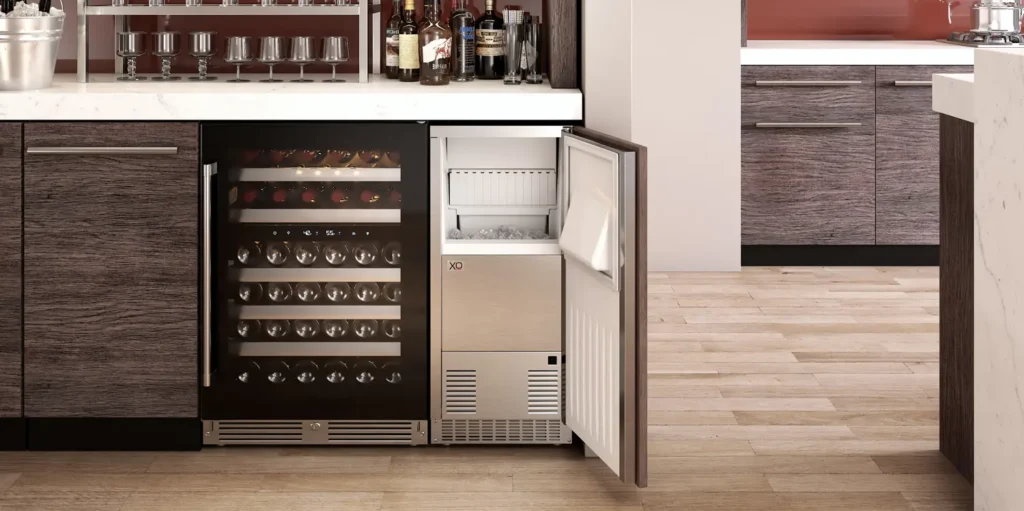
- Replace filters every 6 months
- Ensure the filter clicks into place fully
- Flush several gallons through the dispenser after replacement
- Remove trapped air from the system
Some refrigerators temporarily stop ice production when airflow or water pressure changes after filter installation.
Freezer Temperature Problems
Ice makers require freezer temperatures near 0°F (-18°C) to operate correctly.
| Freezer Temperature | Ice Maker Result |
|---|---|
| 0°F (-18°C) | Normal ice production |
| 5°F (-15°C) | Slow production possible |
| 10°F (-12°C) or warmer | Ice production may stop completely |
How to Reset the Ice Maker
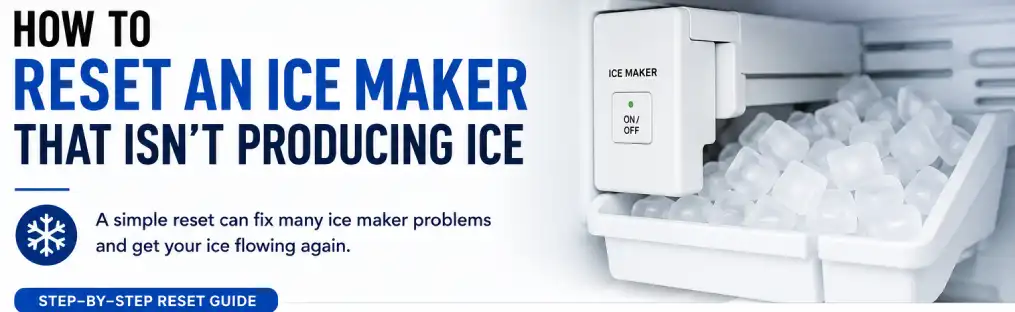
Many modern refrigerators include a dedicated reset or test button for the ice maker module.
DIY Troubleshooting Steps
Always unplug the refrigerator before inspecting wiring, frozen components, or water line connections.
- Check freezer temperature settings.
- Inspect the water supply valve.
- Replace or reseat the water filter.
- Look for frozen fill tube blockages.
- Reset the ice maker module.
- Inspect the shutoff arm or sensor.
- Allow several hours for ice production.
Most refrigerators require patience after installation. The first full ice production cycle can take several hours.
When to Call a Professional
Professional refrigerator repair is recommended if:
- The ice maker still will not fill with water
- The freezer temperature is correct but no ice forms
- You hear buzzing from the inlet valve
- The fill tube repeatedly freezes
- The refrigerator leaks water
- Error codes continue appearing
- The control board or sensor appears defective
Schedule professional refrigerator and ice maker repair in New York
Why Homeowners Choose Express Repair NY
- Same-day refrigerator repair service
- Experienced ice maker technicians
- Repairs for all refrigerator brands
- Fast diagnosis of water and sensor problems
- Professional installation corrections
Frequently Asked Questions
How long does a new ice maker take to start making ice?
Most new ice makers begin producing ice within several hours. A full ice bin may take up to 24 hours.
Why is my new ice maker not filling with water?
The most common causes are closed water valves, clogged filters, frozen fill tubes, or faulty inlet valves.
Can a water filter stop an ice maker from working?
Yes. Restricted water flow from a dirty or improperly installed filter can stop ice production completely.
What temperature should my freezer be for ice production?
Most ice makers work best around 0°F (-18°C).
Why does my ice maker click but not make ice?
This often indicates the ice maker motor is cycling but water is not entering the mold due to supply or valve issues.
Final Thoughts
A new ice maker that stops working is usually caused by water supply restrictions, filter issues, frozen fill tubes, or incorrect freezer temperatures rather than major refrigerator failure.
Fortunately, many ice maker issues can be solved through simple troubleshooting steps like resetting the system, improving airflow, replacing filters, and restoring proper water pressure.
If the problem continues after basic troubleshooting, professional refrigerator repair can quickly identify faulty valves, sensors, installation mistakes, or electronic failures before larger cooling issues develop.
Replacing refrigerator water filters every 6 months and keeping freezer temperatures near 0°F helps prevent most common ice maker failures.