
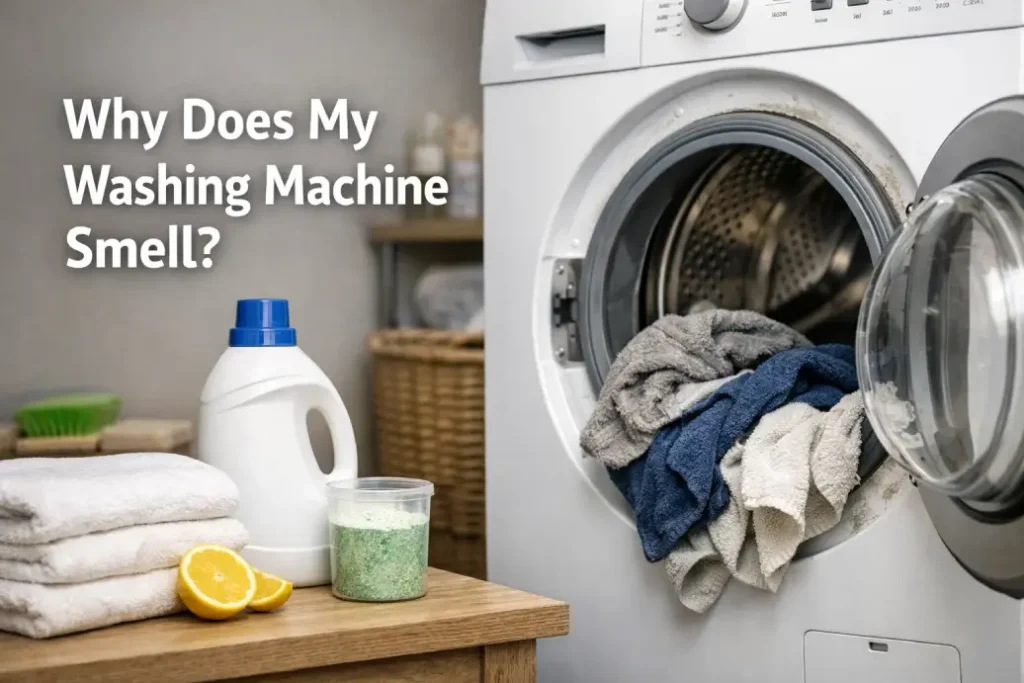
A washing machine is supposed to make clothes smell fresh. But sometimes the opposite happens — you open the door and are hit with a musty, sour, or even sewage-like odor. If you’re wondering why does my washing machine smell, you’re not alone. This is one of the most common appliance issues homeowners face.
The good news is that in many cases the problem is easy to fix. In this guide, you’ll learn the most common reasons why a washing machine smells bad, how to remove the odor, and when it’s better to call a professional technician.
Why Does My Washing Machine Smell?
If you’re asking yourself why does my washing machine smell, the cause is usually moisture, detergent buildup, or bacteria growth. Modern washing machines — especially high-efficiency models — use less water, which can allow residue to accumulate over time.
Here are the most common reasons a washing machine develops unpleasant odors.
1. Mold and Mildew Inside the Drum
Front-load washers are especially prone to mold growth. The rubber door gasket traps moisture, detergent residue, and lint, creating the perfect environment for mildew.
Signs this is the issue:
- Musty smell when opening the door
- Black spots on the rubber seal
- Odor that gets stronger after washing
Leaving the door closed after each wash cycle makes the problem worse.
2. Detergent and Fabric Softener Buildup
Using too much detergent is a surprisingly common mistake. Excess detergent doesn’t fully rinse away and forms a sticky film inside the washer.
This buildup can:
- trap dirt
- hold bacteria
- create unpleasant washing machine odors
High-efficiency washers require much less detergent than traditional machines.
3. Dirty Washing Machine Filter or Drain
Another reason why a washing machine smells bad is a clogged filter or slow drain line. Debris like lint, hair, coins, and soap residue can accumulate in the filter.
When water sits in these areas, bacteria begin to grow — producing unpleasant odors.
4. Standing Water in the Machine
If water doesn’t fully drain after a cycle, it can create a stagnant smell similar to dirty water or sewage.
Possible causes include:
- partially blocked drain hose
- clogged pump filter
- malfunctioning drain pump
In these situations, professional appliance repair may be required.
Common Washing Machine Odor Causes
| Cause | Typical Smell | How to Identify | Difficulty to Fix |
|---|---|---|---|
| Mold in rubber gasket | Musty, damp smell | Black spots on door seal | Easy |
| Detergent buildup | Sour or stale odor | Soap residue inside drum | Easy |
| Clogged drain filter | Dirty water smell | Slow draining washer | Medium |
| Standing water | Sewage-like odor | Water left after cycle | Medium |
| Bacteria in drum | Strong mildew smell | Odor transfers to clothes | Easy |
How to Fix a Smelly Washing Machine
If you’re dealing with the issue why does my washing machine smell, try these cleaning methods before calling for repair.
Step 1: Run a Hot Cleaning Cycle
Run the washer empty on the hottest cycle with one of the following:
- 2 cups of white vinegar
- washing machine cleaning tablets
- baking soda and vinegar combination
This helps break down detergent residue and kill odor-causing bacteria.
Step 2: Clean the Door Seal
The rubber gasket is one of the biggest odor sources.
- Mix warm water with vinegar or mild detergent.
- Pull back the rubber seal carefully.
- Wipe inside the folds thoroughly.
- Dry with a clean cloth.
You may be surprised how much dirt and moisture hide there.
Step 3: Clean the Detergent Dispenser
Detergent drawers often collect thick soap buildup.
Remove the drawer (most models slide out fully) and wash it under hot water. Use a small brush to scrub hidden residue.
Step 4: Check and Clean the Drain Filter
Many washers have a small access panel at the bottom for the pump filter. 
Before opening it:
- place a towel underneath
- expect some water to drain out
Remove debris and rinse the filter before reinstalling it.
How to Prevent Washing Machine Odors
If you’ve solved the problem of why your washing machine smells, these habits will prevent it from returning.
Simple maintenance tips:
- Leave the washer door slightly open after each load
- Use the correct amount of detergent
- Run a hot cleaning cycle once per month
- Wipe the rubber seal regularly
- Avoid leaving wet clothes in the washer overnight
These small steps significantly reduce the chance of mold growth.
When to Call a Professional Washer Repair Service
Sometimes a washing machine smell points to a deeper mechanical issue.
You should consider professional repair if:
- the smell returns quickly after cleaning
- water remains inside the drum
- the washer drains slowly
- you notice leaks or unusual noises
A technician can inspect the drain pump, internal hoses, and hidden mold buildup inside the machine.
Professional cleaning or part replacement may be necessary if the odor originates deep inside the appliance.
Final Thoughts
If you’ve been wondering why does my washing machine smell, the cause is usually mold, detergent buildup, or drainage problems. Regular cleaning and proper detergent use can eliminate most odors and keep your washer working efficiently.
However, if the smell persists despite cleaning, it may indicate a clogged drain system or failing internal components. In that case, scheduling a professional appliance repair service is the safest way to restore your washing machine and keep your laundry smelling fresh.