
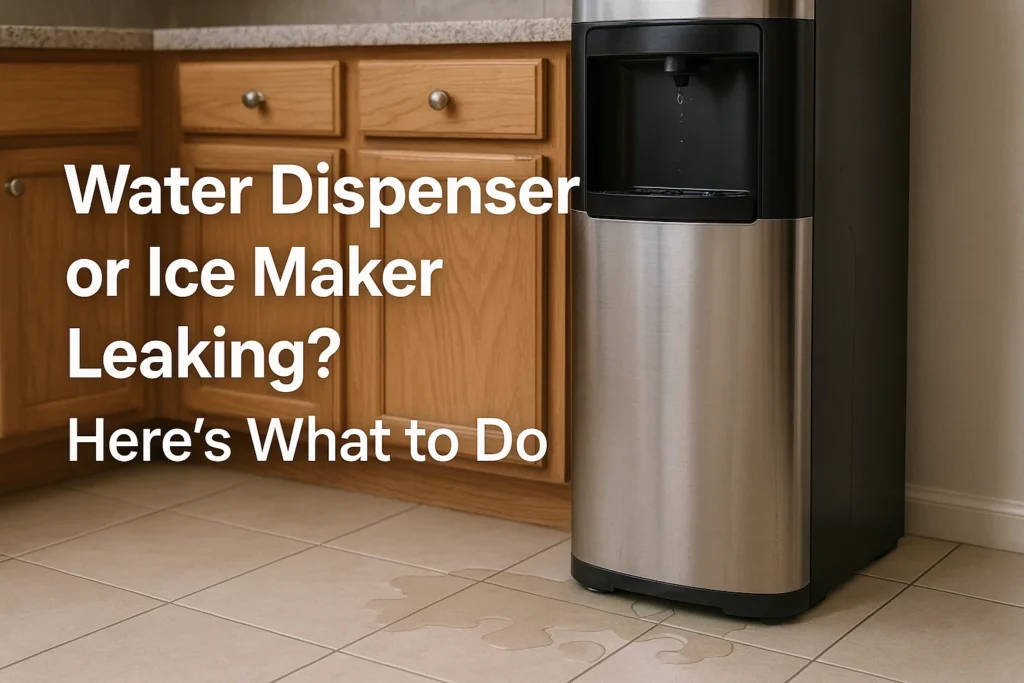
Why Leaks Happen
A refrigerator’s water system looks simple from the outside—press the paddle, get a drink, wait for ice. Behind the panels, though, a small network of tubes, valves, trays, and drains is doing a quiet dance. When any one of those parts drifts out of spec, water shows up where it shouldn’t.
The usual suspects are familiar. A plastic supply tube can kink or hairline-crack; compression fittings work loose after years of vibration; an inlet valve may “weep” when it should close and slowly overfill the ice tray; and a filter that isn’t seated perfectly can let water track along the cartridge head and drip. Cold makes mischief too: a partially frozen fill tube sends water sideways, icing up the chute and spilling into the freezer. On the warmer side, blocked defrost drains push meltwater back into the fresh-food section, where it pools under the crisper like a tiny lake.
Sometimes the fridge isn’t really leaking at all—it’s sweating. In humid weather, warm air hitting cold plastic creates condensation that mimics a leak. Leveling matters as well: if the cabinet tilts forward, trays and channels overflow more easily. Add in high household water pressure (above what the fridge prefers) and even good seals get overwhelmed. Put differently, leaks are often a small problem amplified by the environment.
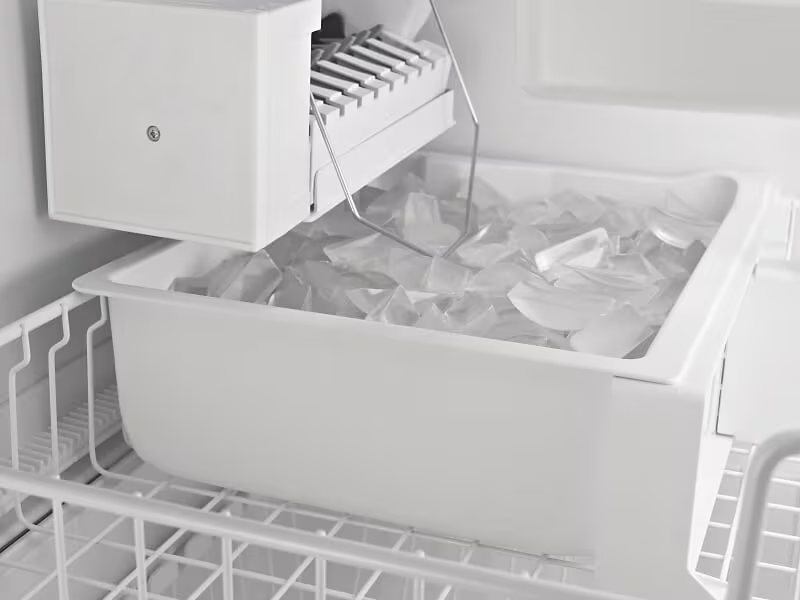
How to Detect the Source with Confidence
Start safely: turn off the water supply to the refrigerator and unplug the unit. Electricity and standing water aren’t friends. Wipe everything dry—freezer floor, fresh-food floor, the bottom edges of shelves—and slip a few paper towels under suspect areas. This “reset” makes fresh moisture easy to spot.
Now reintroduce water briefly. Run the dispenser for ten seconds and watch the dispenser cavity and the toe-kick area. If you see drips only when the dispenser runs, your culprit sits somewhere between the filter head and the dispenser line. If the ice maker is the focus, restore power, let it cycle once, and check the fill-tube area: icicles or a frosty collar point to a partial freeze that’s redirecting water.
Open the fresh-food compartment and look along the back wall. Is there a sheet of water or a rime of ice near the bottom? That hints at a clogged defrost drain. Pull the kick plate and shine a flashlight at the drain pan; an overflowing or bone-dry pan each tell a story (overflow means too much water is arriving; bone-dry can mean it isn’t reaching the pan at all).
Don’t ignore simple mechanics. Set a small level on top of the cabinet; the fridge should tilt ever so slightly backward so doors close by themselves. While you’re there, glance at the water filter: check the date, the O-rings, and whether it clicked home with conviction. A mismatched or overdue filter is a very common, very human cause of “mystery drips.”
What You Can Do Yourself (Before Calling a Pro)
Work in small, tidy steps. Change one thing, test, then move on. That way you’ll know what actually solved the problem.
Begin with the filter. Power off, water off, then remove and reseat it firmly—don’t force it, but make sure it fully engages. If the O-ring looks nicked or flattened, replace the filter; aged cartridges can leak even if water quality still seems fine.
Trace the water path next. Inspect the 1/4-inch supply line from the shutoff valve to the fridge, then any quick-connects you can access. Kinks are easy to miss behind the cabinet; gently straighten the line or replace brittle tubing altogether. Hand-snug compression fittings (a quarter-turn past snug is plenty for most) and dry the area before testing again.
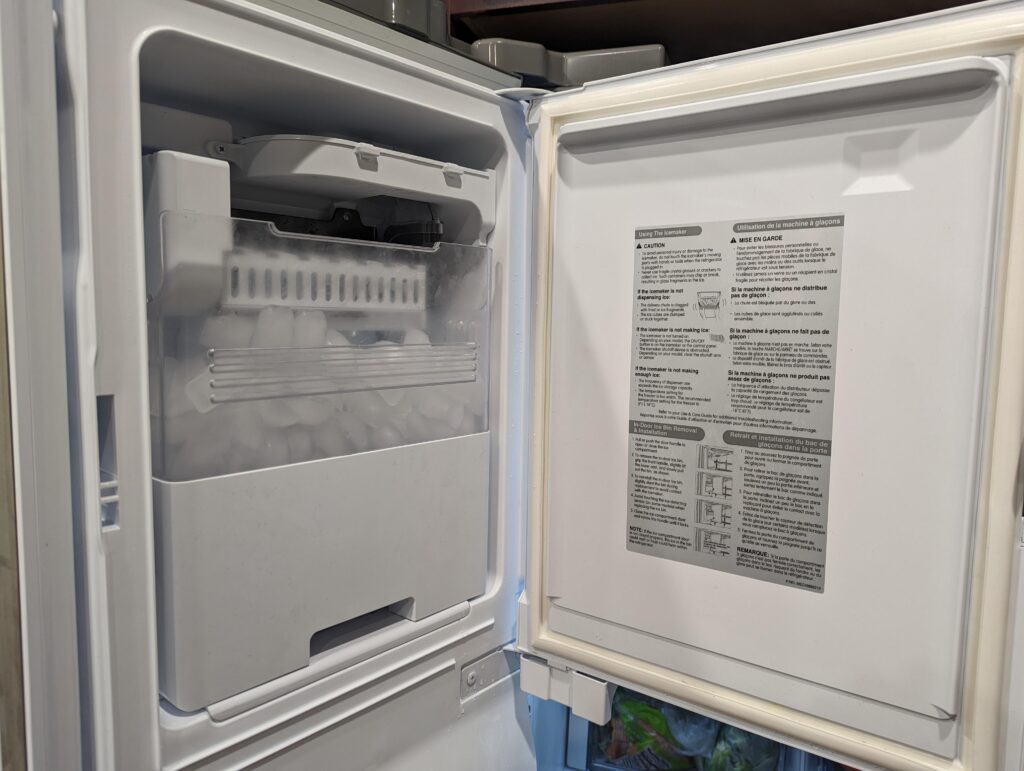
If the freezer shows ice buildup near the fill tube, defrost it the low-risk way: unplug, prop doors open, and let warm air do the work. A turkey baster of warm (not hot) water aimed at the fill inlet helps melt a stubborn plug without cracking plastic. Avoid prying with knives or screwdrivers—those quick wins often end in cracked liners or punctured tubing.
For puddles inside the fresh-food compartment, clear the defrost drain. Find the drain hole at the back (often behind a small panel), and flush it gently with warm water until you hear it trickle into the pan below. A length of soft, flexible line (even a trimmed zip-tie) can nudge out debris without damaging the channel.
Re-level the cabinet if needed. Adjust the front feet so the doors close by themselves from a half-open position; a slight rearward tilt keeps water where it belongs. If you suspect high household pressure—common in some buildings—installing or adjusting a pressure-reducing valve on the fridge’s feed line can tame chronic seepage. It’s a small part with an outsized impact.
Finally, consider the inlet valve and the ice maker assembly. A valve that doesn’t seal can overfill the tray, leaving slushy cubes and puddles under the bin. Replacement is straightforward for many models, but if you’re unsure about part numbers, electrical connectors, or access through a tight rear panel, it’s reasonable to stop here and bring in a technician.
A quick sanity check when you’re done: wipe everything dry, run the dispenser, let the ice maker fill once, and look again after fifteen minutes. No new moisture? You likely nailed it.
Need Fast Help? Urgent Fridge Repair in New York
If you’d rather skip the detective work—or you’ve done the basics and water still reappears—there’s no shame in calling reinforcements. Express Repair NY handles urgent refrigerator issues across New York, including water-system diagnostics, inlet valve replacements, ice-maker alignment, and drain cleaning. You can book service here: fridge repair.
One last note: if your refrigerator is under warranty, check your coverage before replacing components yourself. A quick skim of the terms can save you money and headaches.