

Content:
- Quick Answer
- Why Electric Ovens Stop Heating
- Common Oven Heating Problems
- 1. Power Supply Problems
- 2. Burnt-Out Heating Elements
- 3. Faulty Temperature Sensor
- 4. Broken Oven Thermostat
- 5. Control Board Malfunctions
- Step-by-Step Troubleshooting Guide
- When to Call a Professional
- Maintenance Tips to Prevent Oven Problems
- Frequently Asked Questions
- Final Thoughts
Quick Answer
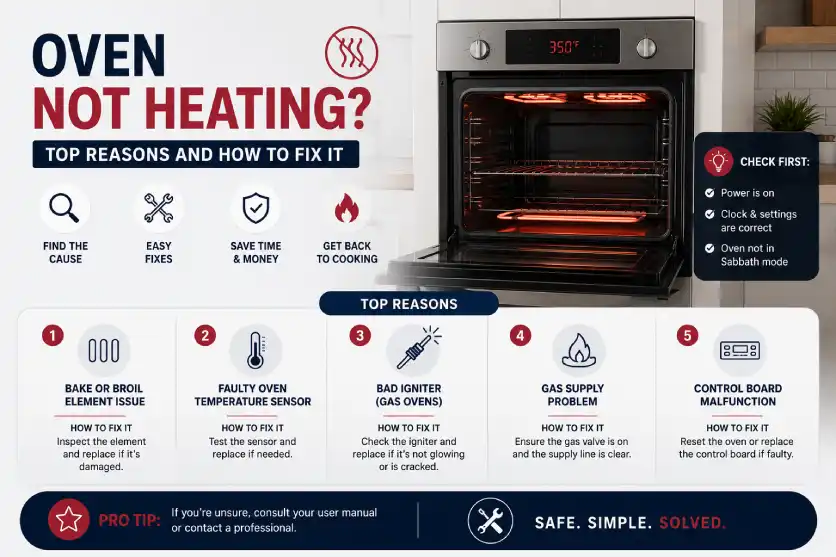
If your electric oven is not heating, the most common causes include a tripped breaker, burnt-out heating element, faulty temperature sensor, broken thermostat, or damaged control board. Some issues are easy to troubleshoot at home, while others require professional oven repair service.
Few appliance problems are more frustrating than turning on your oven and discovering it stays cold. Whether you’re baking dinner, preparing holiday meals, or simply reheating food, a non-heating oven can disrupt your entire kitchen routine.
The good news is that most electric oven heating problems have clear causes. In many cases, identifying the issue early can help prevent more expensive repairs later.
This article was reviewed by experienced electric oven repair specialists servicing Whirlpool, GE, Samsung, LG, Frigidaire, KitchenAid, Bosch, and other major appliance brands throughout New York City.
Why Electric Ovens Stop Heating
| Problem | What Happens | Common Symptoms |
|---|---|---|
| Power supply issue | Oven doesn’t receive full voltage | Display works but oven stays cold |
| Heating element failure | Bake or broil element stops heating | Uneven cooking or no heat |
| Temperature sensor problem | Incorrect temperature readings | Undercooked or overcooked food |
| Control board malfunction | Heating signals fail | Oven won’t start heating cycle |
Common Oven Heating Problems
| Symptom | Most Likely Cause | DIY Difficulty | Professional Repair Recommended? |
|---|---|---|---|
| Oven completely cold | Breaker or power issue | Easy | Sometimes |
| Bake element not glowing | Burnt bake element | Medium | Often |
| Oven heats unevenly | Sensor or thermostat issue | Medium | Recommended |
| Control panel works but no heat | Control board failure | Hard | Yes |
1. Power Supply Problems
The first thing to check is the oven’s electrical supply. Electric ovens require significant voltage to operate correctly, and a partial power issue can leave the control panel functioning while the heating elements stay cold.
- Check the power cord: Make sure the oven is securely plugged in.
- Inspect the breaker: Electric ovens usually use a double-pole breaker. One side may trip while the display still works.
- Look for flickering displays: This may indicate unstable voltage or loose electrical connections.
2. Burnt-Out Heating Elements
Electric ovens rely on two primary heating elements:
- Bake element — located at the bottom of the oven
- Broil element — located at the top
Over time, these elements can crack, blister, or burn out completely.
- Element no longer glows red
- Visible damage or bubbling on the element
- Food cooks unevenly
- Longer preheating times
Professional oven heating element replacement
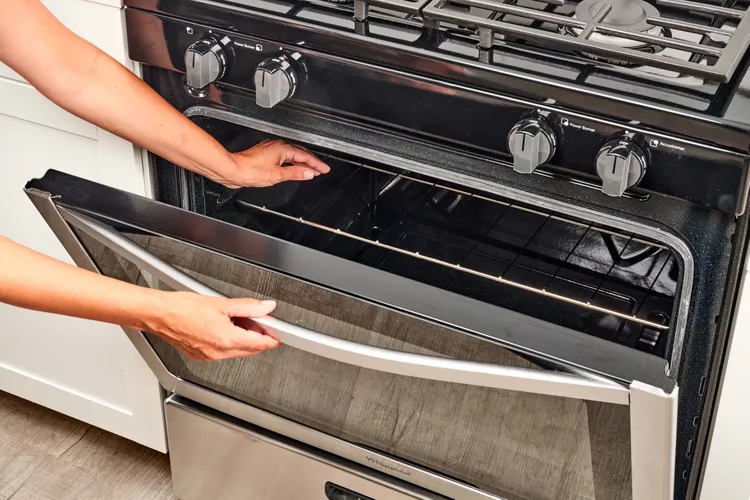
may be necessary if the element fails completely.
3. Faulty Temperature Sensor
Modern electric ovens use temperature sensors to monitor internal heat levels. If the sensor malfunctions, the oven may:
- Shut off too early
- Fail to reach target temperature
- Overheat unexpectedly
- Display inaccurate temperatures
A technician typically tests the sensor with a multimeter to verify proper resistance readings.
4. Broken Oven Thermostat
Some ovens still use mechanical thermostats instead of digital temperature systems. A defective thermostat may prevent the oven from heating correctly or maintaining stable temperatures.
- Oven overheating
- Oven staying cold
- Temperature fluctuations
- Burnt or undercooked food
5. Control Board Malfunctions
The electronic control board manages heating cycles, relays, and communication between oven components. If the board fails, the oven may stop sending power to the bake or broil elements.
- Display works but oven won’t heat
- Random shutdowns
- Error codes
- Intermittent heating problems
Important:
Control board issues can mimic sensor or heating element failures. Accurate diagnosis often requires professional testing equipment.
Step-by-Step Troubleshooting Guide
Safety First: Always disconnect power before inspecting internal oven components.
- Check the circuit breaker.
Reset the breaker fully if necessary. - Test bake and broil modes.
Determine whether one or both elements fail to heat. - Inspect heating elements visually.
Look for cracks, blistering, or burn marks. - Verify oven temperature accuracy.
Use an oven thermometer to compare actual heat levels. - Listen for clicking relays.
Lack of relay sounds may indicate board issues. - Check for error codes.
Modern ovens often display diagnostic codes for failed sensors or electronics.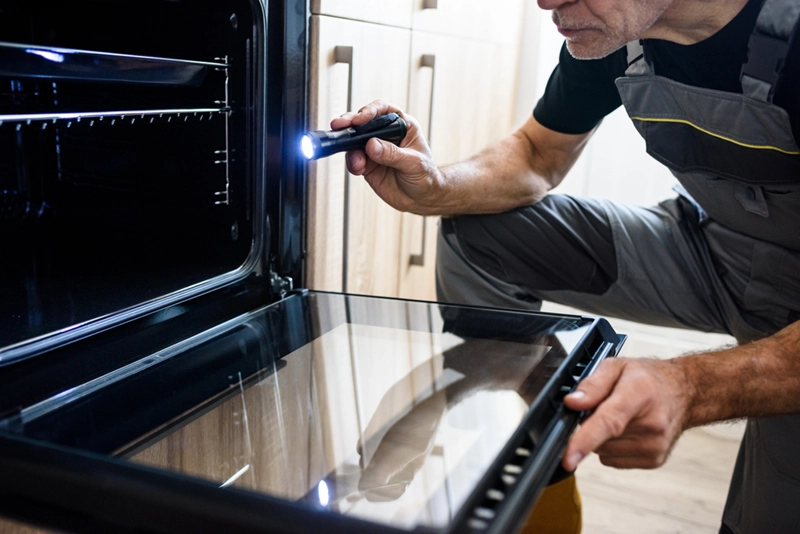
When to Call a Professional
Some oven issues involve high-voltage electrical components and should not be handled without experience.
- The breaker repeatedly trips
- The oven sparks or smells burnt
- The control board appears damaged
- Heating elements fail repeatedly
- The oven still won’t heat after basic troubleshooting
Schedule professional oven repair in New York
Maintenance Tips to Prevent Oven Problems
| Maintenance Tip | Why It Helps |
|---|---|
| Clean oven regularly | Prevents grease buildup and overheating |
| Avoid slamming oven door | Protects sensors and wiring connections |
| Inspect heating elements | Helps detect damage early |
| Schedule periodic maintenance | Prevents expensive electrical failures |
Frequently Asked Questions
Why does my oven turn on but not heat?
This usually indicates a failed heating element, faulty sensor, or control board problem.
Can a tripped breaker stop the oven from heating?
Yes. Electric ovens use double-pole breakers, and one side can trip while the display still powers on.
How do I know if my oven heating element is bad?
Signs include visible cracks, blistering, uneven cooking, or the element failing to glow red.
Can a faulty temperature sensor prevent heating?
Yes. Incorrect sensor readings may stop the oven from reaching the correct temperature.
Is it safe to repair an electric oven yourself?
Basic troubleshooting is usually safe, but repairs involving electrical wiring or control boards should be handled by professionals.
Final Thoughts
Electric ovens stop heating for several common reasons, including power supply problems, burnt heating elements, faulty temperature sensors, broken thermostats, or damaged control boards.
While some simple checks can be done at home, many repairs involve high-voltage electrical systems that require professional expertise.
If your oven still won’t heat properly after troubleshooting, professional diagnosis can help prevent larger electrical failures and restore safe cooking performance.


Maintenance Tip:
Regular cleaning and periodic inspections can significantly extend electric oven lifespan and reduce the risk of heating failures.