
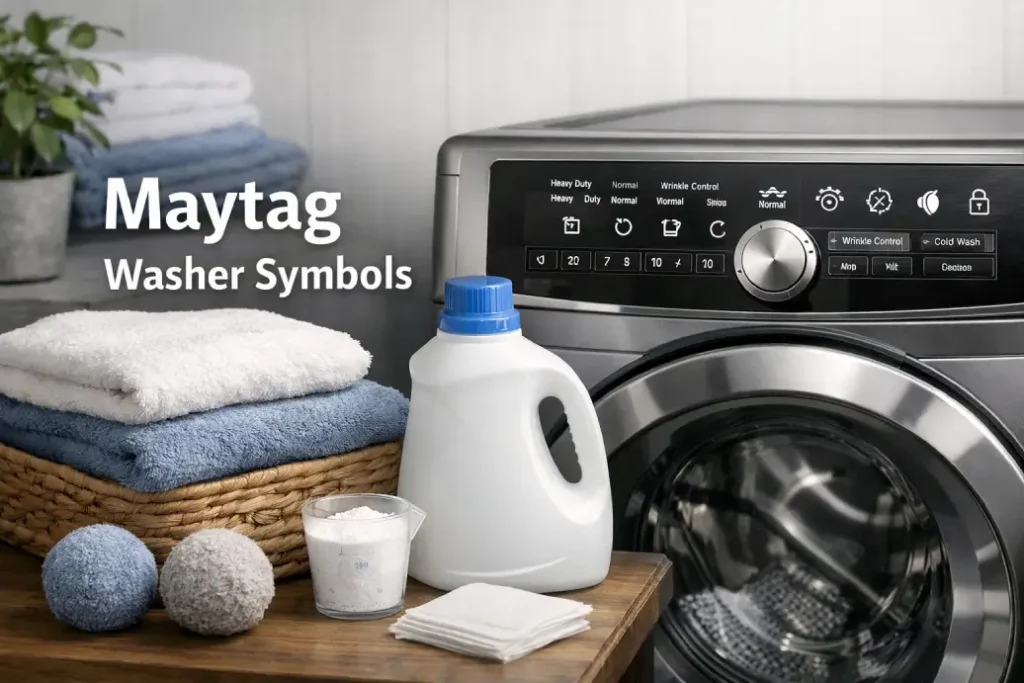
Understanding Maytag washer symbols can make laundry much easier and help protect your clothes from damage. Modern washers and clothing labels include a variety of icons that explain how garments should be washed, dried, bleached, ironed, or professionally cleaned.
Instead of long instructions, manufacturers use simple visual symbols to communicate care requirements quickly. These washing symbols appear on clothing tags and are also used to guide users when selecting the correct washer cycle. Learning what these icons mean helps you choose the proper temperature, cycle, and drying method for different fabrics.
Using the correct settings can prevent common laundry problems such as shrinking, fading colors, fabric damage, or excessive wrinkling. In this guide, you’ll find a complete reference chart explaining the most common Maytag washer symbols and what they mean.
How to Read Maytag Washer Symbols
Laundry care icons are designed to show specific washing instructions through simple shapes and markings.
Here’s how to interpret the most common elements:
- Wash tub symbol – indicates washing instructions
- Dots inside the tub – represent water temperature
- Lines below the tub – indicate wash cycle type
- Triangle symbol – shows bleaching instructions
- Square symbol – indicates drying instructions
- Iron symbol – provides ironing temperature guidance
- Circle symbol – indicates dry cleaning instructions
For example, a wash tub with one dot means the garment should be washed in cold water, while five dots indicate a sanitize wash cycle with very hot water.
| Symbol | Name | Explanation |
|---|---|---|
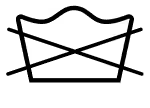 |
Do Not Wash | This symbol indicates the garment should not be washed in water. Items with this label usually require professional dry cleaning. |
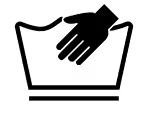 |
Hand Wash | This icon means the item should be washed by hand to prevent damage to delicate fabrics. |
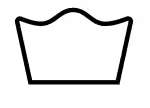 |
Machine Wash | The garment can be safely washed in a washing machine using a standard wash cycle. |
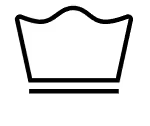 |
Machine Wash – Permanent Press | Use the permanent press cycle, designed to reduce wrinkles and protect synthetic fabrics. |
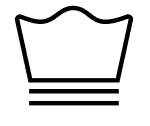 |
Machine Wash – Gentle Cycle | This symbol indicates the garment should be washed on the delicate or gentle cycle. |
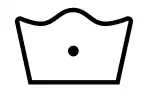 |
Cold Wash | Wash using cold water, around 30°C (85°F), which helps protect colors and delicate fabrics. |
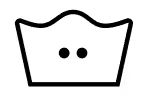 |
Warm Wash | This symbol indicates washing in warm water, approximately 40°C (105°F). |
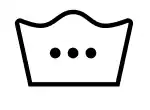 |
Warm/Hot Wash | This wash temperature is suitable for heavily soiled clothes and colorfast fabrics. |
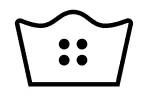 |
Hot Wash | Wash with hot water around 60°C (140°F), typically used for whites and durable fabrics. |
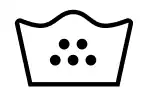 |
Sanitize Wash | This setting uses very hot water to help remove bacteria and allergens from laundry. |
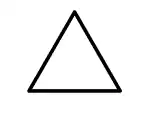 |
OK to Bleach | This triangle symbol indicates that bleach can be safely used on the garment. |
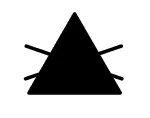 |
Do Not Bleach | This symbol warns that bleach should not be used because it could damage the fabric. |
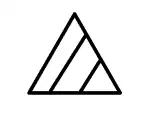 |
Non-Chlorine Bleach If Needed | Only color-safe bleach should be used when necessary. |
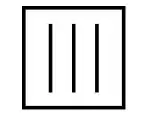 |
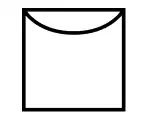
Drip Dry | The garment should be hung wet and allowed to drip dry naturally. |
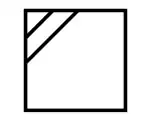 |
Dry in the Shade | Dry the garment away from direct sunlight to prevent fading. |
 |
Hang Dry | The garment should be hung on a line or hanger to dry naturally. |
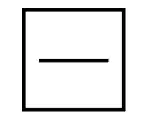 |
Dry Flat | This symbol means the garment should be laid flat to dry to maintain its shape. |
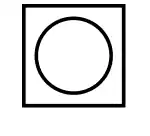 |
Tumble Dry | The garment can be safely dried in a tumble dryer. |
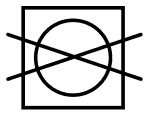 |
Do Not Tumble Dry | This symbol indicates the item should not be dried in a dryer. |
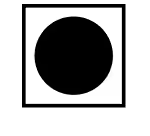 |
No Heat Dry | The dryer can be used but only with air or no heat. |
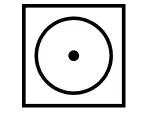 |
Normal Cycle – Low Heat | Use the normal dryer cycle with low heat. |
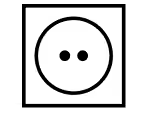 |
Normal Cycle – Medium Heat | This drying setting is suitable for most everyday clothing. |
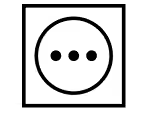 |
Normal Cycle – High Heat | High heat drying is best for thick fabrics like towels or denim. |
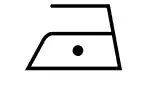 |
Cool Iron | This symbol indicates ironing at a low temperature. |
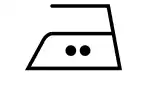 |
Warm Iron | Use a medium ironing temperature suitable for synthetic fabrics. |
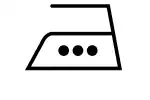 |
Hot Iron | This symbol indicates high heat ironing for durable fabrics. |
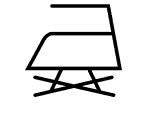 |
No Steam | Iron without using steam to prevent damage to the fabric. |
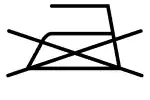 |
Do Not Iron | The garment should not be ironed. |
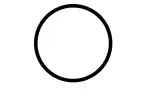 |
Dry Clean | The item should be professionally dry cleaned. |
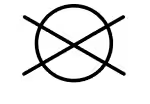 |
Do Not Dry Clean | This symbol means the garment should not be dry cleaned. |
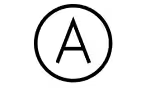 |
Dry Clean – Any Solvent | Any solvent may be used during dry cleaning. |
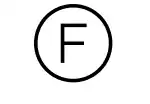 |
Dry Clean – Except Trichloroethylene | Dry cleaning solvents can be used except trichloroethylene. |
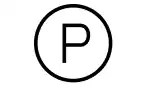 |
Dry Clean – Petroleum Solvent Only | Only petroleum-based solvents should be used during dry cleaning. |
When Washing Problems May Indicate a Washer Issue
If you are following clothing care labels but your laundry results are still poor, the problem may be related to your washing machine. Issues such as incorrect water temperature, improper spinning, or cycle malfunctions may require professional repair.
A qualified appliance technician can inspect your washer and ensure it operates according to the correct cycle settings.