

A thick layer of ice inside your freezer is more than just inconvenient. It reduces storage space, forces the appliance to work harder, and increases electricity consumption. If you notice frost covering the walls or drawers, it’s time to defrost your freezer.
This guide explains how to defrost a freezer safely and efficiently, what tools you need, and when the issue might require professional appliance repair.
Why It’s Important to Defrost Your Freezer
Over time, moisture enters the freezer each time the door opens. That moisture freezes and forms frost. When ice buildup becomes thick, it can affect the freezer’s performance.
Common problems caused by frost accumulation include:
- Reduced cooling efficiency
- Higher energy consumption
- Blocked air circulation
- Less storage space
- Difficulty closing drawers or doors
Regular freezer maintenance helps prevent serious issues and extends the lifespan of the appliance.
Signs Your Freezer Needs Defrosting
Not sure whether it’s time for a manual freezer defrost? Look for these indicators.
| Sign | What It Means | Action Needed |
|---|---|---|
| Thick frost on walls | Moisture has accumulated over time | Defrost the freezer |
| Drawers stuck or difficult to open | Ice buildup around rails | Remove ice and clean |
| Freezer running constantly | Compressor working harder | Defrost and check seals |
| Food covered in frost | Excess moisture inside | Defrost and reorganize |
| Door not sealing properly | Ice blocking the gasket | Remove ice and inspect seal |
If frost exceeds 6–7 mm (¼ inch), it’s recommended to defrost the freezer.
Tools You May Need
Before starting the defrosting process, prepare a few basic items.
- Towels or absorbent cloths
- A bowl or container for water
- Plastic spatula (never metal)
- Cooler or insulated bag for frozen food
- Warm water
Having everything ready will make the process faster and safer.
Step-by-Step: How to Defrost a Freezer
Follow this simple method to remove ice buildup effectively.
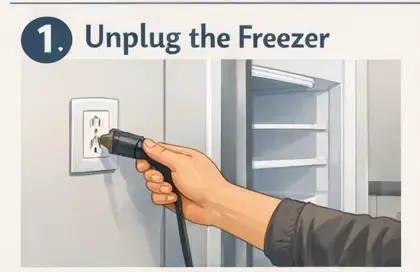
1. Turn Off and Unplug the Freezer
Safety always comes first. Disconnect the appliance from the power source before starting the defrost process.
This also stops the compressor and allows the ice to melt naturally.
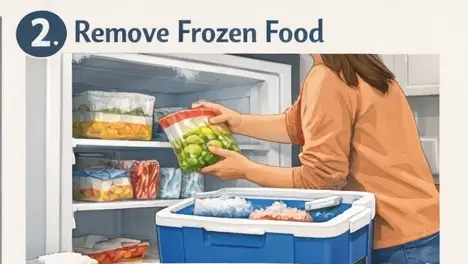
2. Remove All Food
Take out all frozen items and place them in:
- another freezer
- an insulated cooler
- a cold storage bag with ice packs
This prevents food from thawing while the freezer defrosts.
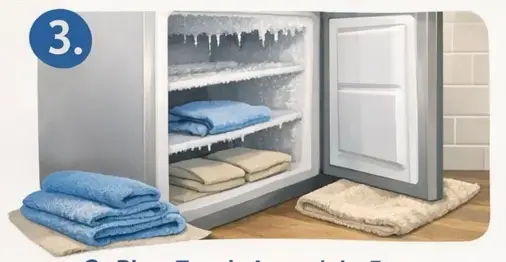 3. Protect the Floor
Melting ice produces a lot of water. Place towels around the base of the appliance and inside the freezer to absorb excess moisture.
You may also place a shallow container inside to collect water.
4. Let the Ice Melt Naturally
 Leave the freezer door open and allow the frost to melt gradually. This is the safest method when learning how to defrost a freezer.
To speed up the process you can:
- place a bowl of warm water inside
- gently loosen ice with a plastic spatula
Never use knives or metal tools. They can puncture refrigerant lines and cause expensive damage.
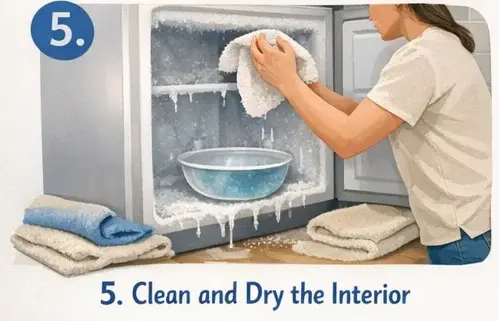
5. Clean and Dry the Interior
Once the ice has melted:
- Wipe the interior walls with a soft cloth
- Clean shelves and drawers
- Dry all surfaces completely
Removing moisture prevents new frost from forming quickly.

6. Turn the Freezer Back On
Plug the appliance back in and wait until the temperature returns to normal before placing food inside.
Most freezers need 30–60 minutes to reach proper cooling levels again.
How Long Does It Take to Defrost a Freezer?
Defrost time depends on ice thickness and freezer size.
| Ice Thickness | Estimated Time |
|---|---|
| Light frost | 1–2 hours |
| Moderate buildup | 3–4 hours |
| Heavy ice layer | 6–12 hours |
Using warm water bowls can significantly reduce defrosting time.
Tips to Prevent Ice Buildup
Proper maintenance reduces the need for frequent freezer defrosting.
Helpful habits include:
- Avoid leaving the freezer door open for long periods
- Ensure the door gasket seals tightly
- Let hot food cool before placing it inside
- Keep the freezer organized to allow airflow
- Check humidity levels in the kitchen
These small steps help keep frost from forming too quickly.
When Defrosting Doesn’t Solve the Problem
Sometimes frost keeps returning even after a complete defrost. This may indicate a deeper technical issue.
Possible causes include:
- Faulty door seal
- Malfunctioning defrost heater
- Defective thermostat
- Blocked drain line
- Problems with the defrost timer
If your freezer develops frost again within a few days, professional appliance repair may be necessary to diagnose the issue correctly.
Final Thoughts
Knowing how to defrost a freezer properly helps maintain efficient cooling, reduce energy consumption, and extend the life of the appliance. The process is simple: unplug the unit, remove food, allow ice to melt, clean the interior, and restart the freezer.
Regular maintenance prevents excessive ice buildup and keeps your freezer working efficiently. And if frost continues to return quickly, a qualified technician can identify and repair the underlying problem.