
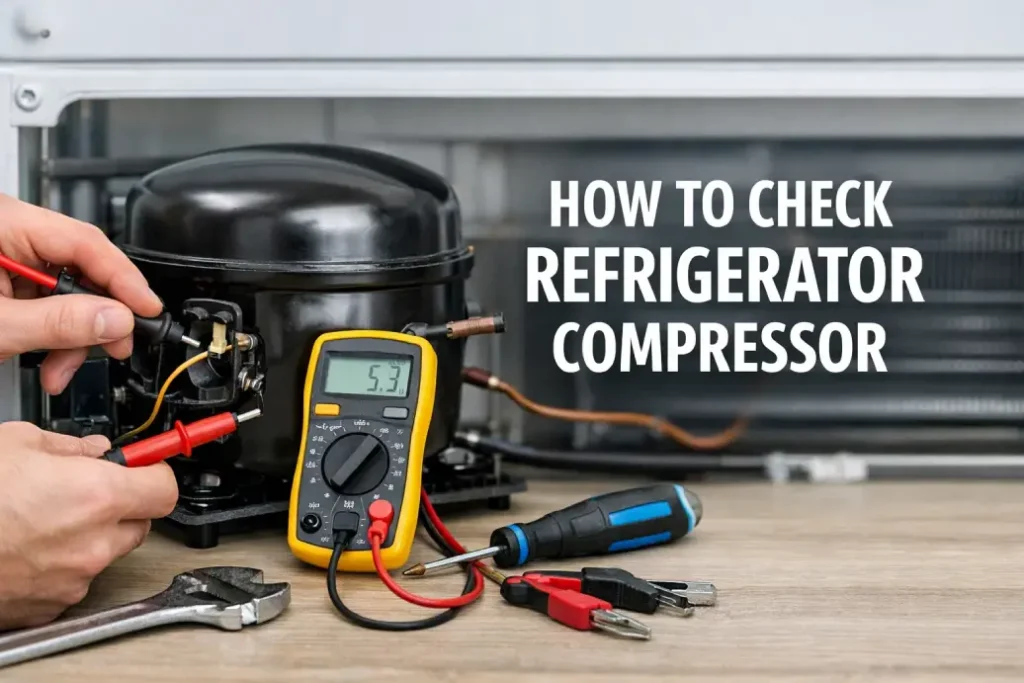
If your fridge is running but not cooling, or you hear clicking sounds from the back panel, the issue may be the compressor. Understanding how to check refrigerator compressor performance can help you determine whether you’re facing a minor electrical problem or a serious mechanical failure.
This guide walks you through everything safely and clearly — from basic inspection to multimeter testing.
What Does a Refrigerator Compressor Do?
The compressor is the heart of your refrigerator’s cooling system. It circulates refrigerant through the coils, allowing heat to be removed from inside the unit.
When the compressor fails, you may notice:
- The refrigerator is warm but the light works
- Clicking or buzzing noises every few minutes
- The compressor feels extremely hot
- The fridge runs constantly but doesn’t cool
If you’re wondering how to check refrigerator compressor function before calling a technician, start with the basics below.
Safety First: Before You Check the Refrigerator Compressor
Before you begin any inspection:
- Unplug the refrigerator from the outlet
- Turn off the circuit breaker if accessible
- Wear insulated gloves
- Use a reliable multimeter
Working with electrical components without disconnecting power is dangerous. Never skip this step when learning how to check refrigerator compressor safely.
Step 1 – Locate the Compressor
The compressor is typically located at the back bottom of the refrigerator. It looks like a black metal cylinder with electrical wiring connected to its side.
To access it:
- Remove the rear access panel
- Identify the black tank-shaped component
- Locate the start relay and overload protector attached to it
Now you’re ready to properly begin checking the refrigerator compressor.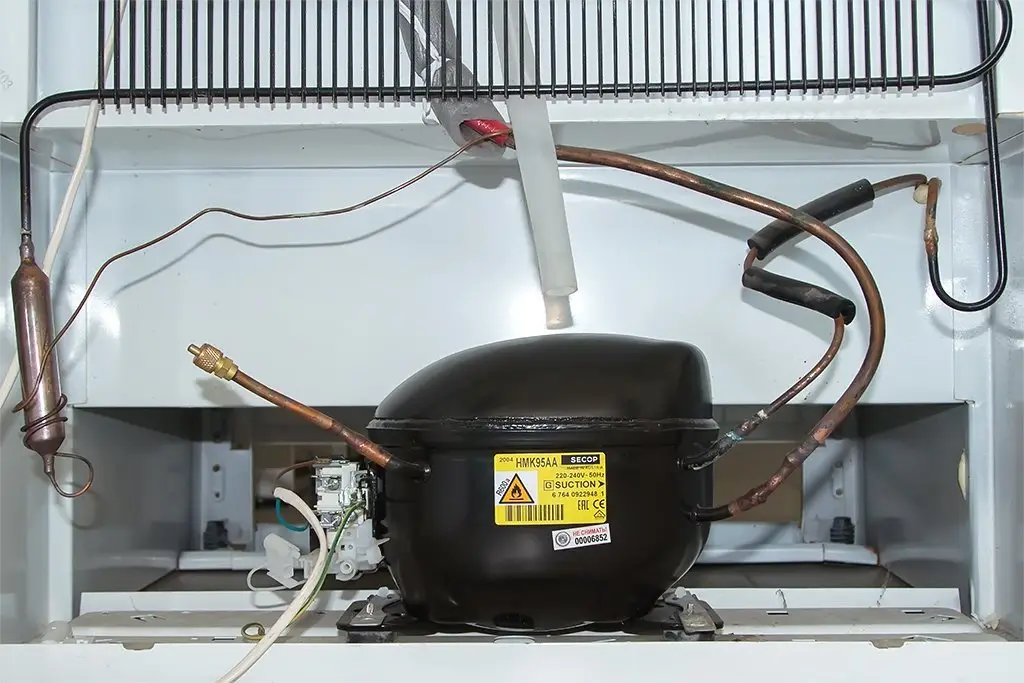
Step 2 – Listen for Compressor Operation
Plug the refrigerator back in briefly and listen:
- Do you hear a steady hum? (Normal operation)
- Do you hear a click every 2–5 minutes? (Possible relay issue)
- Is there complete silence? (No power or internal failure)
If you hear clicking without startup, the issue may not be the compressor itself but the start relay.
This is an important early step in understanding how to check refrigerator compressor condition without tools.
Step 3 – Check the Start Relay
Before assuming the compressor is bad, inspect the start relay:
- Unplug the fridge again
- Remove the relay from the compressor terminals
- Shake it gently
If it rattles, it’s likely defective. A failed relay can mimic compressor failure and is inexpensive to replace.
Many homeowners misdiagnose the problem because they skip this part when researching how to check refrigerator compressor problems.
Step 4 – Test Compressor Windings with a Multimeter
Now for the technical part.
Identify the Three Terminals
Under the relay cover, you’ll see three prongs:
- C (Common)
- S (Start)
- R (Run)
Measure Resistance (Ohms)
Set your multimeter to resistance (Ω) and measure:
- C to S
- C to R
- S to R
You should get low but measurable resistance readings.
If:
- One pair shows infinite resistance → winding is open
- Any terminal shows continuity to the metal body → compressor is grounded (bad)
This is the most reliable way to check refrigerator compressor electrical integrity.
Step 5 – Check for Ground Fault
Place one multimeter probe on a compressor terminal and the other on the metal housing.
If you get any reading other than OL (open line), the compressor is shorted to ground and must be replaced.
At this stage, you’ve completed the core diagnostics for how to check refrigerator compressor health.
When the Compressor Is Hot But Not Running
An overheated compressor may be:
- Locked internally
- Struggling due to low refrigerant
- Failing mechanically
In such cases, even if electrical tests pass, the compressor may still be defective.
This is where professional diagnostic tools (amp draw test, pressure gauges) are required.
Signs You Should Call a Professional
While it’s useful to understand how to check refrigerator compressor, certain situations require licensed service:
- Replacing the compressor (requires refrigerant handling certification)
- Sealed system repairs
- Repeated breaker trips
- Burned wiring
Compressor replacement is often costly. In some cases, replacing the refrigerator is more economical.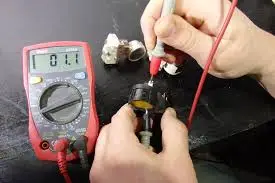
Can You Repair a Refrigerator Compressor Yourself?
Technically, replacing a compressor involves:
- Recovering refrigerant
- Brazing copper lines
- Vacuum pumping the system
- Recharging with the correct refrigerant
This is not a DIY-friendly repair unless you have HVAC certification and tools.
If your testing confirms compressor failure, the smartest next step is scheduling a professional appliance repair service.Final Thoughts
Knowing how to check refrigerator compressor condition can save you time, prevent unnecessary part replacements, and help you make informed decisions.
Start with basic listening tests, inspect the relay, and use a multimeter to verify winding integrity. If the compressor is grounded or electrically open, replacement is the only solution.
If you’re unsure at any step, don’t risk further damage — a qualified technician can confirm the issue quickly and safely.
If your diagnostic results show that the compressor is not starting properly but there are no obvious signs of mechanical failure, the issue may be related to a temporary electrical fault. In that case, you may want to try resetting the refrigerator compressor before considering a replacement. A proper reset can sometimes restore normal operation and prevent unnecessary repair costs.