
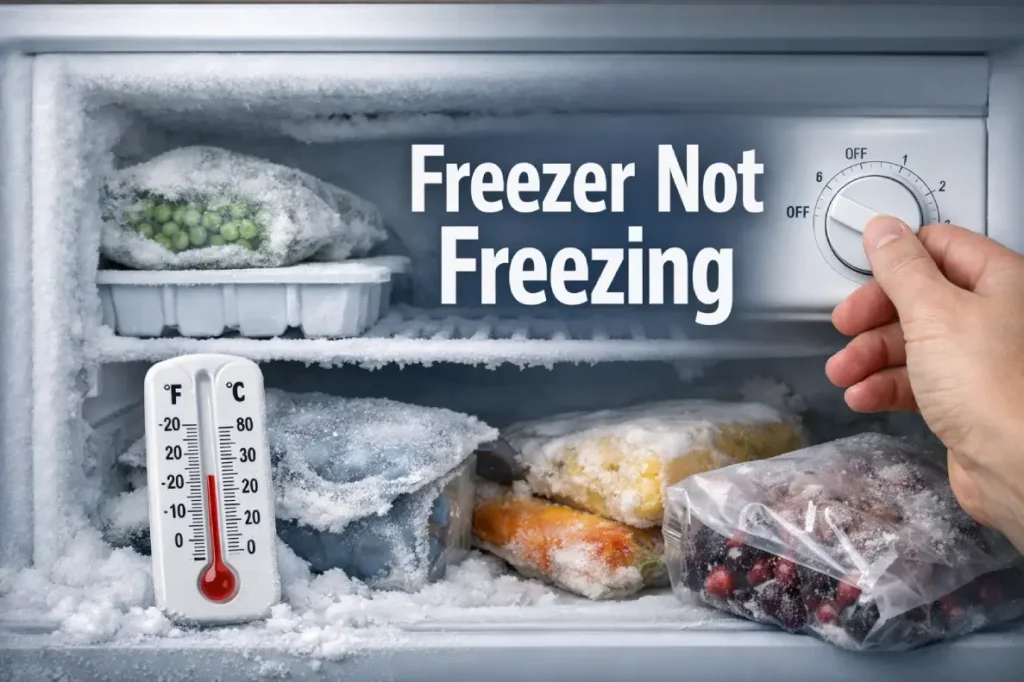
You open the freezer expecting solid ice and perfectly frozen food… but instead you find soft ice cream and half-thawed meat. If your freezer not freezing, don’t panic. In many cases, the problem is simple and fixable without replacing the entire appliance.
Below is a clear, step-by-step guide to help you diagnose why your freezer not freezing properly and what you can do about it.
How a Freezer Actually Keeps Things Frozen
Before jumping into troubleshooting, it helps to understand the basics. A freezer works by:
- Compressing refrigerant gas.
- Circulating it through condenser coils.
- Expanding it in evaporator coils.
- Using a fan to distribute cold air evenly.
If any part of this system fails, your freezer not freezing the way it should.
First Things to Check When Your Freezer Not Freezing
Start with the simplest possibilities before assuming expensive repairs.
1. Temperature Settings
It sounds obvious, but it happens often.
- Recommended freezer temperature: 0°F (-18°C)
- Make sure the control hasn’t been accidentally adjusted.
- Wait 24 hours after changing settings.
If your freezer not freezing after a power outage, settings may have reset.
2. Overloaded or Underloaded Freezer
Airflow is critical.
- Too full → blocks air circulation.
- Too empty → struggles to maintain temperature stability.
Try reorganizing items so vents remain clear.
3. Dirty Condenser Coils
One of the most common reasons a freezer not freezing is dirty coils.
Location: Back or underneath the unit.
What to do:
- Unplug the appliance.
- Use a coil brush or vacuum.
- Clean dust buildup.
Dirty coils force the compressor to work harder and reduce cooling efficiency.
Common Technical Causes of Freezer Not Freezing
If basic checks don’t solve the issue, here are deeper causes.
4. Faulty Evaporator Fan
The evaporator fan moves cold air from the coils into the freezer compartment.
Signs:
- Freezer warm, fridge cool
- Strange humming or silence
- Frost buildup in back panel
If the fan motor fails, your freezer not freezing evenly.
5. Defrost System Failure
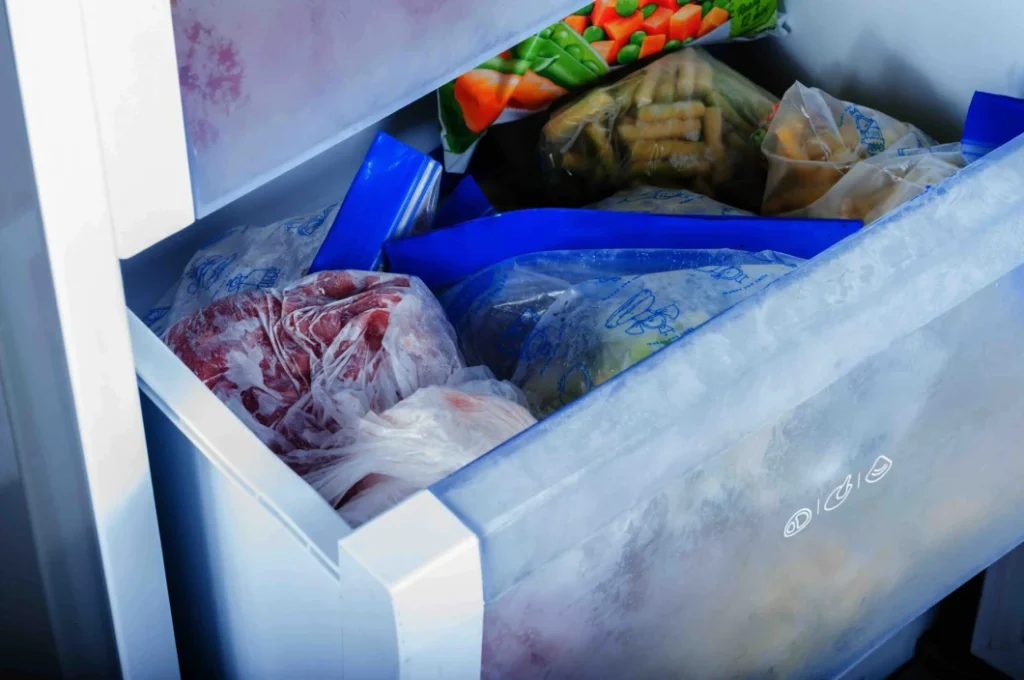
Modern freezers auto-defrost. If this system fails:
- Ice builds up on evaporator coils.
- Air cannot circulate.
- Temperature rises.
Possible faulty parts:
- Defrost heater
- Defrost thermostat
- Defrost timer or control board
Heavy frost on the back wall often means defrost failure.
6. Door Seal Problems
A worn gasket allows warm air inside.
Check by:
- Closing door on a dollar bill.
- If it slides out easily → seal may be weak.
A poor seal leads to constant running and a freezer not freezing consistently.
Quick Diagnostic
| Symptom | Possible Cause | DIY Level | Professional Needed? |
|---|---|---|---|
| Freezer warm, fridge cold | Evaporator fan failure | Medium | Sometimes |
| Heavy frost buildup | Defrost system issue | Medium | Often |
| Unit runs constantly | Dirty coils / bad seal | Easy | Rarely |
| Clicking sound, no cooling | Compressor problem | Hard | Yes |
| Freezer not freezing at all | Refrigerant leak | Hard | Yes |
This table helps narrow down why your freezer not freezing without guessing blindly.
Compressor or Refrigerant Problems
If your freezer not freezing and you hear:
- Clicking every few minutes
- Loud buzzing
- No sound at all
The compressor may be failing.
Refrigerant leaks also prevent proper cooling. These repairs require certified technicians due to specialized tools and safety regulations.
When You Can Fix It Yourself
You can usually DIY if:
- Coils are dirty
- Airflow is blocked
- Door seal is worn
- Temperature setting was incorrect
These issues are low-cost and manageable.
When It’s Time to Call a Professional
Consider booking service if:
- Compressor won’t start
- Electrical components test faulty
- Ice buildup returns quickly
- Freezer not freezing after full defrost
- You smell burning or see damaged wiring
A technician can test voltage, refrigerant pressure, and sealed system components safely.
Preventing Future Freezer Problems
To avoid another freezer not freezing situation:
- Clean condenser coils every 6 months.
- Keep freezer 70–85% full.
- Check door seals annually.
- Avoid placing hot food directly inside.
- Keep vents unobstructed.
Regular maintenance extends appliance life by years.
Final Thoughts
A freezer not freezing doesn’t automatically mean you need a new appliance. In many cases, it’s airflow, maintenance, or minor part failure.
Start simple. Diagnose carefully. And if the issue points to compressor or refrigerant problems, don’t risk it — professional repair is often far cheaper than replacement.
If you’re unsure at any stage, scheduling a service call can save time, prevent food loss, and restore proper freezing faster.