

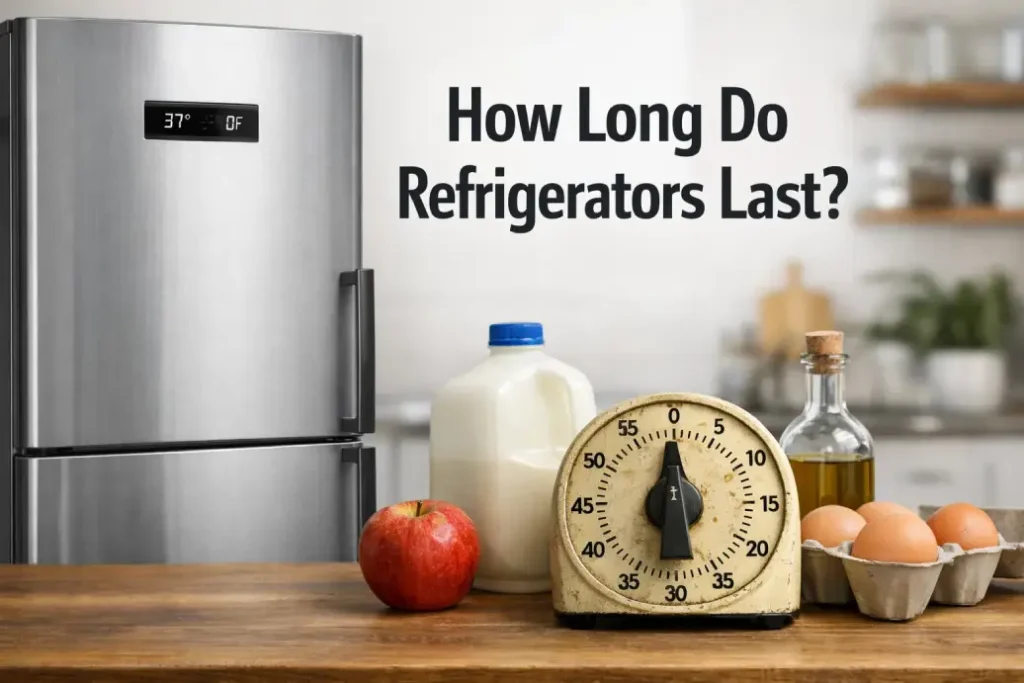
A refrigerator is one of the hardest-working appliances in your home. It runs 24/7, keeping your food fresh and your household functioning smoothly. But how long do refrigerators last? And how can you make yours last longer?
In this detailed guide, you’ll learn:
- The average lifespan of different types of refrigerators
- Factors that affect longevity
- Warning signs your fridge is failing
- Practical maintenance tips to extend its life
- When to repair vs. replace
Let’s break it down.
What Is the Average Lifespan of a Refrigerator?
On average, a refrigerator lasts 10 to 15 years. However, this can vary depending on the type, brand, usage habits, and maintenance routine.
Lifespan by Refrigerator Type
- Top-Freezer Refrigerators: 15–20 years
- Bottom-Freezer Refrigerators: 12–15 years
- Side-by-Side Refrigerators: 10–15 years
- French Door Refrigerators: 10–15 years
If your refrigerator is over 10 years old, it’s wise to start monitoring performance more closely.
What Affects a Refrigerator’s Lifespan?
Build Quality and Brand
Higher-quality components generally mean longer lifespan.
Usage Habits
- Frequently opening the door
- Overloading shelves
- Placing hot food inside
- Keeping the fridge too empty
All of these can strain the compressor and cooling system.
Maintenance Routine
Refrigerators that receive regular cleaning and inspection last significantly longer.
Environment
If your refrigerator is located in a hot garage, near an oven, or in direct sunlight, it may wear out faster.
Signs Your Refrigerator Is Reaching the End of Its Life
| Warning Sign | What It Means | What You Should Do |
|---|---|---|
| Food spoils faster than usual | The fridge may not be maintaining consistent internal temperature. | Check temperature settings and clean condenser coils. If the issue persists, schedule a diagnostic. |
| Motor runs constantly | The compressor is overworking due to inefficiency or internal wear. | Inspect door seals and airflow. A technician should check the compressor if the noise continues. |
| Excessive frost build-up | Possible defrost system malfunction or poor door sealing. | Defrost manually and inspect gaskets. Persistent frost may require professional repair. |
| Unusual noises (clicking, buzzing, grinding) | Failing fan motor, compressor, or internal components. | Turn off the unit and have it inspected to prevent further damage. |
| Rising energy bills | Older refrigerators lose efficiency and consume more power. | Compare current usage to previous bills. Consider repair or replacement if the unit is 10+ years old. |
If you notice multiple symptoms at the same time, your refrigerator may be nearing the end of its service life.
How to Extend the Life of Your Refrigerator
Clean the Condenser Coils (Every 6 Months)
Dirty coils force the compressor to work harder.
How to clean them:
- Unplug the refrigerator.
- Locate coils (back or bottom).
- Use a coil brush or vacuum.
- Remove dust and debris carefully.
This simple step can add years to your fridge.
Check and Replace Door Seals
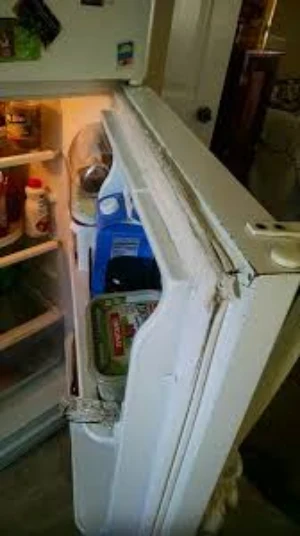
Close a dollar bill in the door. If it slides out easily, the gasket may be worn.
Loose seals cause temperature loss and compressor strain.
Maintain Proper Temperature
- Refrigerator: 37–40°F (3–4°C)
- Freezer: 0°F (-18°C)
Avoid setting temperatures lower than necessary.
Keep It Properly Stocked
A moderately filled fridge retains cold better than an empty one. But avoid overpacking — airflow is crucial.
Level the Refrigerator
An uneven fridge may cause door sealing issues and compressor stress.
Should You Repair or Replace Your Refrigerator?
The 50% Rule
If the repair cost exceeds 50% of the price of a new refrigerator and your appliance is more than 10 years old, replacement may be the smarter investment.
Repair Makes Sense If:
- The fridge is under 8–10 years old
- The issue is minor (thermostat, fan motor, seal)
- The compressor is still in good condition
Replace If:
- The compressor fails in an older unit
- Repairs are frequent
- Energy efficiency is significantly reduced
A professional technician can diagnose the issue and help you decide objectively.
Can You Fix Refrigerator Issues Yourself?
Some minor maintenance tasks are DIY-friendly:
✔ Cleaning coils
✔ Replacing door gaskets
✔ Adjusting temperature settings
✔ Leveling the appliance
 However, issues involving refrigerant leaks, compressor failure, electrical components, or control boards require professional tools and expertise.
Attempting complex repairs without training may cause further damage or void warranties.
When to Call a Professional Appliance Repair Service
Contact a certified technician if you notice:
- Fridge not cooling at all
- Burning smells
- Water leaking internally
- Loud knocking or grinding noises
- Circuit breaker tripping
Early intervention often prevents costly replacements.
Final Thoughts
Most refrigerators last 10–15 years, but proper maintenance can significantly extend their lifespan.
Regular cleaning, temperature monitoring, and early repairs will help you avoid major breakdowns. If your fridge is showing warning signs, don’t wait until it fails completely. A professional inspection can save both your appliance — and your grocery budget.