

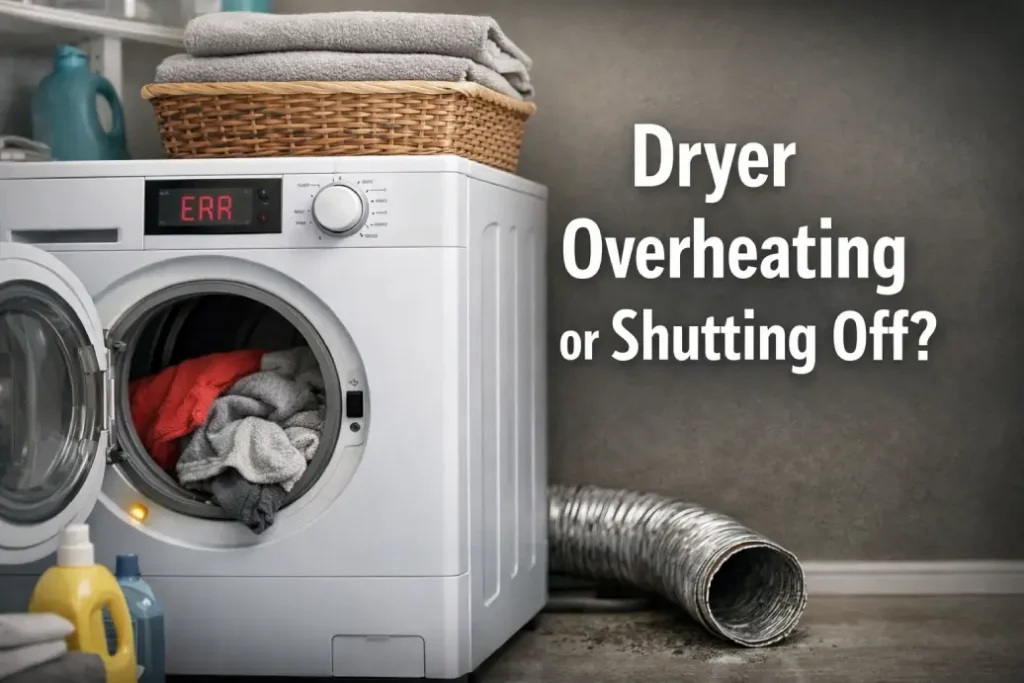
A dryer that suddenly stops mid-cycle or feels dangerously hot isn’t just inconvenient — it can be a warning sign that heat and airflow aren’t behaving the way they should. The good news: in many cases, dryer overheating or shutting off happens for predictable reasons you can identify with a few safe checks.
Below is a practical guide to the most common causes, what you can do at home, and when it’s time to bring in a pro.
Why dryer overheating or shutting off happens
Most dryers are designed to protect themselves. If the machine senses temperatures rising beyond safe limits, it may:
- trip a high-limit thermostat,
- cut power to the heating element,
- or shut down entirely until it cools.
In other words, dryer overheating or shutting off is often a symptom of restricted airflow, a failing sensor, or an electrical/control issue.
The most common causes of a dryer overheating or shutting off
1) Clogged lint screen or lint buildup inside the cabinet
Even if you clean the screen, lint can accumulate in places you don’t see: around the blower wheel, inside ducting, or near the heating housing. That trapped lint reduces airflow and traps heat — a classic trigger for dryer overheating or shutting off.
What to do
- Clean the lint screen thoroughly (wash with warm water and mild soap if it looks “waxy” from dryer sheets).
- If you’re comfortable, vacuum around the lint screen slot using a crevice tool.
- Consider professional internal cleaning if the dryer has never been serviced.
2) Blocked or crushed vent hose
A vent hose pinched behind the machine or packed with lint can cause hot air to stay inside the dryer. When heat can’t escape, temperatures spike and the unit may stop.
Quick check
- Pull the dryer slightly away from the wall and inspect the vent hose.
- Look for sharp bends, crushing, or heavy lint deposits.
- Run a short cycle and feel airflow at the outside vent hood — it should be strong and steady.
Vent restriction is one of the top reasons dryer overheating or shutting off shows up repeatedly.
3) Exterior vent hood stuck closed
Outside flaps can jam due to lint, snow, debris, or even a damaged hood. If the flap doesn’t open fully, airflow drops and heat builds.
Fix
- Clear debris and confirm the flap moves freely.
- Replace the hood if it’s warped, broken, or constantly sticking.
4) Overloading the drum (or drying the wrong items)
A packed drum blocks internal airflow and makes the dryer work harder. Some items (rubber-backed rugs, thick comforters, heavy workwear) can also trap heat.
Better habit
- Dry bulky items in smaller loads.
- Use lower heat settings for dense fabrics.
- Pause to fluff/reposition bulky loads halfway through.
This alone can reduce the chance of dryer overheating or shutting off, especially on older machines.
5) Failed cycling thermostat, high-limit thermostat, or thermistor
Dryers rely on temperature sensors to regulate heat. If a thermostat sticks or a thermistor reads incorrectly, the dryer may:
- overheat,
- shut down unexpectedly,
- or heat inconsistently.
Common signs
- Clothes are extremely hot.
- The dryer runs for a while, then stops and restarts after cooling.
- Cycles seem longer than usual.
If airflow checks out, sensor failure becomes a prime suspect in dryer overheating or shutting off.
6) Weak blower wheel or airflow issues at the fan
A damaged blower wheel may spin poorly, reducing the movement of hot air through the system — another path to overheating.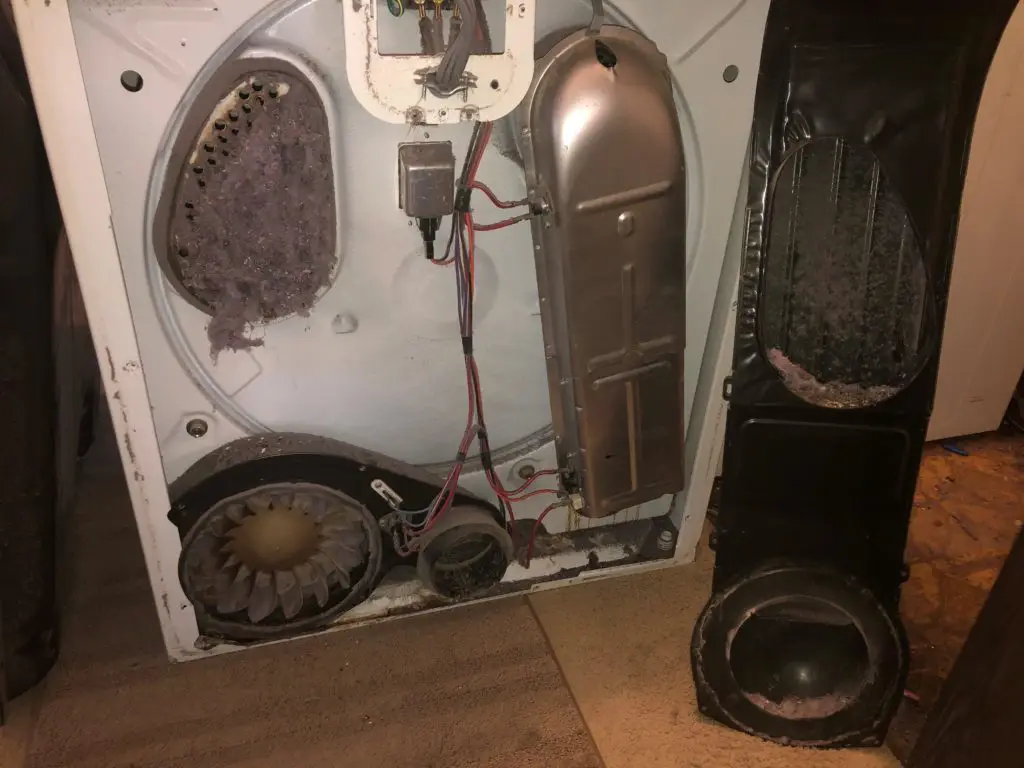
Clues
- Rattling noise during operation
- Weak airflow even with a clean vent
- Lint accumulating faster than normal
7) Electrical or control board problems
Sometimes the dryer isn’t “overheating” — it’s losing power intermittently or the control board is cutting the cycle prematurely.
What it can look like
- Random shutoffs at different times
- Buttons lagging or unresponsive
- A burning smell near controls (stop using it immediately)
Electrical faults can appear as dryer overheating or shutting off, so don’t ignore strange behavior.
Safe step-by-step troubleshooting checklist
Before you start: unplug the dryer (and shut off gas if it’s a gas dryer) for any inspection beyond basic external checks.
- Clean the lint screen (and wash it if airflow seems reduced).
- Inspect the vent hose for crushing, kinks, or lint clogging.
- Check outside airflow at the vent hood.
- Run a short timed cycle with a small load and monitor heat/airflow.
- If overheating continues with good airflow, stop using the dryer and move to technician-level checks (thermostats, thermistor, heating element, control board).
This process covers the majority of cases where dryer overheating or shutting off happens in real homes.
When to stop and call a technician
Call a professional (or the manufacturer’s service) if you notice:
- Burning smell, scorching, or visible smoke
- The dryer shuts off within minutes even after vent cleaning
- The unit trips breakers repeatedly
- You suspect a thermostat/heating element/control board failure
- You have a gas dryer and suspect a combustion or venting issue
A dryer that keeps overheating is a safety risk — and persistent dryer overheating or shutting off shouldn’t be treated as “normal.”
How to prevent dryer overheating or shutting off in the future
 A few habits go a long way:
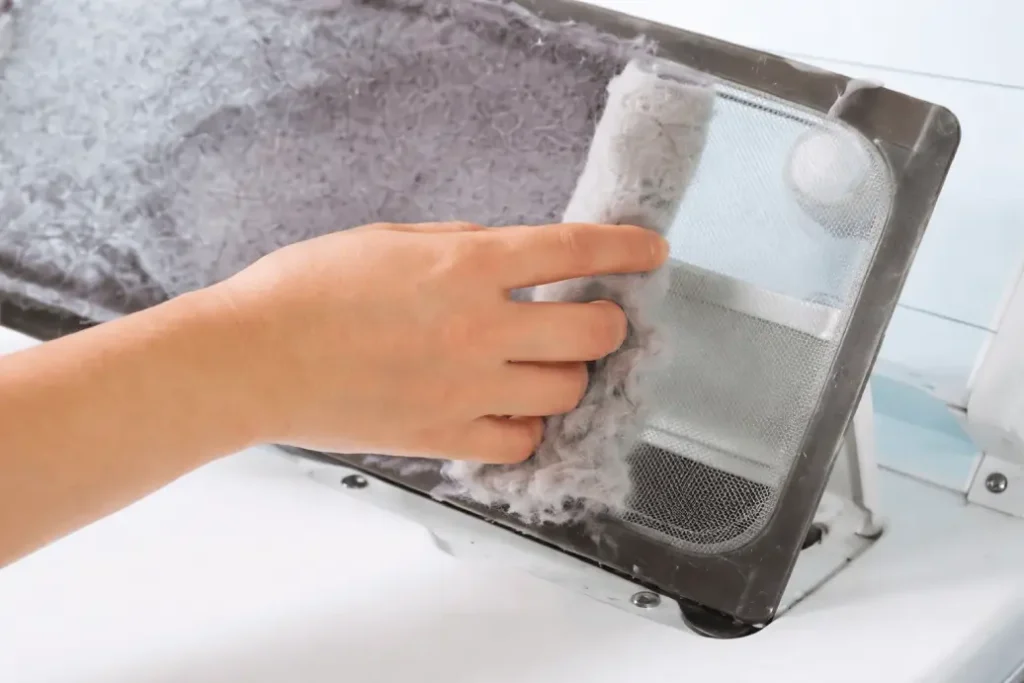
- Clean the lint screen every load (and wash it monthly if you use dryer sheets).
- Vent maintenance: clean the entire vent line periodically (more often if you dry lots of towels, pet bedding, or bulky items).
- Keep the vent run short and smooth (avoid long, flexible, ribbed hoses where possible).
- Don’t overload: leave room for air to circulate in the drum.
- Listen for changes: new rattles, longer drying times, hotter-than-usual clothes — all early warnings.
These steps drastically reduce repeat cases of dryer overheating or shutting off.
FAQ
Why does my dryer overheat and then work again later?
Many dryers shut down when a safety thermostat trips. Once it cools, it may restart — but the underlying problem (often airflow restriction) remains.
Can a clogged vent really make the dryer shut off?
Yes. Poor venting traps heat inside the dryer, which can directly cause dryer overheating or shutting off as a protective response.
Is it safe to keep using a dryer that shuts off?
Not if overheating is involved. If it’s shutting off due to heat, continued use can worsen damage and increase fire risk. Fix airflow issues first, and call a technician if it persists.
Related Dryer Troubleshooting Guides
Many dryer problems are connected. An electrical fault, heating issue, or error code may have the same underlying cause. If you're experiencing additional symptoms, these guides can help you diagnose the problem more accurately.