

A washing machine that suddenly starts making a grinding noise or gives off a burning smell should never be ignored. While some problems are relatively minor, others can quickly lead to expensive damage if the appliance continues running.
In many cases, these two symptoms appear together because one mechanical component is creating excessive friction. As parts begin to wear, they generate heat, causing rubber, grease, or electrical insulation to produce a noticeable odor. Identifying the source early can often prevent a much larger repair.
This guide explains what different grinding noises and burning smells usually mean, how to narrow down the problem, and which checks you can safely perform before calling a repair technician.
Stop Using the Washer Until You Identify the Cause
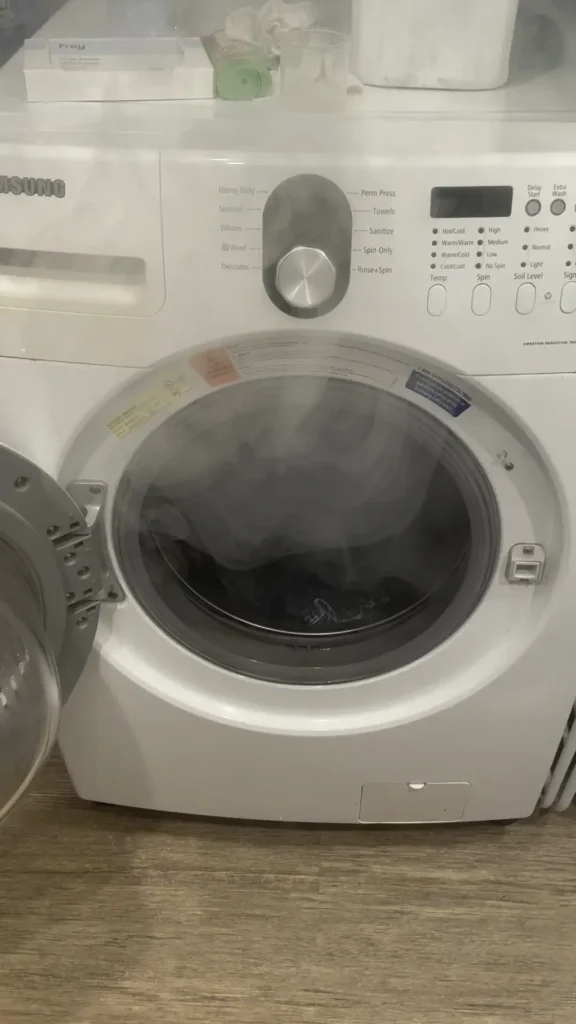
If you notice a burning odor during a wash cycle, press Pause or Cancel immediately and disconnect the appliance from the electrical outlet.
Although some smells come from an overloaded belt or trapped debris, others indicate overheating electrical components. Continuing to operate the washer without finding the source can permanently damage the motor, drive system, or electronic control board.
If smoke is visible or the smell becomes stronger within a few seconds, leave the washer unplugged until it has been inspected.
What Type of Burning Smell Do You Notice?
The smell itself often provides the first clue about what’s happening inside the machine.
Burning Rubber
A strong rubber odor usually points to a slipping drive belt, seized pulley, overloaded drum, or another moving component creating excessive friction.
Burning Plastic or Electrical Smell
A sharp electrical odor may indicate overheating wiring, damaged connectors, a failing motor, or problems on the electronic control board. These situations should be treated more seriously because electrical failures can worsen rapidly.
Hot Grease or Metal Smell
If the odor resembles overheated grease or hot metal, worn drum bearings are often responsible. As lubrication breaks down, metal parts begin rubbing together and generate both heat and grinding noises.
Burning Lint or Dust
Sometimes lint, hair, or other debris accumulates near moving components and begins rubbing against rotating parts. Although less dangerous, the obstruction should still be removed before it causes additional wear.
When Does the Grinding Noise Happen?
Paying attention to exactly when the noise occurs can significantly narrow the list of possible causes.
- During washing: Drive belt, motor coupling, transmission or agitator components.
- During draining: Drain pump or foreign object inside the pump housing.
- During spinning: Drum bearings, suspension system, pulley, clutch or spider support.
- Throughout the entire cycle: Severe bearing wear, damaged motor or objects rubbing against the drum.
Knowing the stage of the cycle often saves time during diagnosis because many components only operate during specific portions of the program.
Most Common Causes of Grinding Noise and Burning Smell
1. Worn Drum Bearings
One of the most expensive but also one of the most common causes is worn drum bearings.
As bearings lose lubrication, metal surfaces begin grinding against each other. The additional friction produces heat that may create a hot metal smell while making the washer increasingly noisy during high-speed spin cycles.
Typical symptoms include:
- Loud roaring or grinding during spin.
- Noise continues even with an empty drum.
- The inner drum moves excessively when pushed by hand.
- Water stains or rust appear behind the tub seal.
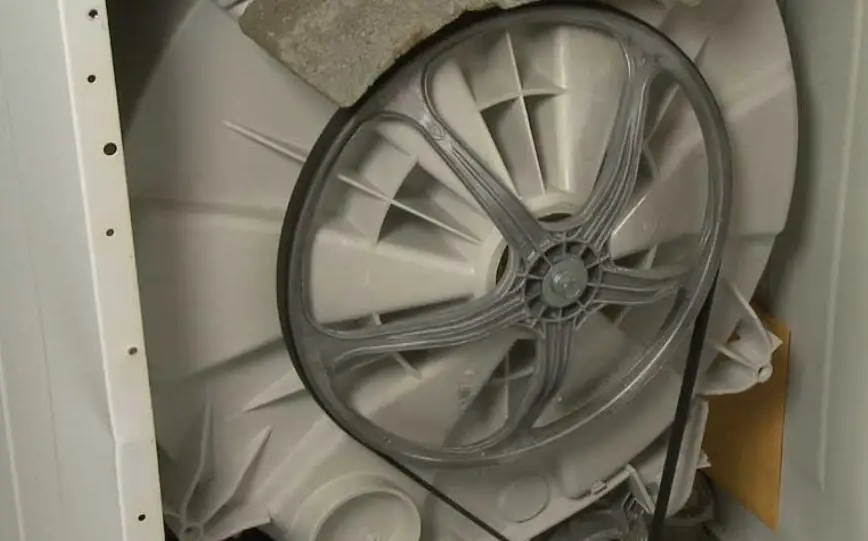
2. Slipping Drive Belt
Many belt-driven washing machines use a rubber belt to transfer power from the motor to the drum.
As the belt ages, it can become glazed, stretched, or cracked. Instead of gripping properly, it slips across the pulley and generates heat.
Signs include:
- Burning rubber smell.
- Squealing followed by grinding.
- Poor spinning performance.</li
- Visible belt wear through the rear service panel.
3. Foreign Objects Between the Inner and Outer Tub
Coins, screws, bra wires, nails, children’s toys, and other small objects occasionally pass through the drum holes.
Once trapped between the tubs, they scrape metal surfaces every time the drum rotates, creating grinding sounds that often become louder during spinning.
Inspect the rubber door boot, drain filter, and drum openings before assuming a major mechanical failure.
4. Damaged Drain Pump
If the grinding begins only while the washer is draining, inspect the drain pump.
Small objects like buttons, hairpins, and pieces of fabric can jam the impeller. The motor continues trying to rotate, producing both noise and excessive heat.
Cleaning the pump filter often solves this problem without replacing any parts.
5. Motor or Pulley Problems
Drive motors rarely fail suddenly, but worn bearings or damaged pulleys can create grinding noises that gradually worsen.
If the motor struggles to rotate normally, it may overheat and produce a burning smell after several minutes of operation.
Unlike a slipping belt, motor problems usually don’t improve after reducing the laundry load.
“`html id=”h9vx2p”
Step-by-Step Troubleshooting You Can Do at Home
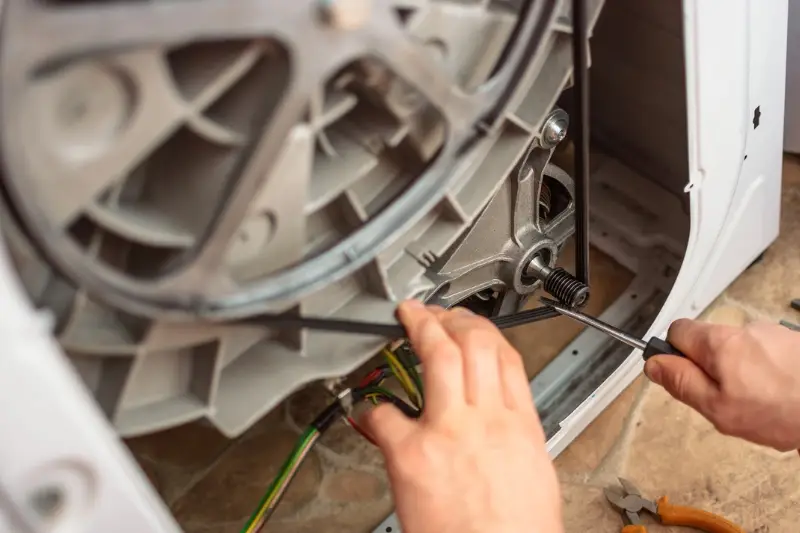
Before replacing expensive parts, perform a few simple inspections. Many grinding noises and burning odors are caused by issues that can be identified within 15 to 20 minutes.
Step 1: Reduce the Load
An overloaded washer forces the motor, belt, and suspension system to work much harder than normal. Remove several heavy items and run a short spin cycle. If the noise disappears, the washer may simply have been overloaded rather than mechanically damaged.
Step 2: Rotate the Drum by Hand
With the washer unplugged, slowly turn the drum.
- The drum should rotate smoothly.
- Grinding, scraping, or rough movement usually indicates bearing wear or a foreign object.
- If the drum feels loose or rocks up and down, the bearings or drum support may be failing.
Step 3: Inspect the Drain Pump Filter
Many front-load washers include an access panel near the bottom of the machine.
Open the filter carefully and remove any trapped debris such as coins, buttons, hairpins, or small socks. These objects frequently create grinding noises during the drain cycle.
Step 4: Check the Drive Belt
If your washer uses a belt-driven system, remove the rear service panel and inspect the belt.
Replace the belt if you notice:
- Cracks or missing ribs.
- Frayed edges.
- A shiny glazed surface.
- Loose tension.
A worn belt often produces a burning rubber smell long before it completely fails.
Step 5: Inspect for Leaks Around the Bearings
Water leaking through a worn bearing seal gradually washes away grease inside the bearings.
Look for:
- Rust-colored streaks.
- Grease around the rear tub.
- Water marks beneath the washer.
These signs usually indicate bearing failure rather than a simple belt problem.
Quick Diagnosis Guide
| Symptom | Most Likely Cause |
|---|---|
| Burning rubber smell only | Slipping drive belt |
| Grinding during spin cycle | Drum bearings |
| Grinding only while draining | Blocked or damaged drain pump |
| Grinding plus drum wobble | Bearing or spider arm damage |
| Electrical burning smell | Motor, wiring, or control board |
| Metal scraping once per drum rotation | Foreign object inside the tub |
Can You Continue Using the Washer?
That depends on what’s causing the problem.
If the noise was caused by an overloaded drum and disappears after redistributing the laundry, the washer is generally safe to use.
However, you should stop using the appliance immediately if:
- The burning smell becomes stronger.
- Smoke appears.
- The grinding noise becomes louder with every cycle.
- The drum no longer spins smoothly.
- The washer trips the circuit breaker.
Continuing to operate the washer under these conditions can damage additional components and significantly increase repair costs.
Repair or Replace?
Not every grinding noise requires replacing the washing machine.
Minor repairs such as replacing a belt, cleaning the drain pump, or removing a foreign object are usually inexpensive and can restore normal operation.
On the other hand, worn drum bearings, damaged spider arms, or major motor failures often require extensive disassembly. For older machines, comparing the repair estimate with the price of a new washer is often the smartest decision.
How to Prevent Grinding Noises and Burning Smells
Routine maintenance can prevent many of these problems from developing.
- Do not overload the washer.
- Check pockets before washing clothes.
- Clean the drain pump filter regularly.
- Level the washer to reduce vibration.
- Inspect hoses and look for leaks.
- Address unusual noises as soon as they appear.
Small maintenance habits often prevent expensive repairs later.
Frequently Asked Questions
Why does my washer smell like burning rubber?
The most common causes are a slipping drive belt, an overloaded drum, or a seized pulley creating excessive friction.
Can bad bearings cause a burning smell?
Yes. As bearings wear out, increased metal-to-metal friction generates heat that may produce a hot metal or burnt grease odor.
Is it safe to keep using a noisy washer?
No. If the noise is getting louder or is accompanied by a burning smell, continuing to use the appliance can cause additional damage.
Why does the noise only happen during the spin cycle?
Problems that occur only during spinning are commonly related to drum bearings, suspension components, the drive pulley, or the drive belt.
Final Thoughts
A grinding noise combined with a burning smell is almost always a warning that something inside the washer is experiencing excessive friction or overheating. While the cause may be as simple as a foreign object or worn drive belt, it can also indicate failing bearings, a damaged motor, or electrical components that require immediate attention.
Start with the simplest inspections, avoid running repeated test cycles, and stop using the washer if the odor becomes stronger or visible smoke appears. Addressing the problem early is often the difference between a relatively inexpensive repair and replacing the entire appliance.