

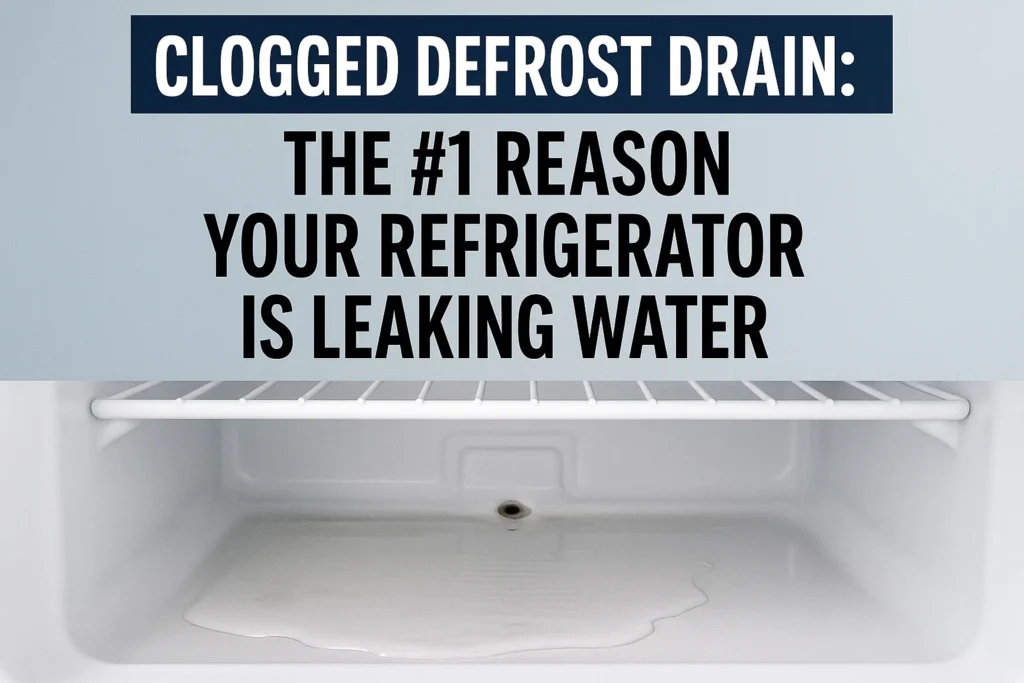
Why a Clogged Defrost Drain Causes Leaks
Modern refrigerators run an automatic defrost cycle. When frost melts off the evaporator coil, the water is supposed to travel through a small drain hole, down a narrow tube, and into a drip pan near the compressor where it quietly evaporates. If that pathway narrows or plugs—ice buildup, crumbs, coffee grounds, a sticky spill, even a kinked “duckbill” valve—meltwater has nowhere to go. It backs up, overflows into the freezer floor, weeps into the fresh-food compartment, and eventually shows up as a puddle on your kitchen floor.
In short: the system still melts, but it can’t drain.
Experiencing water under your fridge? Read about refrigerator water leakage problems and discover the most common causes. If you need fast and reliable help, you can order repair service here.
How the Defrost Drain Works
During each automatic defrost cycle, your fridge melts accumulated frost and sends the water through a small drain hole in the back wall. This water travels down a tube to a drip pan under the fridge, where it evaporates naturally. But when the drain is blocked — by food, ice, or gunk — the water backs up and leaks into places it shouldn’t.
How to Spot the Problem Early
- Water under the crisper drawers or along the back wall of the fridge compartment.
- A thin sheet of ice on the freezer floor (classic sign the drain trough above has iced over).
- Intermittent puddles on the floor, often toward the front center of the unit.
- Musty smell or damp packaging near the rear vents.
- No obvious leaks from the water line (if you have an ice maker), and door gaskets look fine—yet water persists.
Quick differentiation: if water appears only when dispensing or making ice, suspect the inlet valve or tubing. If it appears a day or two after a defrost cycle, the drain is the prime suspect.
What You Can Safely Do Yourself
Safety first: Unplug the refrigerator. Wear cut-resistant gloves. Avoid sharp tools around plastic liners and coils.
You’ll need (nice to have, not mandatory):
- Turkey baster or squeeze bottle
- Warm (not boiling) water + a drop of mild dish soap
- Flexible plastic zip tie or pipe cleaner
- Small towel, bowl, and a hair dryer on low (optional)
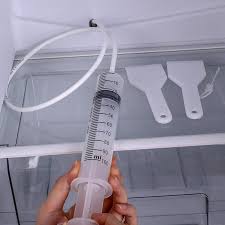
Step-by-step:
- Find the drain trough/hole.
Typically under the evaporator cover at the back of the freezer; on some models it’s visible as a small hole or slot in a shallow channel. In bottom-freezer units, remove the drawer and the rear panel to access it. - Melt the ice dam gently.
Use warm—not boiling—water. A turkey baster is perfect for pulsing water into the hole. If needed, a hair dryer on low can soften ice (keep it moving; don’t overheat plastics). - Clear the obstruction.
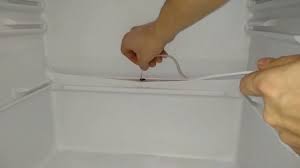
Feed a flexible zip tie or pipe cleaner down the drain a few inches to dislodge gunk. Don’t force rigid metal wire; you could puncture the tube. - Flush the line.
Baste several rounds of warm water until it flows freely into the drip pan beneath the fridge. You should hear water trickle down. - Check the drain outlet.
From the back of the refrigerator (pull it out carefully), locate the end of the drain tube above the drip pan. Many models use a soft “duckbill” check valve—if it’s stuck closed with residue, remove and clean it with warm, soapy water. Trim hardened tips only if manufacturer guidance allows. - Clean the drip pan.
Empty, wash, and reinstall the pan to prevent odors. - Reassemble and test.
Plug the unit back in. After a few hours and a defrost cycle, leaks should stop.
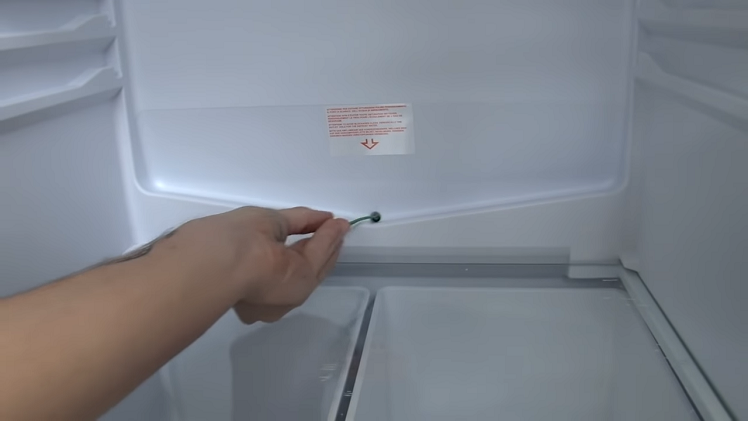
Prevention tips:
- Keep temps steady: Fridge ~37°F (3°C), Freezer 0°F (-18°C).
- Don’t block rear air vents with boxes or bags.
- Wipe spills promptly; fine debris often migrates to the drain.
- Inspect and clean the drain every 6–12 months.
- Slight rear-to-front tilt (front a touch higher) encourages proper drainage.
Note: Repeated clogs on some models can point to a worn drain heater clip, a misfitting duckbill valve, or a warped trough—items better handled by a pro.
Prevent Future Leaks
A little fridge maintenance goes a long way. To keep your defrost drain clear:
– Wipe up sticky spills as soon as they happen
– Keep food packaging away from rear vents
– Don’t overfill the freezer — it restricts airflow
– Clean the drain line every 6–12 months
– Make sure your fridge is slightly tilted backward to encourage proper drainage
Need It Fixed Fast? Professional Fridge Repair
| Cause | Symptoms | Why It Causes a Leak | How to Diagnose |
|---|---|---|---|
| Clogged drain hole | Water under drawers, moldy smell | Water can’t flow to drip pan | Inspect drain behind freezer panel |
| Frozen drain line | Thin ice sheet, periodic leaks | Ice blocks water path | Feel for ice, pour warm water |
| Kinked or damaged drain tube | Chronic leaks, even after cleaning | Water can’t exit to pan | Pull fridge, inspect tube at back |
| Blocked duckbill valve | Backflow, musty odor | Valve stuck shut with gunk | Clean rubber valve at drain outlet |
| Fridge not tilted properly | Water pools near front | Water flows forward, not back | Use level tool, adjust front feet |
If you’d rather skip the disassembly—or you cleared the drain and the leak came back—booking a same-day professional can save your food and your floor. In NYC, you can reach out for fridge repair: experienced techs handle clogged defrost drains, leaking issues, and component replacements across most major brands.
Frequently Asked Questions (FAQ)
Q: How do I know if the defrost drain is clogged or frozen?
A: Look for signs like water pooling under crisper drawers, a musty smell, or a thin sheet of ice in the freezer. If the issue occurs a day or two after a defrost cycle, it’s likely the drain line.
Q: Can I pour boiling water into the drain hole to unclog it?
A: No. Boiling water may damage plastic parts. Use warm (not hot) water and apply it gently using a turkey baster or squeeze bottle.
Q: What’s the duckbill valve, and how do I clean it?
A: It’s a soft rubber valve at the end of the drain tube, designed to stop odors and pests. If it’s clogged with debris or stuck shut, remove it and rinse it in warm soapy water. Trim only if your fridge manufacturer recommends it.
Q: The leak came back after I cleaned the drain. Why?
A: Possible reasons: the clog wasn’t fully cleared, the drain tube is damaged, the fridge isn’t tilted properly, or the drain heater (if present) isn’t working.
Q: Can I use vinegar or baking soda to clean the drain?
A: Yes, a mild vinegar solution can help break down organic buildup. Avoid harsh chemicals — they may harm internal components.
Q: How often should I clean the fridge drain line?
A: Every 6–12 months, or sooner if you notice odors or moisture buildup.
Q: When should I call a professional?
A: If you’ve cleared the drain but the leak persists, if water keeps freezing, or if parts like the drain heater or duckbill valve appear damaged, it’s time to call in a technician.