
Clogged Spray Arms
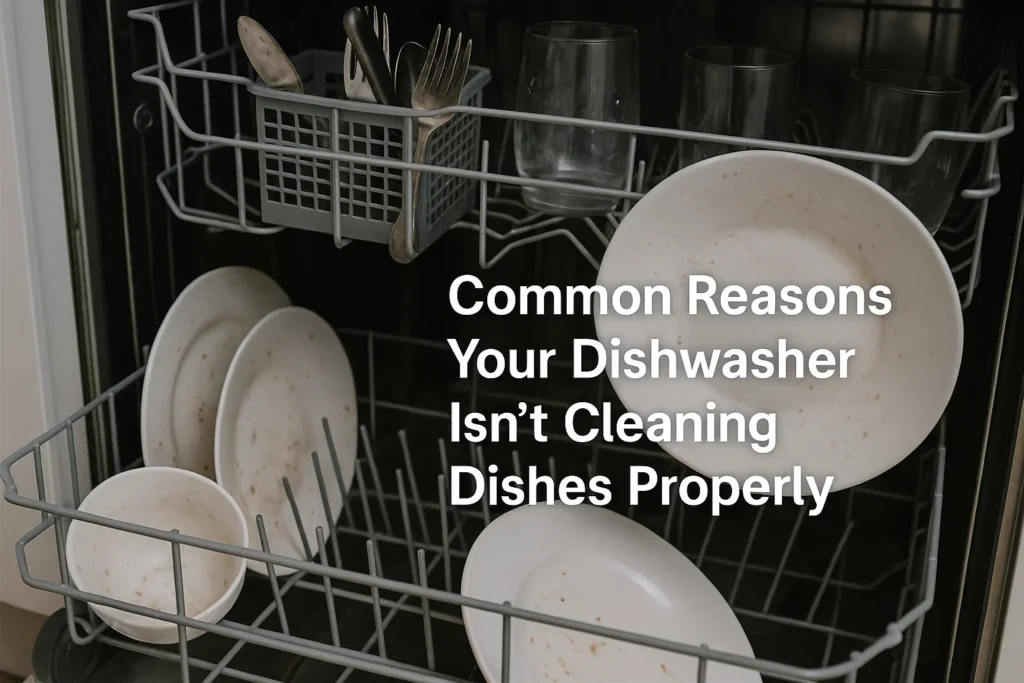
If your dishes come out looking smeared or still grimy, the culprit can be spray arms clogged with food bits, mineral deposits, or dishwasher gunk. Blocked holes mean water can’t spray effectively. Give those arms a twist and pull to clean them — soak in warm soapy water, use a toothpick to unclog holes, rinse thoroughly, and reattach.

Professional Appliance Service
Expert Dishwasher Repair in New York
Having problems with your dishwasher? Whether it won’t drain, leaks water, makes unusual noises, or fails to clean dishes properly, our experienced technicians provide fast and reliable dishwasher repair throughout New York.
✓
Same-day service available
Fast Repair
✓
Experienced certified technicians
Trusted Service
✓
All major brands serviced
Any Brand
Dirty or Faulty Filters
Your dishwasher’s filter catches food scraps to keep the wash water cleaner — but if you let it get too full, it backfires. A filthy or damaged filter means recirculating dirty water. Rinse it under running water, gently scrub with a soft brush, or replace if torn or too gunked up.
Hard Water Buildup
Limescale from hard water can gum up jets, spray arms, and filter screens, reducing cleaning power. A quick fix: run a cycle with a dishwasher cleaner or a cup of white vinegar. For ongoing relief, consider a water softener or a detergent designed for hard-water conditions.
Malfunctioning Detergent Dispenser
If your detergent isn’t releasing at the right time—or at all—your dishwasher can’t clean properly. Test the dispenser: open it mid‑cycle to see if detergent has been released. If not, the mechanism might be stuck or broken. Sharp edge wear or caked-on residue can block it.
Overloading or Incorrect Loading
It’s tempting to jam every dirty item inside — but overcrowding blocks spray paths. Plates, bowls, and utensils need breathing room for water and detergent to reach surfaces. Load smart: face dirty sides inward or downward, leave space between items, and avoid nesting bowls where possible.
Broken Heating Element
Dishwashers work best when the water’s hot—ideally around 120–140 °F (49–60 °C). A failed heating element or thermostat means cold—or only lukewarm—water, and poor cleaning. If dishes stay cold or if you notice energy‑error codes, it’s time to test (or have a pro test) the element and control board.

Quick Fixes and DIY Solutions
Step‑by‑Step Filter Cleaning
- Locate and remove the filter at the base.
- Rinse it under warm water, scrub gently with a soft brush, and check for tears or stubborn debris.
- Dry it and pop it back in.
- Run a short rinse cycle — instant improvement.
Best Way to Unclog Spray Arms
- Remove the arms (most just twist off).
- Soak in hot water mixed with baking soda or vinegar.
- Use a toothpick or wire to clear each jet hole.
- Rinse and reinstall — slides right back in and makes a world of difference.
Choosing the Right Detergent
Not all detergents are created equal. Powder, liquid, pods—choose one that suits your water hardness, load type, and dishwasher model. High-efficiency pods dissolve better, while gels help with longer cycles. Keep detergent dry and sealed.
Resetting the Dishwasher — When and How
Sometimes, tech glitches or error codes are solved with a simple reset. Turn off the power (switch or breaker), wait 30 seconds, then restart. If it still misbehaves, then it’s time to investigate deeper or bring in a pro.
When It’s Time to Call the Pros
Persistent Issues After DIY Attempts
If you’ve cleaned filters and spray arms, tried different detergents, and still get poor results, there might be a hidden issue—like a failing motor or clogged drain pump.
Signs of Serious Malfunctions
Look out for error codes, strange noises, leaks, or no water fill at all. Flickering lights or half-finished cycles? Those are signs the problem is more than a simple clog.
Trust Express Repair NY for Reliable Dishwasher Repair
If your dishwasher still isn’t performing, Express Repair NY is here to help. Our certified technicians provide fast, honest, and convenient dishwasher repair in New York. We’ll diagnose the issue, explain your options (repair or replacement), and get your kitchen back in working order — no stress, no guesswork.
Prevent Future Dishwasher Problems
Monthly Maintenance Tips
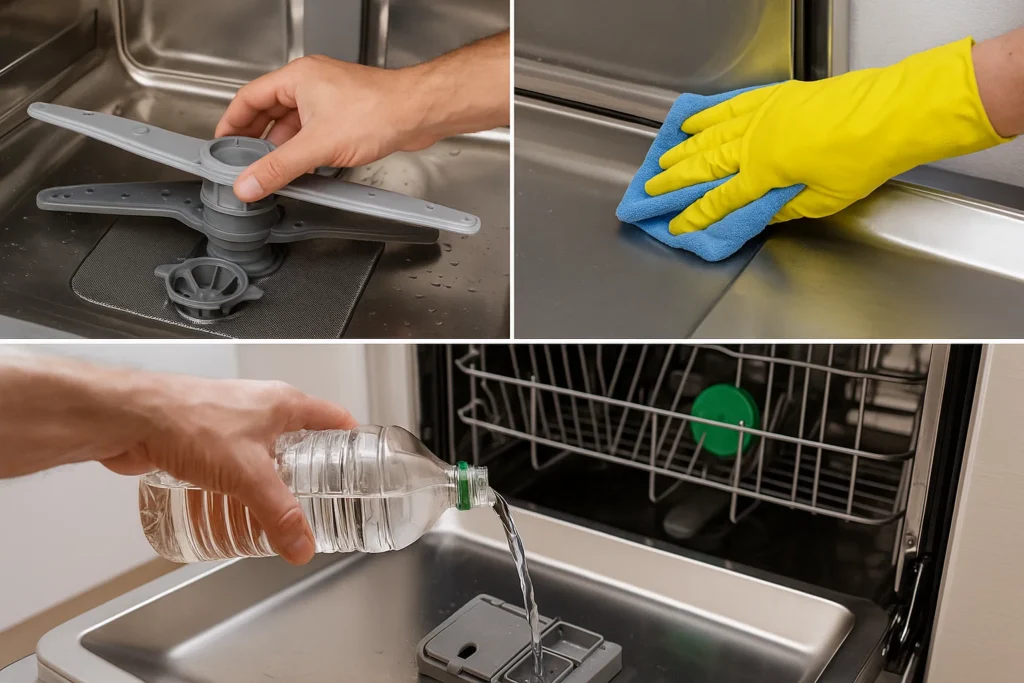
- Clean filters and spray arms every few weeks.
- Wipe seals and door edges with a mild cleaner to prevent mold.
- Run a monthly “empty” cycle with a dishwasher cleaner or vinegar.
Using Rinse Aids and Cleaners Effectively
Rinse aids reduce spotting and improve drying; use one if your glasses look cloudy. Periodic dishwasher cleaners strip away scale and grease buildup.
Avoiding Common User Mistakes
- Don’t pre-rinse excessively — modern machines rely on food particles to activate detergent enzymes.
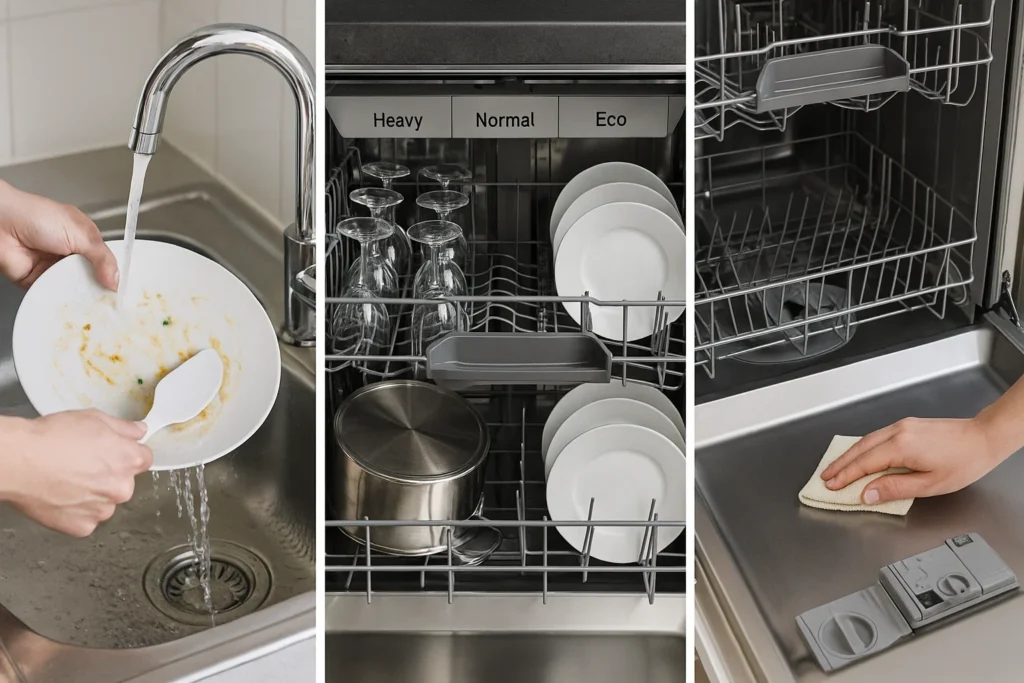
- Use the correct load setting: “heavy” for pots, “light” for glasses, “eco” when possible to save energy.
- Keep the interior dry between uses to prevent odor.