
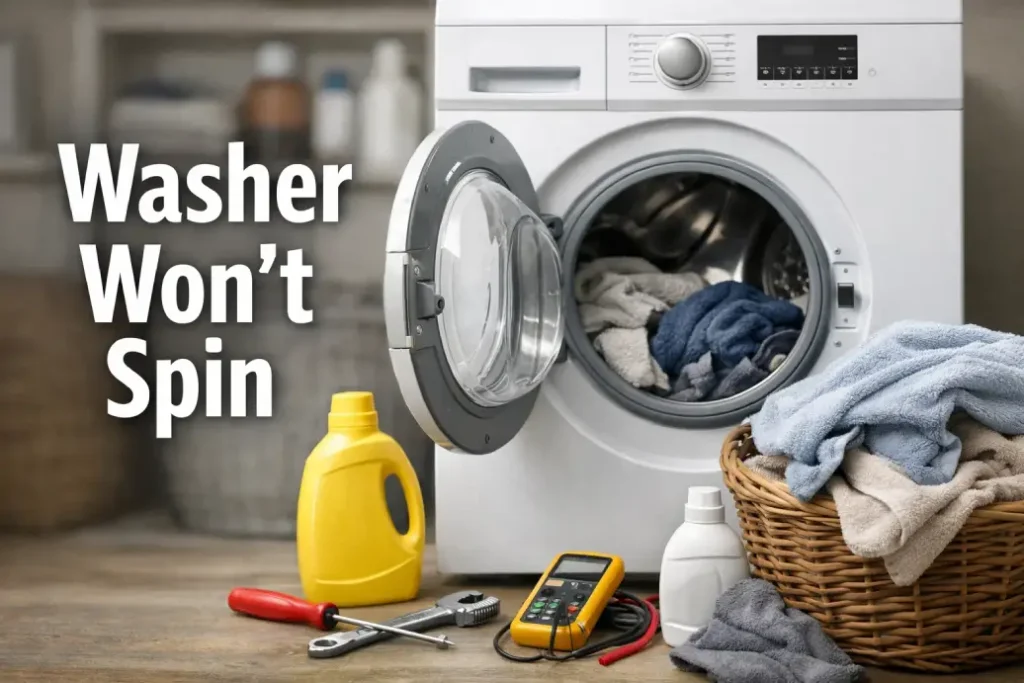
You load your washing machine, run a full cycle, and when it finishes — your clothes are soaking wet. If your washer won’t spin, this is not just an inconvenience. It signals a mechanical, electrical, or drainage issue that can worsen over time.
A washer that won’t spin properly leaves excess water inside fabrics. This causes:
- Longer drying times
- Higher electricity bills
- Mold and mildew growth
- Unpleasant odors
- Additional stress on the motor
Understanding why a washer won’t spin is the first step toward solving the issue correctly and preventing repeat failures.
How the Spin Cycle Actually Works
To understand why a washer won’t spin, you need to know how spinning functions internally.
The spin cycle depends on several coordinated systems:
- Drain pump removes water from the tub.
- Lid switch or door lock confirms safe operation.
- Motor activates rotation.
- Drive belt or direct drive transfers motion to the drum.
- Control board regulates speed and timing.
If any of these components fail, your washer won’t spin correctly — or at all.
Most Common Reasons a Washer Won’t Spin
1. Unbalanced Load
Modern washers have imbalance detection. If heavy items gather on one side, the machine stops spinning to prevent damage.
Common causes:
- Washing one heavy blanket alone
- Overloading with towels
- Mixing lightweight and heavy items improperly
Fix:
Redistribute items evenly. Run a drain and spin cycle again.
2. Washer Is Not Draining Properly
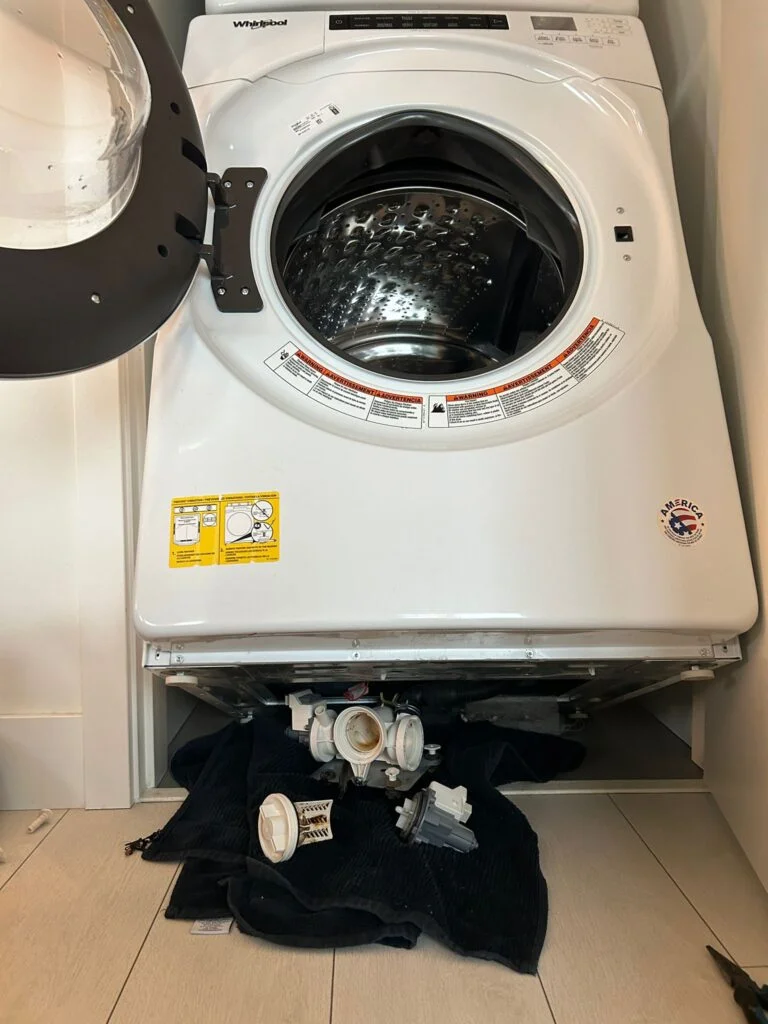
If water remains in the tub, the washer won’t spin at high speed.
Check for:
- Clogged drain hose
- Blocked pump filter
- Foreign objects (coins, lint, hairpins)
If the washer won’t spin and you hear humming, the pump may be obstructed.
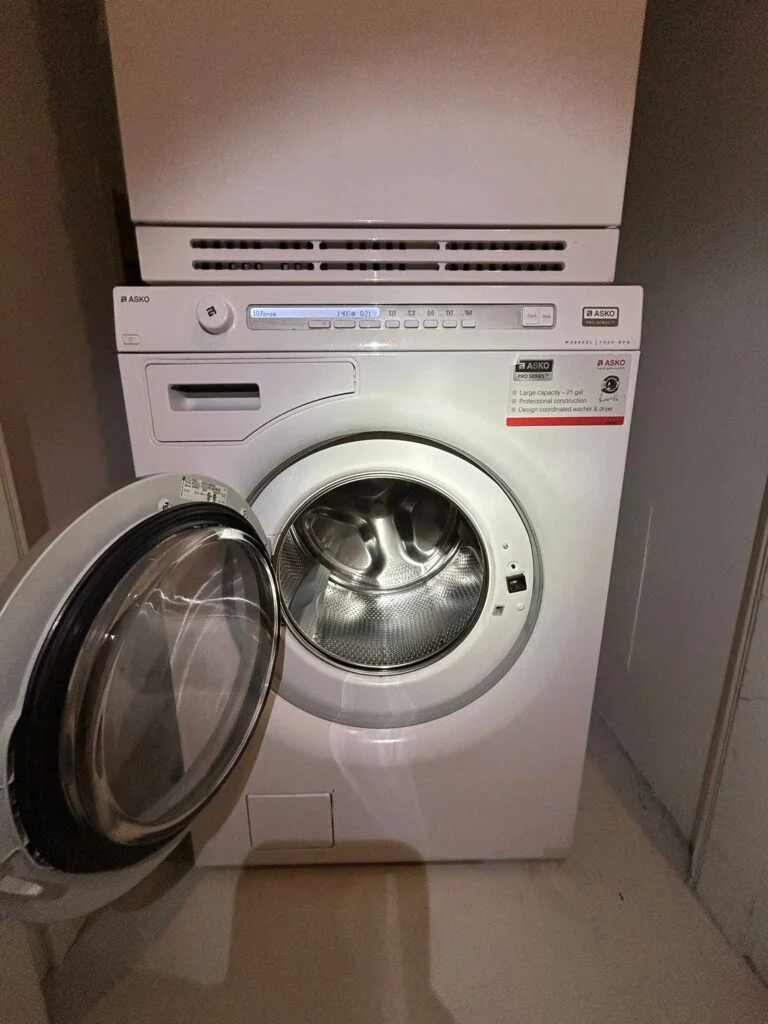
3. Faulty Lid Switch or Door Lock
Many top-load models stop spinning if the lid switch fails. Front-load machines rely on door locks.
Signs:
- Washer fills and agitates but won’t spin
- No clicking sound when lid closes
- Error codes
If the washer won’t spin and stops mid-cycle, this is a common cause.
4. Broken Drive Belt
Some washers use a belt to spin the drum.
Symptoms:
- Burning rubber smell
- Drum does not rotate
- Motor runs but drum stays still
When the belt slips or breaks, the washer won’t spin even though power is present.
5. Motor Coupling Failure
Direct-drive washers use a coupling between motor and transmission.
If broken:
- Washer fills
- Agitates
- But washer won’t spin
Couplings wear out over time, especially with heavy loads.
6. Worn Clutch Assembly
In top-load washers, a worn clutch prevents proper spinning speed.
Signs:
- Slow spin
- Clothes still wet
- Grinding noise
If your washer won’t spin at full speed, clutch wear is likely.
7. Control Board or Timer Malfunction
Modern washers rely on electronic boards.
Symptoms:
- Random stopping
- Spin cycle skipped
- Error codes
If everything mechanical looks fine and the washer won’t spin, electronics may be at fault.
Step-by-Step Diagnostic Process
If your washer won’t spin, follow this structured approach:
Step 1: Safety First
Unplug the washer.
Step 2: Check Load Balance
Remove items. Run empty spin cycle.
Step 3: Inspect Drainage
- Clean pump filter
- Check hose for kinks
- Ensure standpipe isn’t clogged
Step 4: Test Lid Switch
Use a multimeter to test continuity.
Step 5: Examine Belt (If Applicable)
Look for cracks or looseness.
Step 6: Listen to the Motor
If motor hums but drum doesn’t move, suspect coupling or belt.
Front-Load vs Top-Load Spin Issues
Front-Load Washers
Common causes:
- Door lock failure
- Drain blockage
- Control board issues
Top-Load Washers
Common causes:
- Lid switch
- Clutch wear
- Drive belt
When diagnosing why a washer won’t spin, always consider the type of machine.
Advanced Troubleshooting
If basic checks fail:
- Test motor windings
- Inspect transmission
- Check shock absorbers (front-load)
- Inspect suspension rods (top-load)
If vibration is excessive, sensors may stop spinning.
When to Repair vs Replace
Repair if:
- Machine under 8 years old
- Issue is mechanical (belt, switch, pump)
- Repair cost under 50% of replacement
Replace if:
- Control board + motor both faulty
- Severe drum bearing damage
- Rusted internal frame
If your washer won’t spin repeatedly despite repairs, replacement may be economical.
Prevention: How to Avoid Spin Problems
- Never overload
- Wash bulky items separately
- Clean pump filter monthly
- Level your washer
- Use correct detergent amount
Preventative care reduces chances your washer won’t spin again.
Cost Breakdown
Common repair costs (approximate):
- Lid switch: low
- Drain pump: moderate
- Drive belt: low
- Control board: high
- Motor: high
If your washer won’t spin, the issue is usually solvable without replacing the entire appliance. Proper diagnosis, structured troubleshooting, and preventative maintenance can extend washer lifespan by years.