

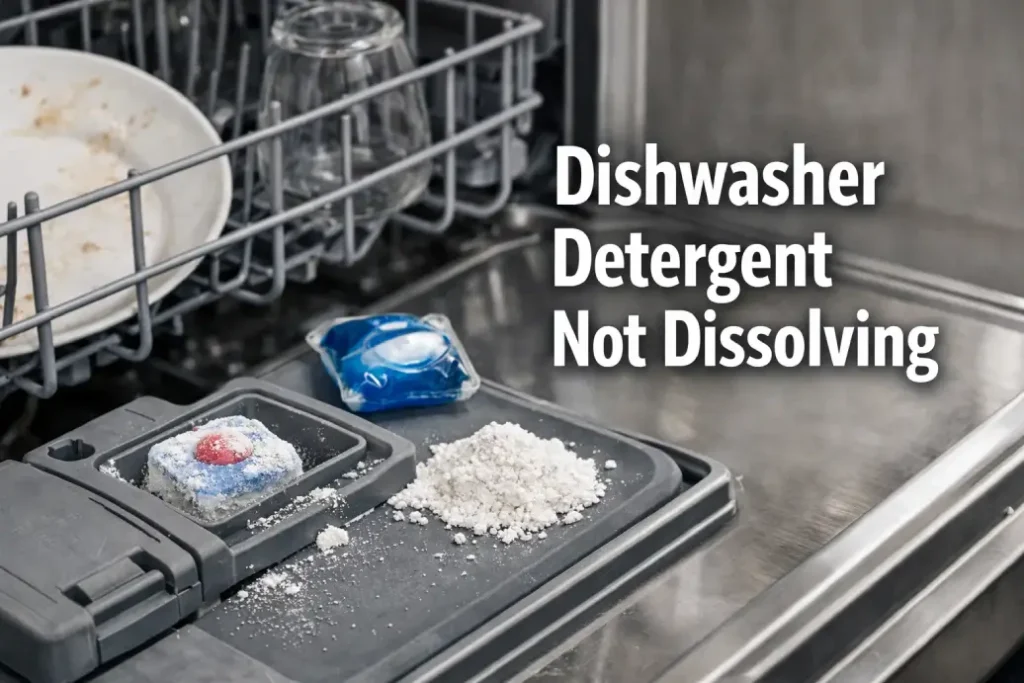
If your dishwasher detergent is not dissolving completely, the problem is usually related to water temperature, poor water circulation, a blocked detergent dispenser, or mechanical issues inside the dishwasher.

Professional Appliance Service
Expert Dishwasher Repair in New York
Having problems with your dishwasher? Whether it won’t drain, leaks water, makes unusual noises, or fails to clean dishes properly, our experienced technicians provide fast and reliable dishwasher repair throughout New York.
✓
Same-day service available
Fast Repair
✓
Experienced certified technicians
Trusted Service
✓
All major brands serviced
Any Brand
Modern detergents are designed to dissolve quickly during the main wash cycle. When detergent remains in the dispenser or leaves residue on dishes, it typically means the cleaning process was interrupted before the detergent could activate properly.
The most common causes include:
- Water entering the dishwasher below 120°F
- Blocked spray arms
- A malfunctioning detergent dispenser
- Low water pressure
- Overloaded dishwasher racks
- Hard water buildup
Identifying the exact cause is important because simply adding more detergent often makes the problem worse rather than improving cleaning performance.
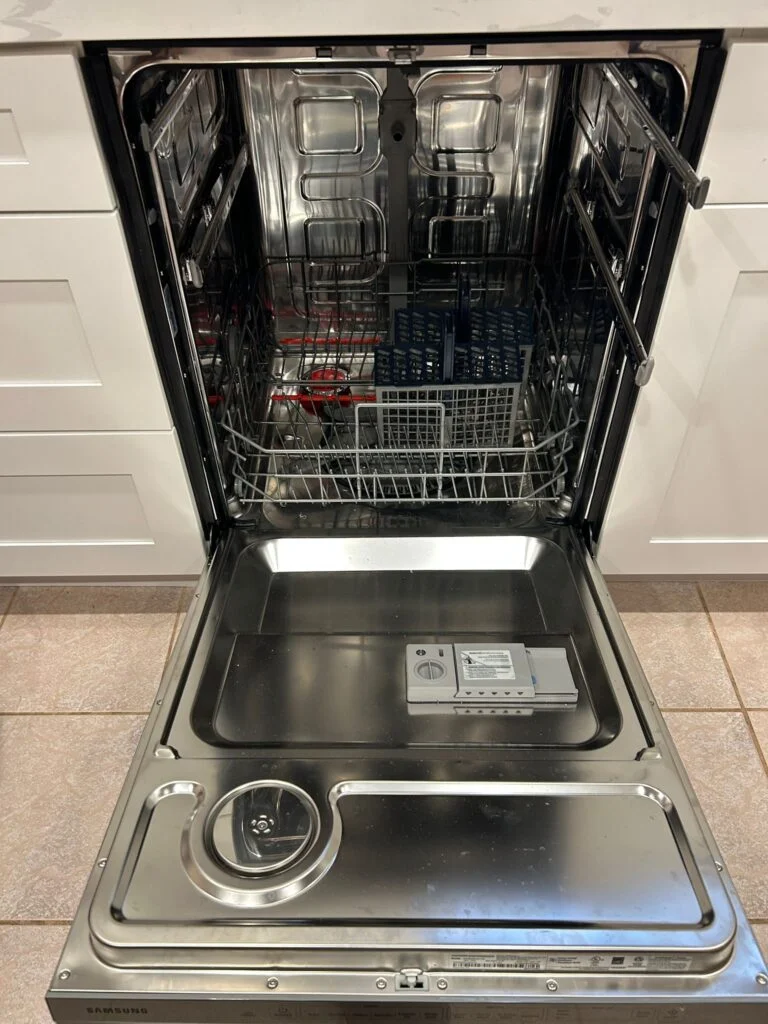
How Dishwasher Detergents Work
Dishwasher detergents are formulated to dissolve in hot water, releasing enzymes and cleaning agents that remove grease, food particles, and stains. The efficiency of these detergents depends on several factors:
- Water Temperature – Most detergents require at least 120°F (49°C) for full dissolution. Cold water will not activate cleaning agents fully.
- Detergent Formulation – Powder, gel, and pod detergents have different dissolution profiles. Pods are often pre-measured with a water-soluble film, while powders require more direct water contact.
- Water Hardness – Hard water contains high mineral content that interferes with detergent activation, often leaving behind chalky residue.
- Cycle Duration and Water Flow – Insufficient water movement or short cycles can prevent detergent from dissolving evenly.
Step-by-Step Troubleshooting
If your dishwasher detergent isn’t dissolving, follow these steps systematically:
- Check Water Temperature: Use a thermometer to confirm the water entering the dishwasher is hot enough.
- Inspect the Dispenser: Look for blockages or clogs. Remove and clean as needed.
- Test Detergent Types: Switch between powder, gel, or pod to find the most effective solution for your appliance.
- Adjust Loading Practices: Avoid overcrowding and ensure spray arms rotate freely.
- Check Water Hardness: If you have hard water, consider adding a water softener or rinse aid.
Advanced Maintenance Tips
To ensure long-term detergent efficiency:
- Clean the Dishwasher Interior Regularly: Remove food debris from the bottom and filter.
- Run a Vinegar Cycle Monthly: Helps remove mineral deposits and grease.
- Inspect Spray Arms: Ensure no holes are blocked by food particles.
- Check for Leaks or Low Pressure: Weak water flow reduces detergent dissolution.
Dishwasher Tablet Not Dissolving
A dishwasher tablet that remains partially intact after a cycle is one of the most common complaints among homeowners.
Dishwasher tablets require direct contact with hot water and strong water circulation. If either condition is missing, the tablet may only partially dissolve.
Common reasons dishwasher tablets fail to dissolve include:
- Water temperature is too low
- Spray arms are clogged
- The detergent dispenser is blocked
- Large dishes prevent the dispenser door from opening
- The wash cycle is too short
If you consistently find pieces of a tablet left inside the dishwasher, inspect the spray arms and verify that hot water is reaching the appliance.
Dishwasher Pod Not Dissolving
Dishwasher pods contain concentrated detergent enclosed in a dissolvable film. When the pod remains inside the dispenser or appears only partially dissolved, insufficient water exposure is usually the cause.
Possible reasons include:
- Weak water pressure
- Faulty spray arms
- Improper dishwasher loading
- Expired detergent pods
- Malfunctioning dispenser mechanisms
Many homeowners mistakenly assume the pods are defective. In reality, most pod-related issues are caused by dishwasher performance problems rather than the detergent itself.
Dishwasher Soap Left in Dispenser
Finding dishwasher soap left in the dispenser after a completed cycle often indicates that the detergent compartment failed to open correctly.
The detergent door may remain closed because:
- A large plate or pan is blocking it
- The dispenser spring is damaged
- Detergent residue has caused the mechanism to stick
- The dispenser actuator has failed
Inspect the dispenser after each cycle. If the door does not fully open, the dishwasher may require repair.
Dishwasher Detergent Door Not Opening
A detergent door that fails to release detergent can leave dishes dirty and covered in food residue.
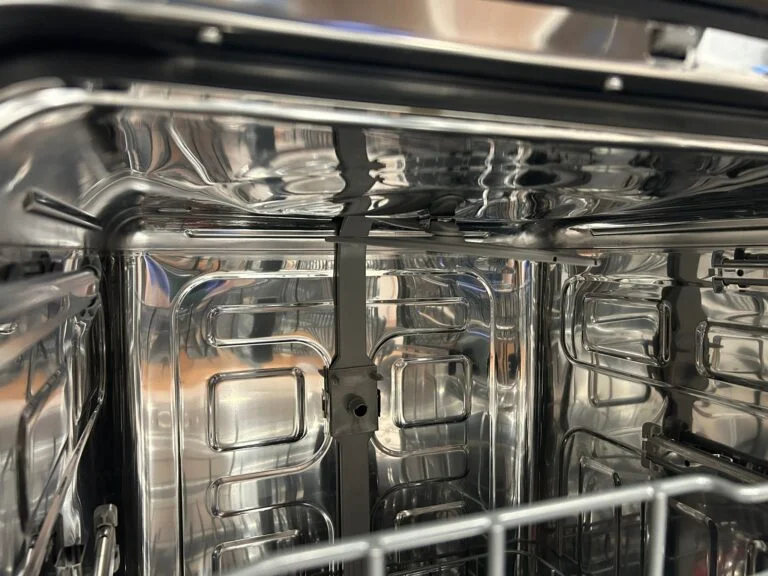
This problem is commonly caused by:
- Broken dispenser latches
- Electrical dispenser failures
- Control board issues
- Improper rack loading
To test the dispenser, run an empty cycle and observe whether the compartment opens during the wash phase.
If the detergent door remains closed, replacing the dispenser assembly may be necessary.
Dishwasher Detergent Not Dissolving in Hard Water
Hard water is a major cause of detergent residue.
Minerals such as calcium and magnesium interfere with detergent activation and can leave white deposits on dishes, glassware, and dishwasher surfaces.
Signs of hard water problems include:
- White chalky residue on dishes
- Cloudy glasses
- Soap buildup inside the dishwasher
- Reduced cleaning performance
Using a rinse aid and regularly cleaning the dishwasher can help minimize hard water issues.
Dishwasher Leaves Detergent Residue on Dishes
If dishes come out covered in white powder or detergent residue, several factors may be responsible.
The most common causes include:
- Too much detergent
- Low water temperature
- Hard water
- Clogged spray arms
- Restricted water flow
Running a cleaning cycle and reducing detergent usage often improves results significantly.
Dishwasher Not Cleaning Dishes and Leaving Soap Behind
When a dishwasher is not cleaning dishes properly and detergent remains visible after the cycle, the issue often extends beyond the detergent itself.
Possible mechanical problems include:
- Failing circulation pump
- Blocked spray arms
- Clogged filters
- Low fill levels
- Water inlet valve problems
If detergent residue is combined with poor cleaning performance, a professional dishwasher inspection may be necessary.
Preventative Measures for Sparkling Dishes
- Pre-Rinse Only When Necessary: Over-rinsing can prevent detergent from clinging to surfaces for cleaning.
- Use Rinse Aid: Helps detergent spread evenly and reduces spotting.
- Choose the Right Detergent Form: Pods for convenience, powder for flexibility.
- Store Detergent Properly: Keep away from moisture and heat.
- Schedule Regular Maintenance: Check water lines, filters, and spray arms.
When to Call a Professional
Sometimes, persistent detergent problems indicate mechanical issues:
- Faulty water heater (insufficient hot water).
- Malfunctioning detergent dispenser.
- Clogged or broken spray arms.
Professional appliance technicians can diagnose these issues and ensure your dishwasher functions correctly.
The problem of dishwasher detergent not dissolving is common, but it is solvable with careful troubleshooting and maintenance. By understanding the science behind detergent dissolution, checking water temperature, cleaning the dispenser, using the correct detergent, and preventing clogs, you can enjoy spotless dishes every time.
Proper maintenance and preventive measures will prolong your dishwasher’s lifespan and improve efficiency. Addressing issues early reduces frustration and avoids costly repairs.
Frequently Asked Questions
Why is my dishwasher detergent not dissolving completely?
The most common causes are low water temperature, clogged spray arms, hard water deposits, and dispenser problems.
Why is my dishwasher pod still in the dispenser?
The dispenser may be blocked, the pod may not be receiving enough water, or the dispenser door may not be opening correctly.
Can cold water prevent dishwasher detergent from dissolving?
Yes. Most dishwasher detergents require water temperatures around 120°F (49°C) for proper activation and dissolution.
Should I switch from pods to powder detergent?
Not necessarily. Pods, powder, and gel detergents all work effectively when the dishwasher is operating correctly. Persistent problems usually indicate a dishwasher issue rather than a detergent issue.
Can a faulty spray arm cause detergent residue?
Absolutely. Spray arms distribute water throughout the dishwasher. If they become clogged or damaged, detergent may not dissolve properly.